Top Orthopedic Physical Therapist Exposes the Billion-Dollar Secret the Hip Pain Industry Doesn't Want Women Who Work on Their Feet to Know...
Nurse's husband and Doctor of Physical Therapy exposes the 'Ibuprofen-and-Insoles Playbook' and the 15-minute after-shift trick that ended two years of deep, aching hip pain for women who stand all day (without pills, cortisone shots, or quitting the job they love)

WARNING: This 54% reader discount expires at midnight tonight (--:--:-- left). After that, the price jumps back to $299, the insole industry wins, and you're back to swallowing ibuprofen in the break room.
I'm about to piss off every orthotics salesman, pain clinic and pharmacy chain in America. Not to mention the companies selling $160 "nurse shoes" and $90 anti-fatigue mats to exhausted women who deserve better.
Because what I'm about to share could cost them a fortune.
But I don't care anymore.
After watching my wife Denise limp through two years of 12-hour shifts...
After watching her eat ibuprofen like candy in the hospital break room, knowing exactly what it does to her stomach because she's the one who warns her patients about it...
After spending $4,812 on insoles, clogs, socks, mats, chiropractors and "therapy" that did nothing lasting...
After nearly watching her give up the job she loved, three years before her pension, because she couldn't stand on that unit floor for one more shift...
I figured out what was actually happening inside her hip.
And if you're reading this after another shift on your feet, sitting in your car in the parking lot because you need five minutes before you can face the drive home, pressing your thumb into that deep ache on the side of your hip...
The next 5 minutes could change the rest of your working life.
My name is Dr. Ray Holloway, DPT. I'm a Doctor of Physical Therapy. I spent 31 years in orthopedic clinics treating hips, backs and knees.
I've treated thousands of hips. Construction workers. Marathon runners. Grandmothers after hip replacements.
But the patients I worried about most were always the same: nurses, teachers, hairdressers, cashiers, line cooks. The people who stand for a living.
And I'm about to tell you the dirty little secret that keeps millions of hard-working women trapped in hip pain, while an entire industry sells them things for their FEET.
But first, let me tell you about the night that broke me...
THE NIGHT EVERYTHING CHANGED...

It was 8:15 PM on a Thursday in March.
I heard the garage door. Then nothing. No keys on the counter. No "I'm home."
I found Denise sitting on the bottom step of our staircase. Still in her scrubs. Still in her work shoes. Her bag dropped on the floor next to her.
She was crying.
"I can't do the stairs, Ray," she said. "Fourteen steps. I can't do them. I stood for twelve hours and now I can't climb fourteen stairs to my own bed."
She pressed her hand into the side of her hip, right on the spot she'd been pressing for two years. "It feels like someone's been squeezing it all day and never let go."
That sentence would turn out to be the whole answer. But that night, I didn't hear it.
Because I just stood there.
Useless.
Thirty-one years of fixing other people's hips, and I couldn't fix my own wife's.
And believe me, we'd tried everything:
- Ibuprofen, 800mg, twice a shift. It took the edge off for three hours. It also gave her heartburn so bad she started keeping antacids in her locker. She's a nurse. She KNOWS the FDA puts a boxed warning on prescription NSAIDs for stomach bleeding, ulcers, heart attack and stroke.[3] She took them anyway, because what choice did she have?
- $460 custom orthotics from a podiatrist. "Your arches are the problem." Her arches were not the problem.
- Three pairs of "nurse clogs" at $140 each, every brand the floor nurses swore by.
- Compression socks that left red grooves in her calves by hour six.
- A $90 anti-fatigue mat for the nurses' station she bought with her own money.
- Chiropractor, twice a week, $65 a visit. Felt great in the parking lot. Gone by her next shift.
- 8 weeks of physical therapy. Yes, my own profession. Clamshells and bridges. Exercises she was too exhausted to do after a 12-hour shift. Of course she was.
- A cortisone shot, $310. Five good weeks. Then right back where she started, with a doctor telling her she could "only have a few of those a year." (In 2019 the journal Radiology published a report warning that hip and knee cortisone shots may not be as safe as everyone assumed, including cases of faster joint breakdown.[4])
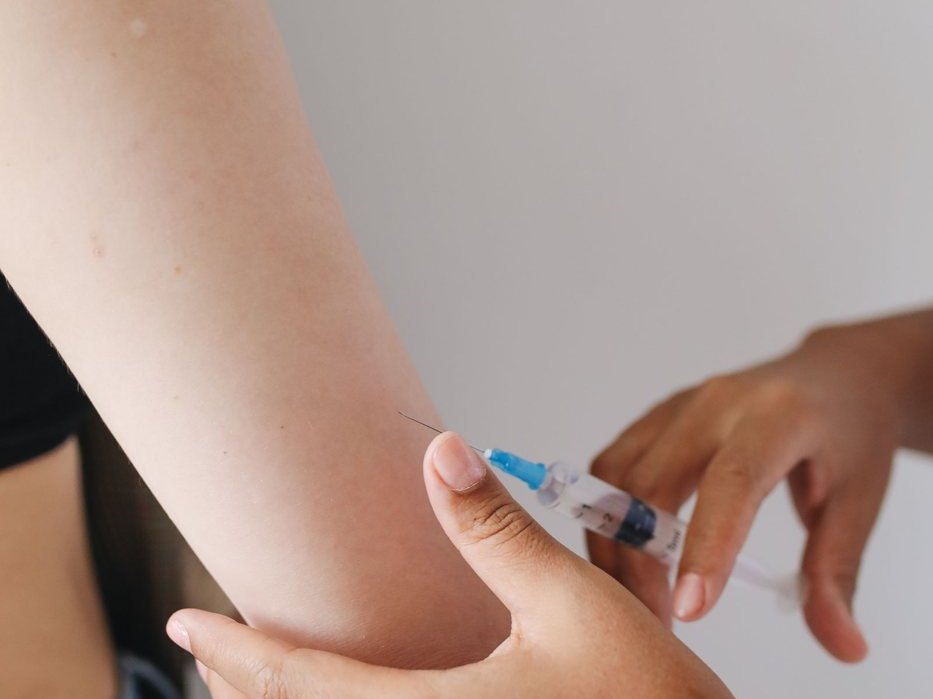
Nothing lasted more than a few weeks.
And the "experts"?

Her orthopedist looked at her X-ray for about forty seconds. "Some wear and tear. You're on your feet all day. What do you expect?" Then he said the sentence that made her cry in the car: "Maybe it's time to think about a desk job."
A desk job. After 29 years at the bedside. Three years from her pension.
She'd already printed out the paperwork to drop to part-time. $31,000 a year less. That's what her hip was about to cost us.
That night on the staircase, watching the strongest woman I know cry because she couldn't climb to her own bed...
Something inside me snapped.
I wasn't going to let her quit the job she loved because of a problem nobody had even bothered to explain to her.
I was going to figure this out.
Or die trying.
See What Finally Worked for Denise »THE THING NOBODY TELLS WOMEN WHO STAND ALL DAY
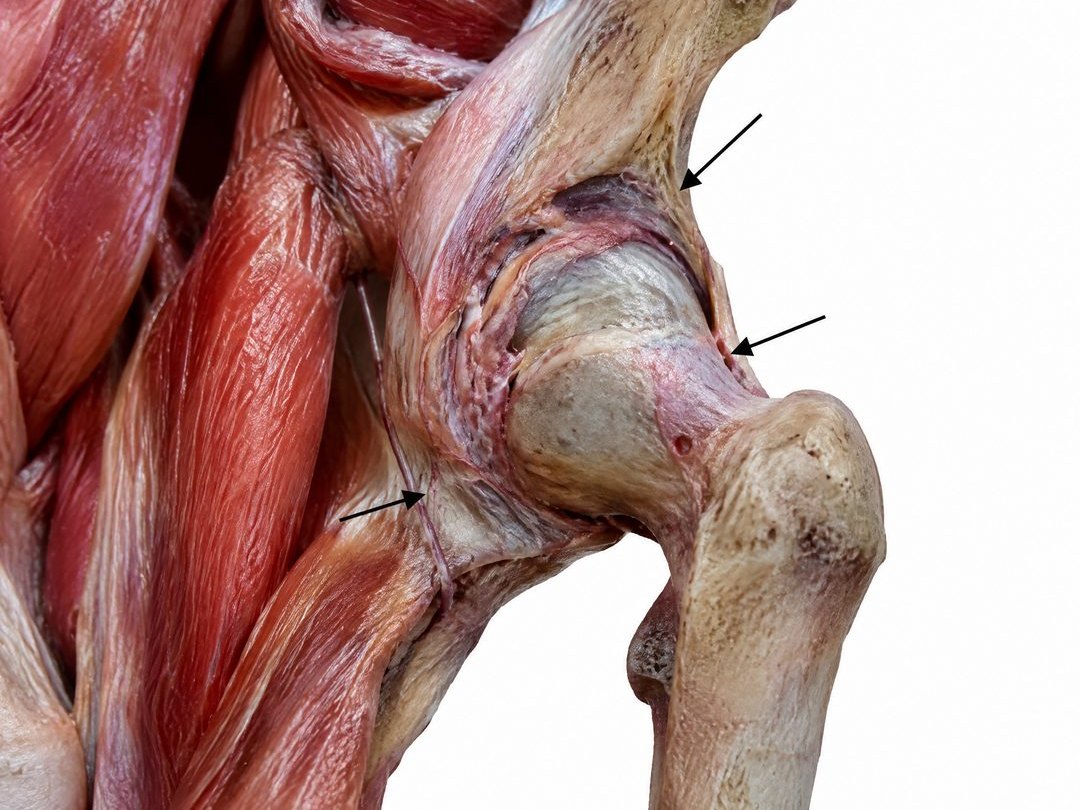
I dug back into the research. A review of prolonged standing at work, published in a nursing rehabilitation journal, linked standing all day to lower back and leg pain, muscle fatigue and leg swelling, and it singled out nurses.[1] Ergonomics studies on factory workers. Studies on surgeons who stand through long operations. Muscle physiology papers on what happens to tissue that stays contracted for hours.
And what I found made me furious.
Hip pain from standing all day is NOT a "foot problem." It's not about your shoes. It's not about your arches.
It's a CIRCULATION problem in the muscles that hold your pelvis up while you stand, muscles that never get to switch off.
Here's what that means, in plain English.
When you walk, the muscles on the side of your hip squeeze, then relax. Squeeze, relax. Every single step. That relax phase is everything: it's when fresh, oxygen-rich blood rushes back in and the waste gets flushed out. Walking literally pumps your hip muscles clean.
But when you stand in one place, charting, giving meds, cutting hair, ringing up groceries, teaching a class, those same muscles never relax. They hold. And hold. And hold. For hours.
Physiologists call this static load. And a muscle that's held "on" squeezes its own blood vessels. Researchers measured it: even a LOW-level contraction held for an hour drove up the pressure inside the muscle and choked its blood flow, while the muscle got more and more fatigued.[2]
Every relax phase pulls fresh blood into the hip muscles and flushes waste out. The muscle pumps itself clean.
Held for hours, the muscle squeezes its own blood vessels. Less oxygen in, waste builds up, tissue gets tighter every hour.
So for twelve hours, the deep muscles on the side of Denise's hip were running with the tap turned almost off. Less oxygen in. Waste products building up. Tissue getting tighter and more irritated with every hour.
That's why it hurts MORE at the end of the shift than the start. That's why it's worse the more you stand still and better on the days you walk around. That's the "squeezed all day and never let go" feeling Denise described on the staircase.
And one night of sleep isn't enough to undo twelve hours of it. So it stacks. Shift after shift. Month after month. Until the ache never fully leaves.
THE "IBUPROFEN-AND-INSOLES PLAYBOOK"
Now look at what women on their feet get sold:
- Insoles and orthotics: fix your feet. Your feet were never the problem.
- $140 shoes: more cushioning under a muscle that's still locked.
- Compression socks: squeeze your calves. Your hip is two feet higher.
- Ibuprofen: numbs the alarm while the muscle stays locked. And chews up your stomach.
- Cortisone: a few weeks of quiet, a limited number of shots a year, then back to square one.
- "Maybe a desk job": the final answer when nothing else works.
Not one of them does the one thing that tissue is starving for: getting the blood moving back through the muscle after the shift ends.
So it goes like this:
Ibuprofen → new insoles → new shoes → compression socks → chiropractor → PT → cortisone → more ibuprofen → "have you thought about a desk job?" → repeat until you quit.
It's a brilliant business model.
If you're a sociopath who sells insoles.
Because the longer you stay in pain, the more they sell you. And they have zero reason to ever tell you the truth.
THE 15-MINUTE AFTER-SHIFT FIX HIDING IN PLAIN SIGHT
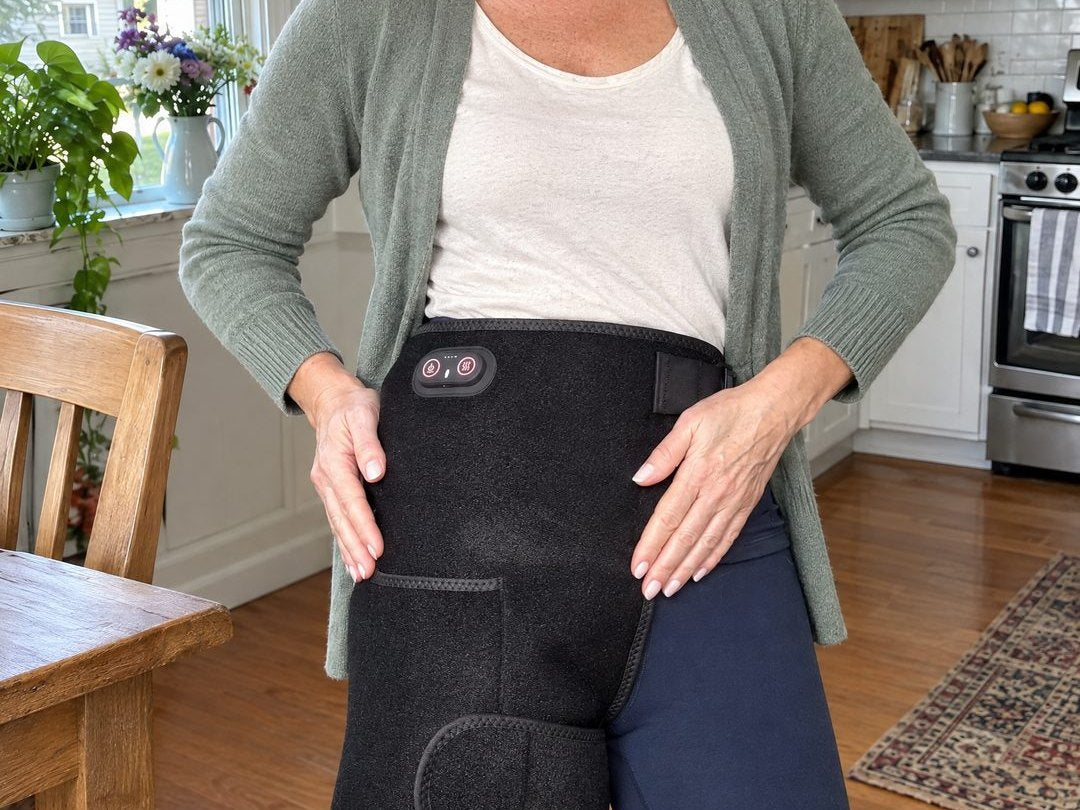
Once I understood what was really happening, the answer was almost embarrassingly simple.
You have to undo the static load before it stacks. Every shift. Not on your day off. Not "when it gets bad." The same evening.
That locked tissue needs four things, and it needs them together:
- Deep heat to open up the blood vessels in the muscle and loosen tissue that's been clenched for hours. In a head-to-head clinical trial on low back pain, a continuous heat wrap beat BOTH ibuprofen and acetaminophen for pain relief.[5]
- Vibration massage to give the muscle the "squeeze, relax" signal it never got all shift, so it finally lets go.
- Compression to hold that warmth and pressure right on the side of the hip, where the static load lives.
- Red light (660nm), the same wavelength used in physical therapy clinics. Published reviews of red and near-infrared light therapy (photobiomodulation) describe its anti-inflammatory effects in tissue.[6]
Any one of those alone? A temporary break. A heating pad cools off and the muscle clamps right back down.
All four at the same time, for 15 minutes, right after the shift? That's what finally broke the cycle for Denise.
I'd seen clinics do pieces of this with $40,000 worth of equipment. What I needed was something she could strap on in the car or on the couch, every single night.
And I found it.
Check Availability Now »WORD SPREAD THROUGH THE HOSPITAL IN TWO WEEKS

Three weeks after the night on the staircase, Denise picked up an extra shift. Her idea, not mine.
Then her charge nurse, Pat, 61, cornered her at the med cart. "What are you doing differently? You're not limping."
Pat ordered one that night.
Then a respiratory therapist on nights. Then a unit secretary. Then a 2nd grade teacher who lives on our street and stands for seven hours a day in front of 24 kids. Then Denise's hairdresser, who's been standing behind a chair for 33 years and had been planning to cut down to three days a week.
Every one of them stood for a living. Every one of them had been sold insoles.
Not one of them needed a desk job.
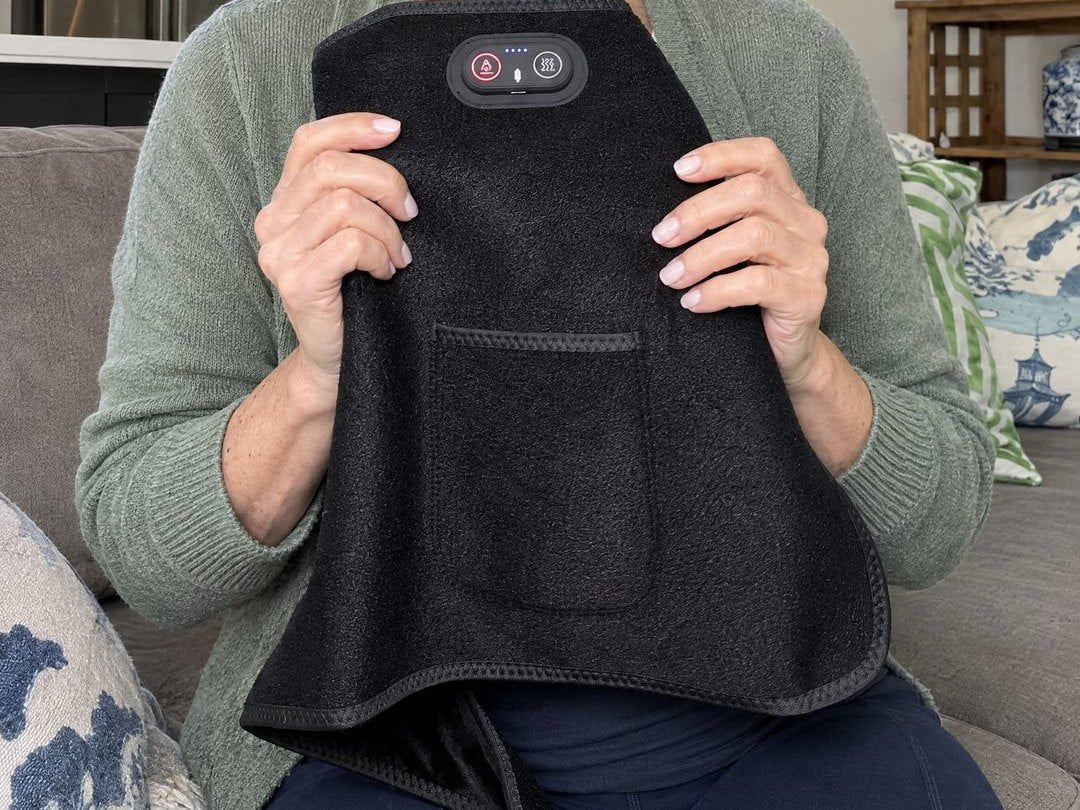
MEET THE DAYWICK 4-IN-1 HIP THERAPY BELT
It's not a heating pad.
It's not a cheap vibrating strap from a checkout aisle.
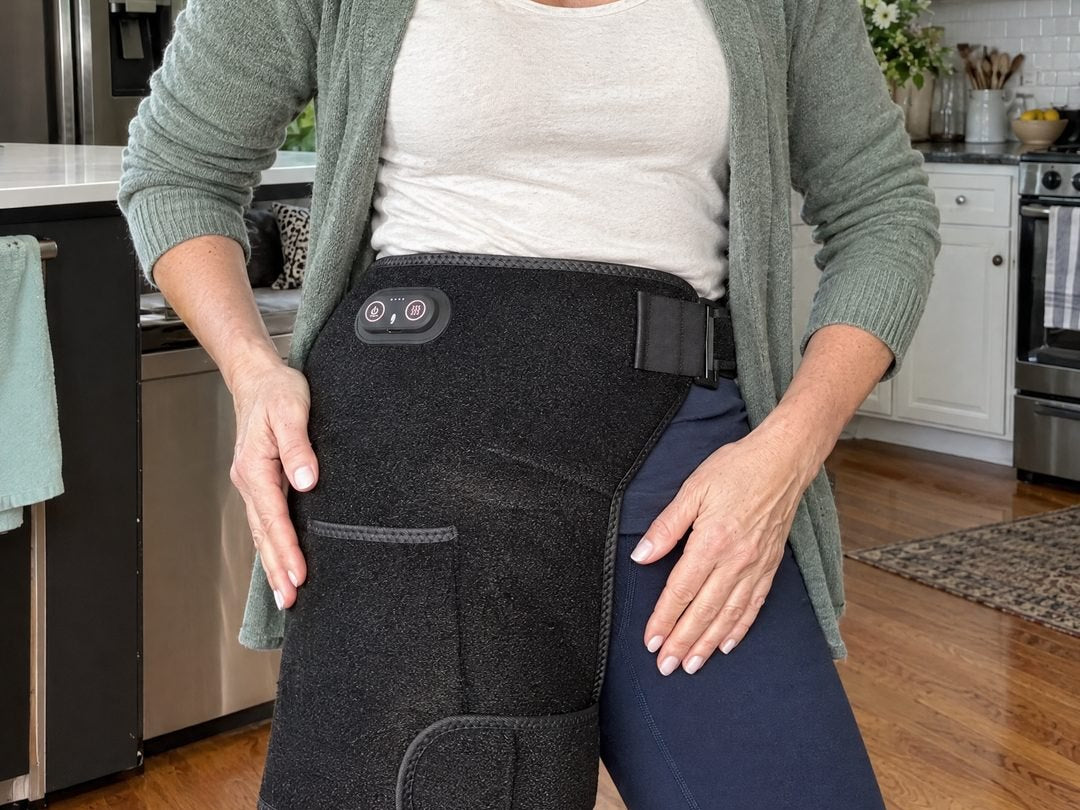
It's the only at-home device I've found that puts all four after-shift therapies on the side of the hip at the same time:
- DEEP HEAT that opens up the circulation in muscle that's been clamped down all day.
- VIBRATION MASSAGE that gives the locked muscle the rhythmic "squeeze, relax" signal walking would have.
- COMPRESSION that wraps around the hip and thigh to keep everything working right where the static load builds.
- 105 RED LEDs AT 660nm, the same red-light wavelength physical therapy clinics use, built right into the lining.
- WIRELESS, so you can wear it in the car, on the couch, while you make dinner.
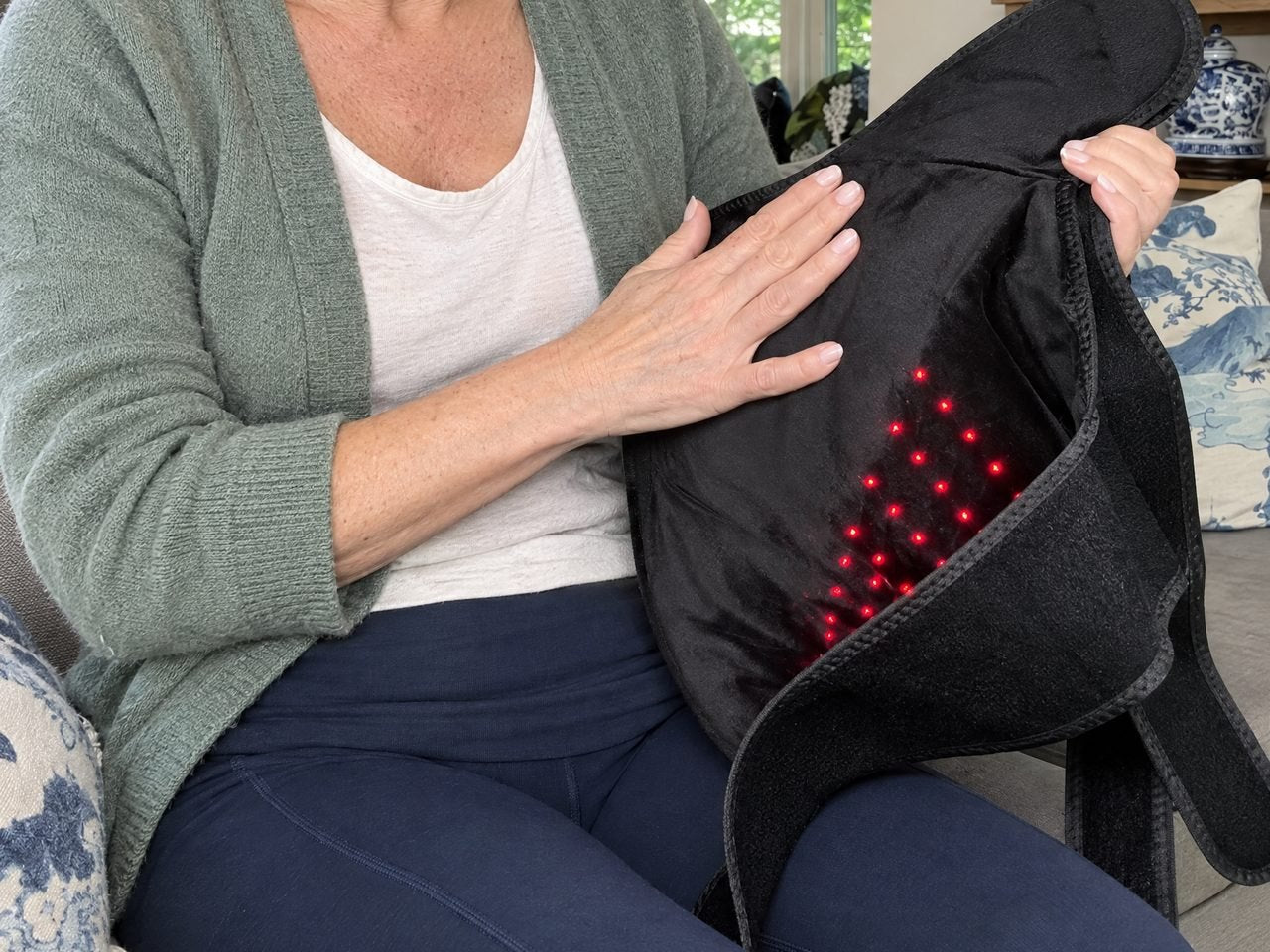
Here's what happens in a 15-minute session:
Heat and red light start working on the side of your hip. You feel the warmth spread into the muscle that's been clenched all day. That tight, "squeezed" feeling starts to soften.
The vibration gives the muscle the rhythmic signal it never got during the shift. Compression keeps everything right on target. Most women describe this as the moment the hip "lets go."
Blood is moving back through tissue that was running on empty for hours. You stand up, and the first step doesn't make you wince. The static load from today doesn't get to stack on top of tomorrow's.
And after 2 to 3 weeks of using it after every shift:
- That deep ache at the end of a shift? It doesn't build up the way it used to.
- The drive home? You're not gripping the wheel and shifting your weight off one side.
- The stairs at home? You just walk up them.
- The ibuprofen bottle in your locker? Gathering dust.
THE RESULTS THAT HAVE NURSES ORDERING THEM FOR THEIR WHOLE UNIT
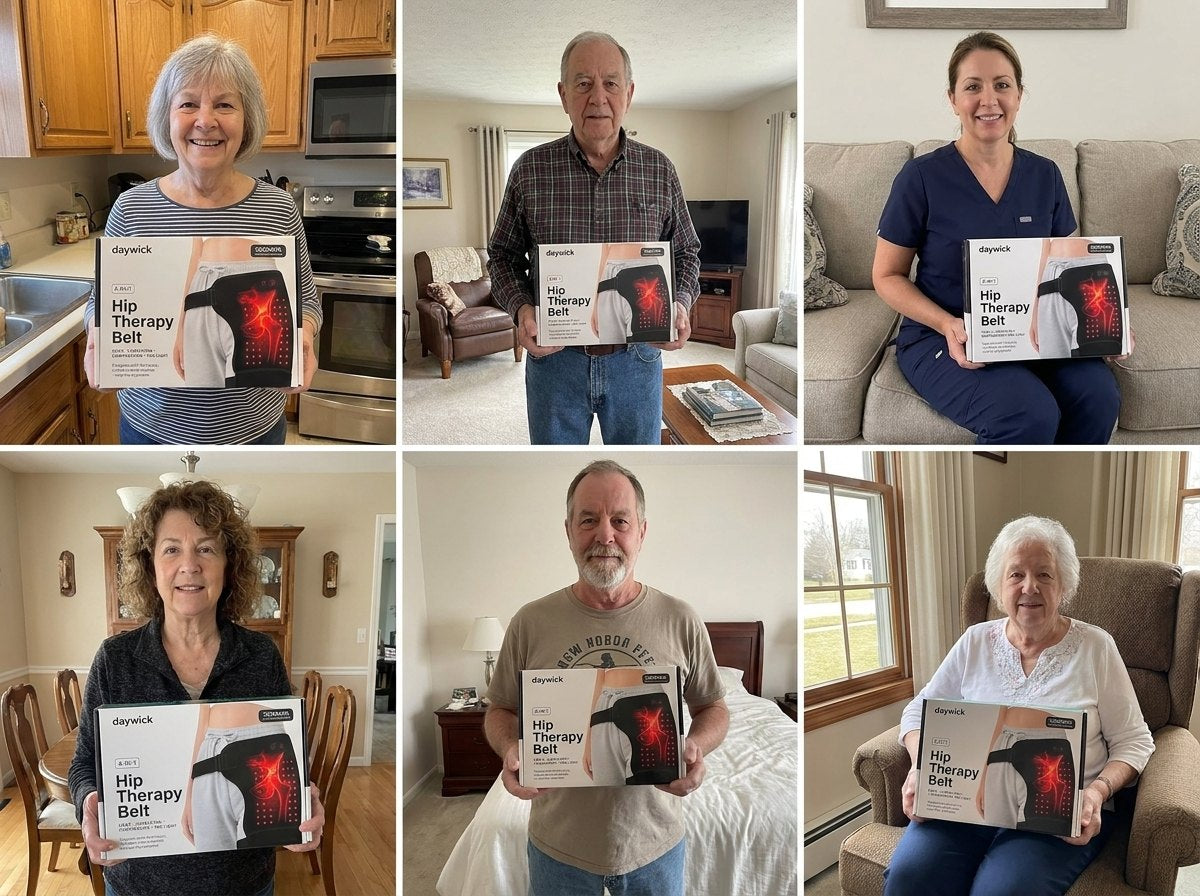
Here's what real, verified Daywick customers say:

"FINALLY PAIN-FREE. I can't believe I'm writing that. Nearly two years of pain and nothing had worked. The first time I used this belt I could actually feel the pain starting to dissipate during the session. By week three I was walking comfortably again."

"I've dealt with chronic hip pain for years and have tried everything you can name. This belt has everything in one device: heat therapy, vibration massage, compression AND red light therapy. Nothing else I tried did all of that at the same time."

"I bought this for my mom who had basically stopped leaving the house because her hip pain was so debilitating. She was in tears some mornings just trying to get up. After two weeks of using the belt daily she walked to the end of the street and back, something she hadn't been able to do in months. I cried watching her."

"I spend most of my day sitting. Over the years my hips have just gotten worse and worse: tight, stiff, and sometimes downright painful. After just a couple of sessions I noticed a real reduction in that deep hip ache I had gotten used to living with."
WHAT "MANAGING" HIP PAIN REALLY COSTS WOMEN ON THEIR FEET
Let me show you what Denise and the women on her unit were actually spending:
The pain industry LOVES those options.
Know why?
Repeat customers.
You're not a patient. You're a subscription. Every pair of insoles wears out. Every shot wears off. Every visit needs another visit.
But here's what they really don't want you to know...
A clinic-grade setup with heat, vibration, compression and 660nm red light runs into the thousands. A single 8-week course of PT copays can cost more than this belt.
The Daywick 4-in-1 Hip Therapy Belt lists at $299.
That's already less than one cortisone shot plus the follow-up visit.
But that's not what you'll pay today.
THE 54% "WORKING WOMEN" READER DISCOUNT
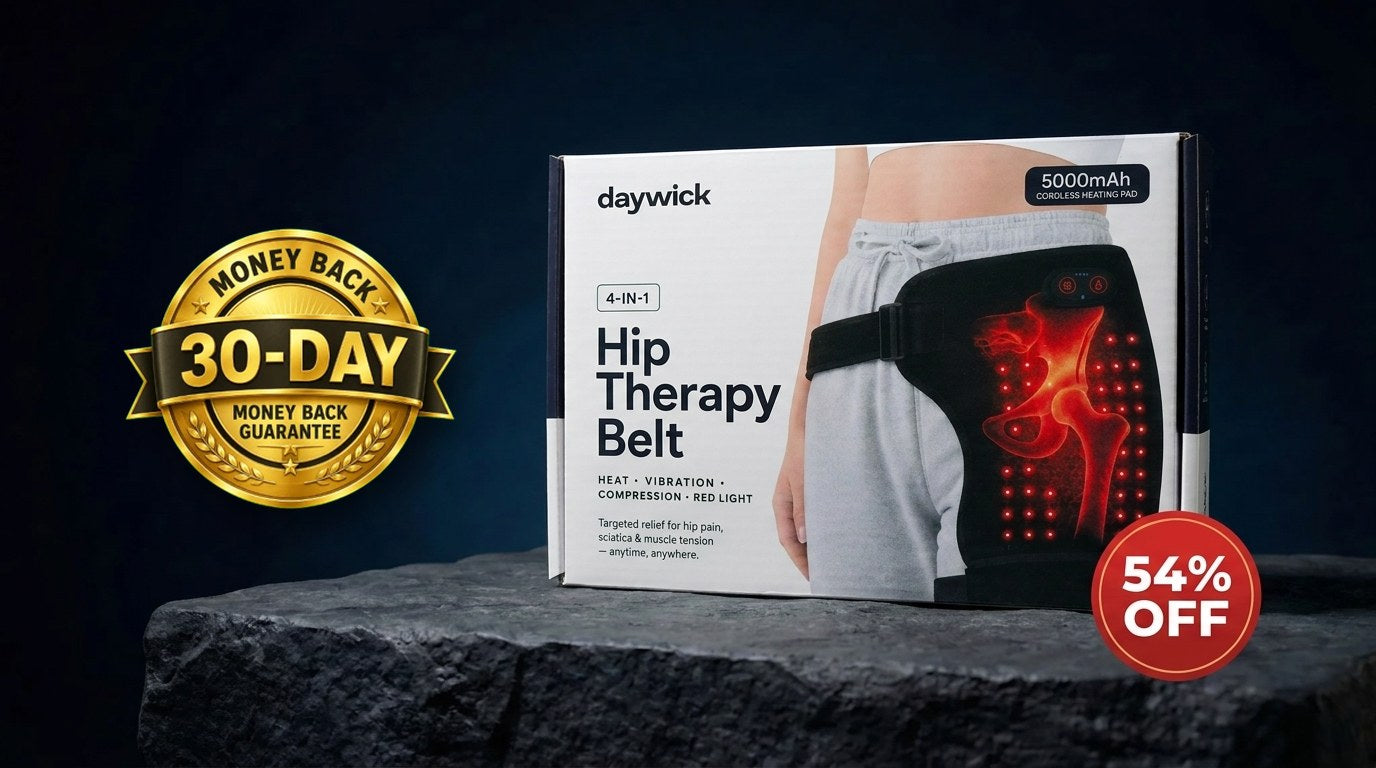
When I told Daywick how many nurses on Denise's unit were buying their belt, and that I was writing this article, they agreed to give my readers their biggest discount.
$299 → just $139.
That's:
- Less than one cortisone shot.
- Less than ONE pair of custom orthotics.
- Less than two pairs of "nurse clogs."
- About what you'd spend on ibuprofen, antacids and copays in a few months.
Plus free shipping and a free hip stretching eBook with every order.
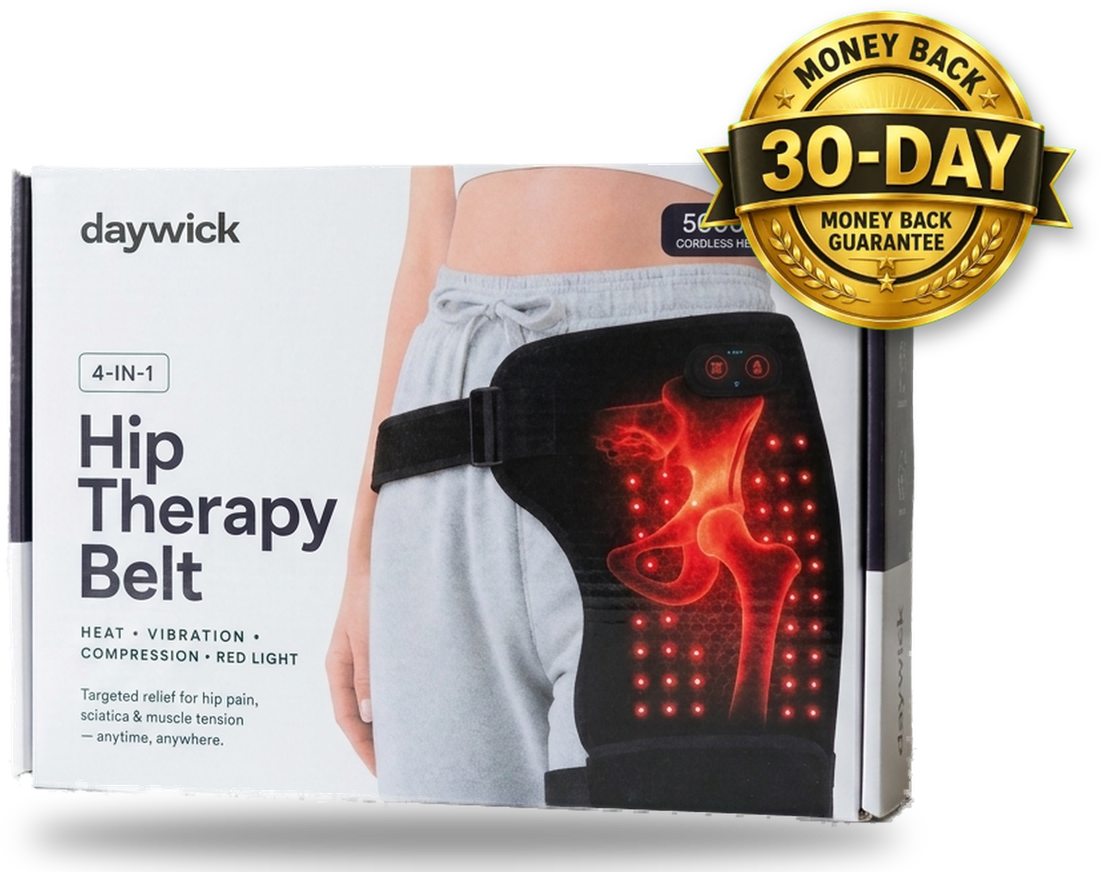
- Heat + vibration + compression + 660nm red light
- Free shipping
- Free hip stretching eBook
- 30-day guarantee
Why would they cut the price that far?
Because every nurse, teacher and hairdresser who gets her hip back tells ten more women who stand for a living. That's worth more to them than full price.
⚠️ BUT HERE'S THE BRUTAL REALITY
This 54% discount dies at midnight tonight. Not "sometime soon." Tonight. When the clock hits zero, the price goes back to $299.
And every single shift you wait is another twelve hours of static load stacking on top of the last one. That ache doesn't stay the same. It digs in deeper.
If you can see the button below, the discount is still live.
Check Availability Now »THE 30-DAY GUARANTEE
Look, I get it.
You've been burned before. You've got a closet full of insoles and a drawer full of half-used creams to prove it.
So here's the deal: try the belt for 30 days.
Use it after every shift. Fifteen minutes. In the car, on the couch, wherever.
Pay attention to how your hip feels at the END of your next shift. Pay attention to the stairs. Pay attention to how many ibuprofen you reach for.
Daywick backs every order with a 30-day guarantee, plus a real support team you can email any time.
You're not risking your next shift. You're risking 15 minutes.
THE DECISION THAT WILL DEFINE THE REST OF YOUR CAREER
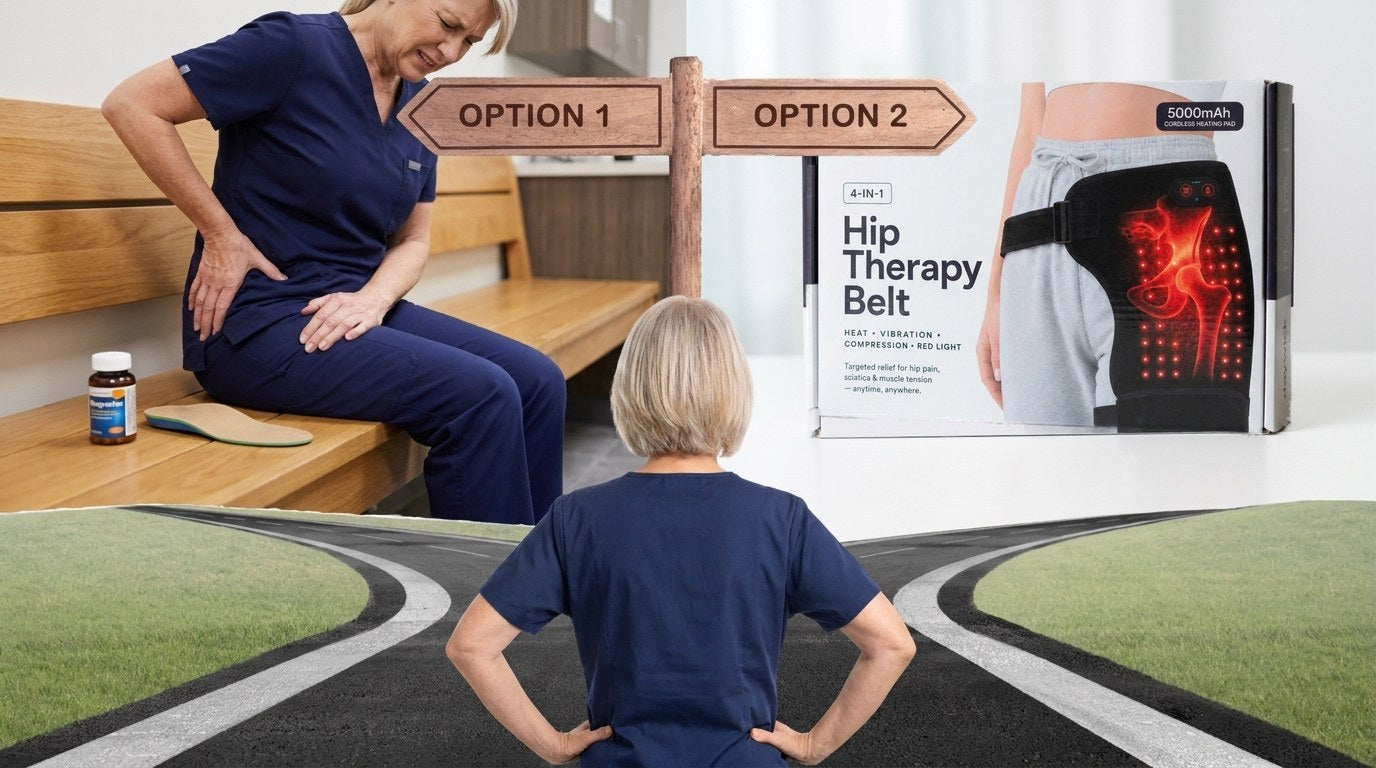
Right now, you're standing at a fork in the road.
Path #1: Keep doing what you're doing.
Keep buying insoles for a problem that isn't in your feet. Keep taking ibuprofen in the break room. Keep sitting in the car after every shift, waiting for your hip to let you drive. Keep wondering if you'll make it to retirement on your feet, or if you'll be the one filling out the part-time paperwork.
Path #2: Undo the static load. Every shift. 15 minutes.
Spend less than one cortisone shot. Give the muscle on the side of your hip the thing it's been starving for since the day you started standing for a living.
And walk up your own stairs tonight.
I think you know which path leads to your pension.
HERE'S EXACTLY WHAT HAPPENS NEXT
Step 1: Tap the button below that says "CHECK AVAILABILITY NOW."
Step 2: On the next page, confirm your discounted price ($139, down from $299) with free shipping and the free stretching eBook.
Step 3: Enter your shipping info. Orders ship from the US.
Step 4: When it arrives, charge it once and put it in your work bag.
Step 5: Use it TONIGHT after your shift. Fifteen minutes. Don't wait for your day off.
But whatever you do, don't close this page thinking "maybe after this week."
There's always another shift.
"After this week" is another twelve hours on that floor.
"After this week" is another night sitting in the parking lot before you can drive home.
"After this week" is this discount being gone.
Or close this page, go back to the insoles and the ibuprofen, and keep paying the people who profit from your pain.
Your hip has carried you through every shift for years.
Tonight, give it 15 minutes back.
Check Availability Now: 54% Off »To your next pain-free shift,
Ray Holloway, PT (ret.) 31 years of outpatient orthopedic physical therapy. Husband of one very stubborn nurse.
P.S. Denise worked a double last Saturday. When she got home she put the belt on in the car, came inside, and walked straight up all fourteen stairs. She didn't even notice she'd done it until I pointed it out. That could be you in a few weeks. But only if you start.
P.P.S. If you're reading this on your break, bookmark it. Better yet, tap the button now. The 54% discount won't be there forever, and you'll be on your feet again in twenty minutes either way.
P.P.P.S. If you're a podiatrist or an insole company reading this and you're angry: your products help feet. I never said they didn't. I said the hip was never a foot problem.
Yes! Check Availability at 54% Off »
Works great! Heat where I need it.
Nearly two years of pain and nothing had worked. The first time I used this belt I could actually feel the pain starting to dissipate during the session. By week three I was walking comfortably again.

Nice to be able to mobilize while using it!
I bought this for my mom who had basically stopped leaving the house because her hip pain was so debilitating. After two weeks of using the belt daily she walked to the end of the street and back. I cried watching her.

Love it!!!
This belt has everything in one device: heat therapy, vibration massage, compression AND red light therapy. Nothing else I tried did all of that at the same time.

Working as advertised.
After just a couple of sessions I noticed a real reduction in that deep hip ache I had gotten used to living with.
- Waters TR, Dick RB. Evidence of health risks associated with prolonged standing at work and intervention effectiveness. Rehabilitation Nursing. 2015;40(3):148-165.
- Sjøgaard G, Kiens B, Jørgensen K, Saltin B. Intramuscular pressure, EMG and blood flow during low-level prolonged static contraction in man. Acta Physiologica Scandinavica. 1986;128(3):475-484.
- U.S. Food and Drug Administration. Boxed warning for prescription non-steroidal anti-inflammatory drugs (NSAIDs): cardiovascular and gastrointestinal risk (2005; strengthened 2015).
- Kompel AJ, Roemer FW, Murakami AM, et al. Intra-articular corticosteroid injections in the hip and knee: perhaps not as safe as we thought? Radiology. 2019;293(3):656-663.
- Nadler SF, Steiner DJ, Erasala GN, et al. Continuous low-level heat wrap therapy provides more efficacy than ibuprofen and acetaminophen for acute low back pain. Spine. 2002;27(10):1012-1017.
- Hamblin MR. Mechanisms and applications of the anti-inflammatory effects of photobiomodulation. AIMS Biophysics. 2017;4(3):337-361.