The Back Pain Report
The Back Pain Report
- Home > Health > Back Pain
Top Physical Therapist: "Your Sciatica Isn’t A Disc Problem - It’s A Compression Problem. Here’s The 10-Second Fix Hiding In Plain Sight"
- Thu . Jun . 20 th , 2026 | 11:11 am EST - 251.328 👁
Written by Elaine Porter, Physical Therapist |
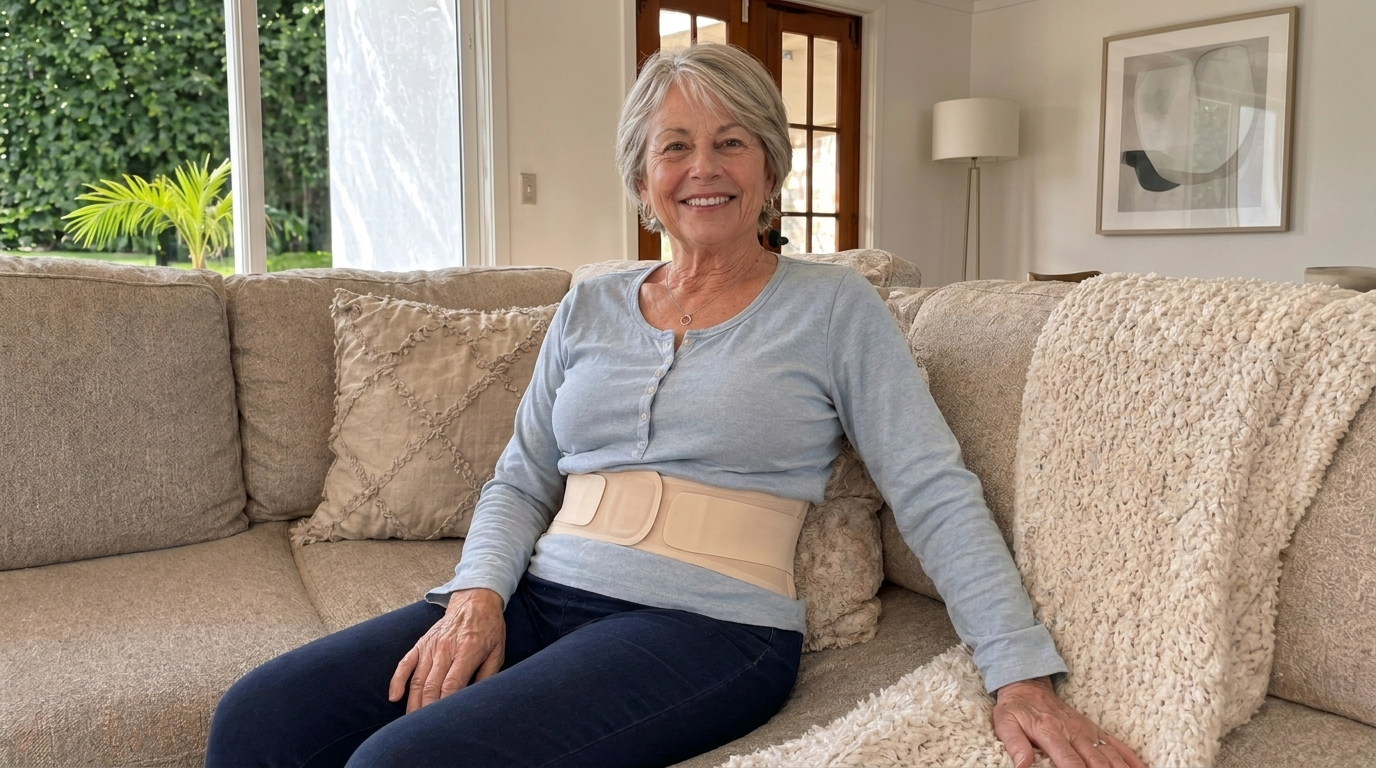
Dear Friend With Lower Back Or Sciatic Pain,
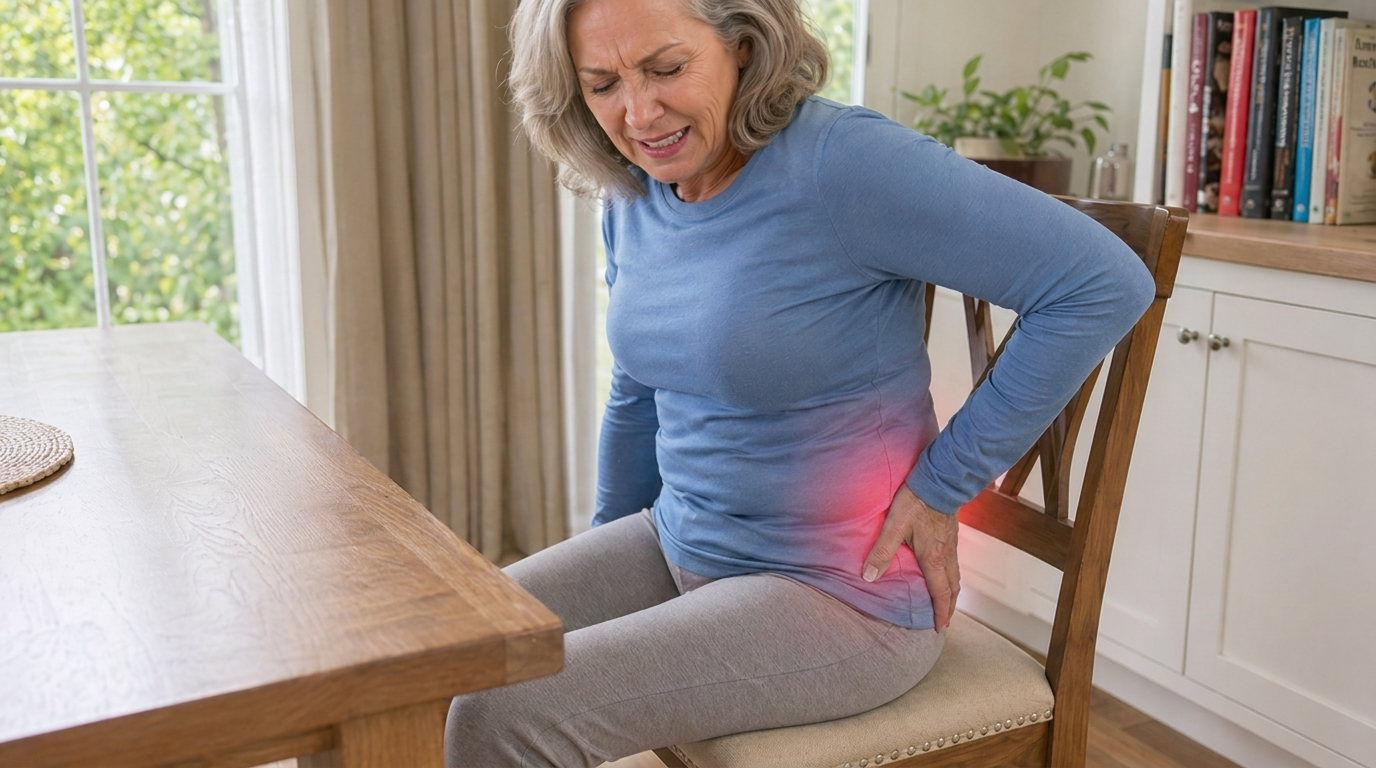
If your lower back aches the second you sit down, and that burning pain starts shooting down through your butt and into your leg...
If getting out of a chair or out of bed sends that electric jolt from your lower back straight down to your foot...
If you keep planning your entire day around how many stairs, how long the drive, and how long you’ll have to sit...
Then what I am about to share could save you from surgery, endless physical therapy, and a lifetime of planning around pain.
But I need to warn you:
What you're about to read will make you angry.
Because the $50 billion back-pain industry doesn’t want you to know that sciatica is often a compression problem, and compression can often be reduced at home without pills, injections, or surgery.
Not because the solution is complicated.
But because it is so simple that it threatens everything they profit from.
And when a massive back-surgery industry sees a simple at-home decompression method that could make many procedures unnecessary...
They don’t celebrate. They attack.
So people keep bouncing from pills to injections to physical therapy to surgery consultations, while the real cause of their pain never gets addressed.
My name is Elaine Porter.
I'm a physical therapist with 23 years of clinical experience.
I’ve treated over 3,000 lower-back and sciatica cases.
I’ve seen every type of lower-back pain, every stage of degeneration, and every failed treatment you can imagine.
And until 18 months ago, I believed everything I had been taught about age-related spinal degeneration and sciatica.
THE NIGHT EVERYTHING CHANGED...
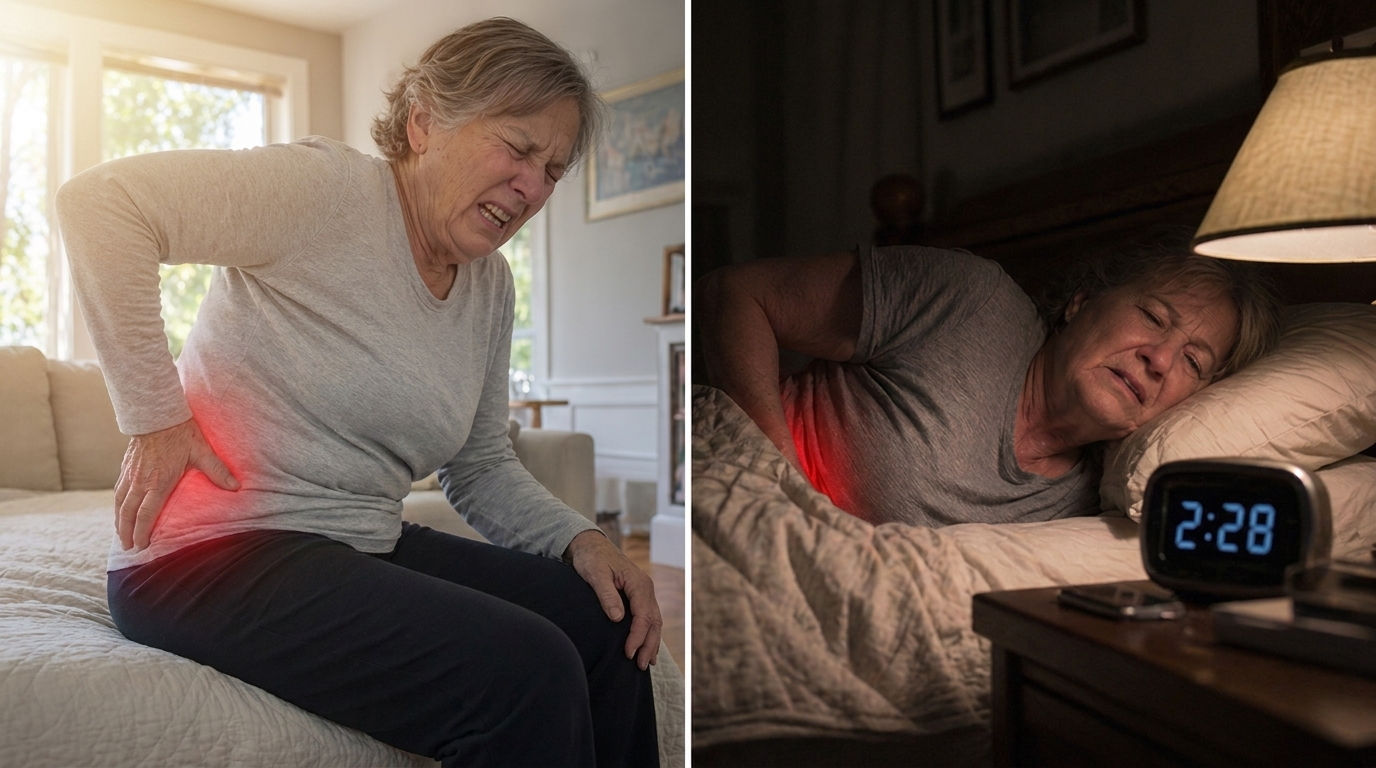
Then at 3:17 AM on a Tuesday morning, everything changed.
I woke up to a noise from the hallway.
My husband Mark was frozen halfway between the bedroom and bathroom, one hand on the wall, crying through his teeth.
The pain shooting from his lower back down through his butt and into his calf was so sharp he couldn’t move.
He had tried to make it there quietly so he would not wake me.
His lower back, the one everyone kept calling "wear and tear," had locked up so hard he could barely take another step.
The bulging disc that had been pressing on his sciatic nerve for months had finally pushed him past his breaking point.
“I cannot live like this,” he whispered. “I am scared this is just my life now.”
Mark is a critical care nurse. Was a critical care nurse. For 19 years, he worked in the ICU - lifting, turning, and repositioning patients who could not move themselves.
His back pain was gradual, then sudden. A little stiffness became a limp. The limp became cancelled dinners. Then the hallway became a threat.
But Here's What Destroyed Me:
When I tried to help him up, he screamed.
I touched the outside of his lower back.
That's all it took.
We had not gone on a normal walk in 4 months.
Every plan came with the same calculation: how far is the parking lot, how many stairs, how long will he have to sit?
Every small piece of life became a negotiation with pain.
The man who once worked full ICU shifts was scared of walking to the bathroom.
And I just stood there.
Useless.
A physical therapist who could not even help her own husband.
I had tried everything my training taught me. Physical therapy. Cortisone injections. Ice. TENS units. Stretching. Anti-inflammatories. Gabapentin.
Nothing worked for more than a few hours.
The "experts" weren't any better:
- His physical therapist? Gave him the same stretch-and-strengthen routine twice a week. The relief lasted about as long as the car ride home.
- Pain management specialist? Offered short-term fixes that left him foggy and frustrated.
- The next option? More invasive routes were being discussed, and the thought scared us both.
That night, something inside me snapped.
I was not going to watch the person I love become another “failed conservative care” file.
I was not going to let fear make the decision for him.
I went to war with everything I thought I knew about back pain.
THE MIND BLOWING DISCOVERY
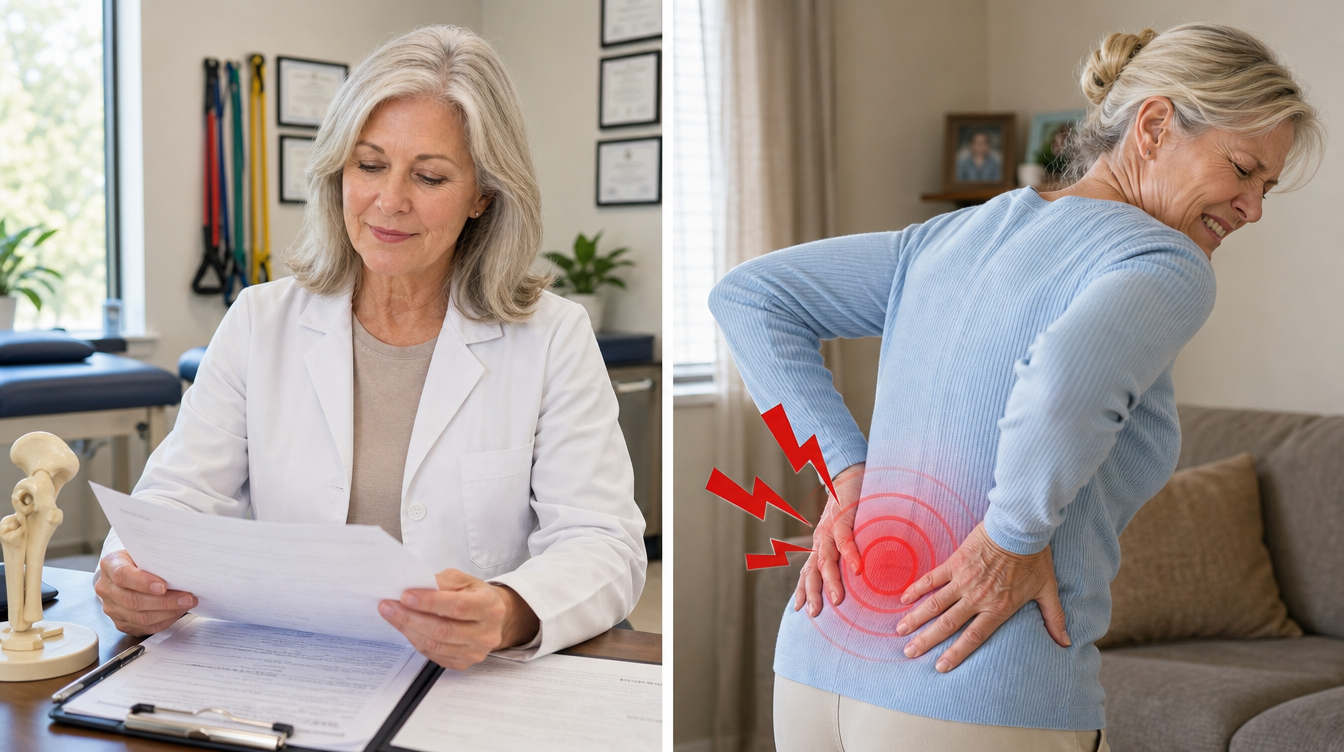
For the next 3 months, I lived like a person possessed.
I devoured every study.
Called spine surgeons, neurologists, and biomechanics researchers who had spent decades studying spinal decompression, disc herniation, and nerve compression.
I spent months buried in medical journals from Japan, Sweden, and Germany, where decompression therapy has been used for decades.
Called spine surgeons, neurologists, and biomechanics researchers who had spent decades studying spinal decompression, disc herniation, and nerve compression.
I spent months buried in medical journals from Japan, Sweden, and Germany, where decompression therapy has been used for decades.
And what I found made me want to punch a hole through my computer screen.
87% of chronic lower-back pain and sciatica comes down to one thing almost nobody explains clearly: spinal compression.
Your spine is made of vertebrae stacked on top of each other, with soft discs between them acting as shock absorbers.
Here is what almost nobody explains clearly:
When you sit for hours, drive for hours, or stand with bad posture for years, the weight of your upper body slowly pushes those vertebrae closer together.
The space between them shrinks. The discs get squeezed. And eventually, they bulge outward, pressing directly on the sciatic nerve that runs from your lower back, through your buttocks, and down your leg.
That is why you feel the pain in your lower back one moment and shooting down your leg the next.
Pills mask the pain signal but the disc is still pressing on the nerve.
Injections reduce the inflammation but the disc is still bulging.
Let me explain...
THE COMPRESSION TRAP BEHIND SCIATICA
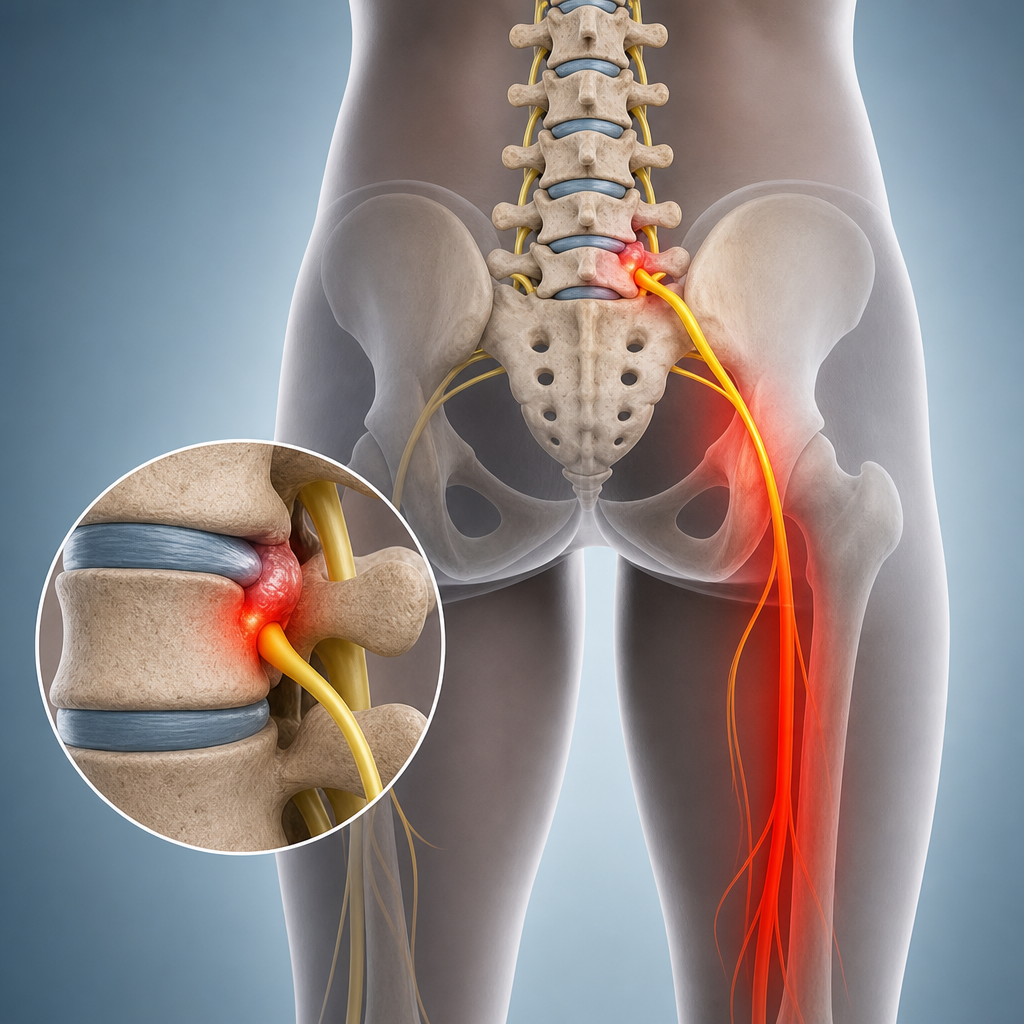
Think of your spine like a stack of coins with a rubber disc between each one.
When the coins are pressed tightly together, the rubber squeezes out the sides.
That is exactly what happens to your spinal discs under compression.
Years of sitting, driving, and poor posture push your vertebrae closer together day after day.
The discs have no room. They bulge outward.
And the sciatic nerve, which is about as thick as your thumb, gets pinched between them.
Every time you sit, bend, or stand up, that bulging disc presses harder on the nerve.
- At first, That is the electric jolt that shoots from your lower back through your butt and down your leg.
- Over time, It is not a muscle problem. It is not an inflammation problem. It is a compression problem.
That is why the same back pain keeps coming back in the morning, in the car, on stairs, and the second you finally sit down.
The leg may be where you feel it. But the lower back is often where the signal keeps getting re-triggered.
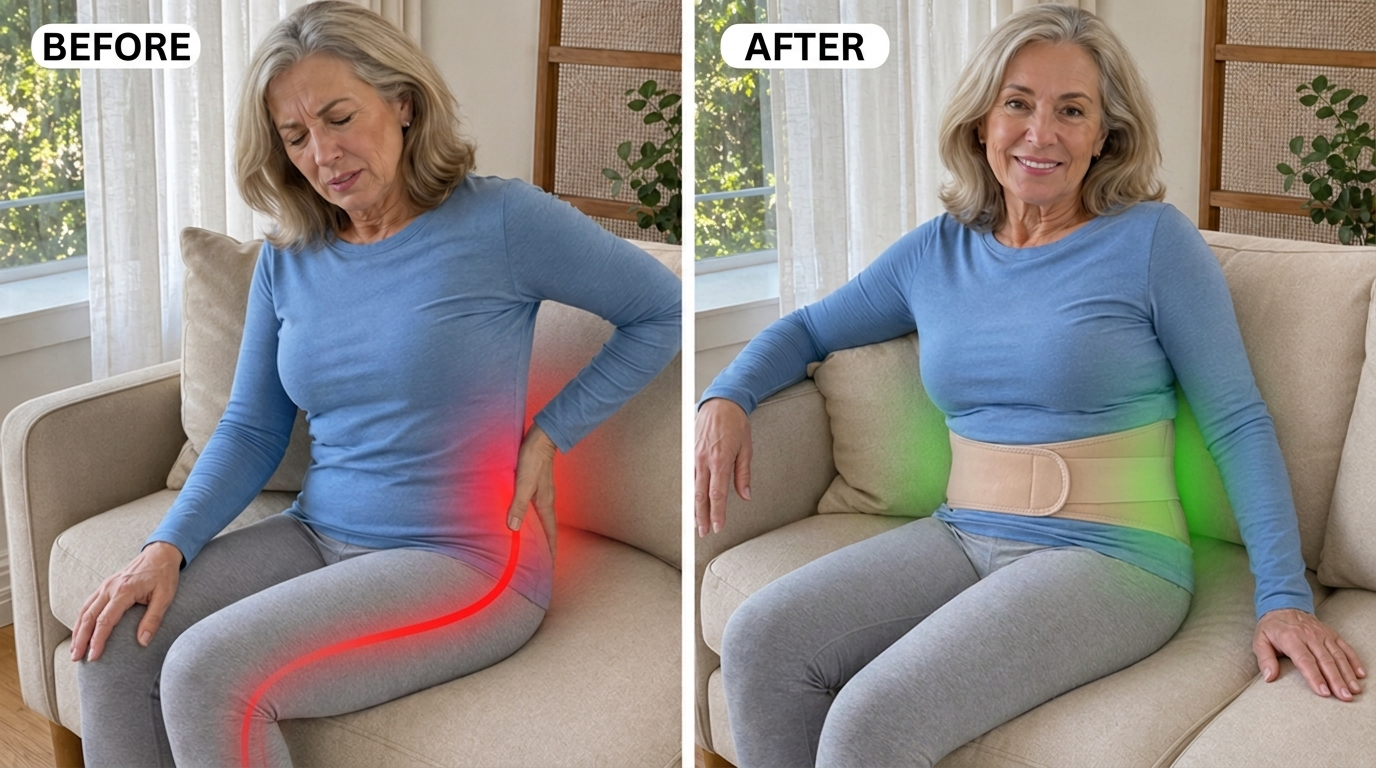
Like the image, the problem is not just the pain signal. It is the pressure point that keeps re-triggering the signal.
This is the part the entire back-pain industry misses.
Every failed back-pain treatment has one thing in common:None of them decompress the spine.
But here's the kicker...
The simple part is easy to overlook.
Why?
Because the actual method is simple, practical, and built around the hours you actually live through.
You cannot turn a simple wearable decompression habit into a complicated clinic ritual.
You cannot bill insurance for teaching someone to stop compressing the same irritated lower-back area the same way every day.
Think about it:
Think of it like a door that won’t close because the frame is warped.
You can oil the hinge. You can sand the edge. You can push harder.
But until you fix the frame, the door will never close properly.
So the same frustrating loop keeps repeating.
Your spine works the same way. Until you fix the compression, the pain will keep coming back.
THE DECOMPRESSION FIX HIDING IN PLAIN SIGHT
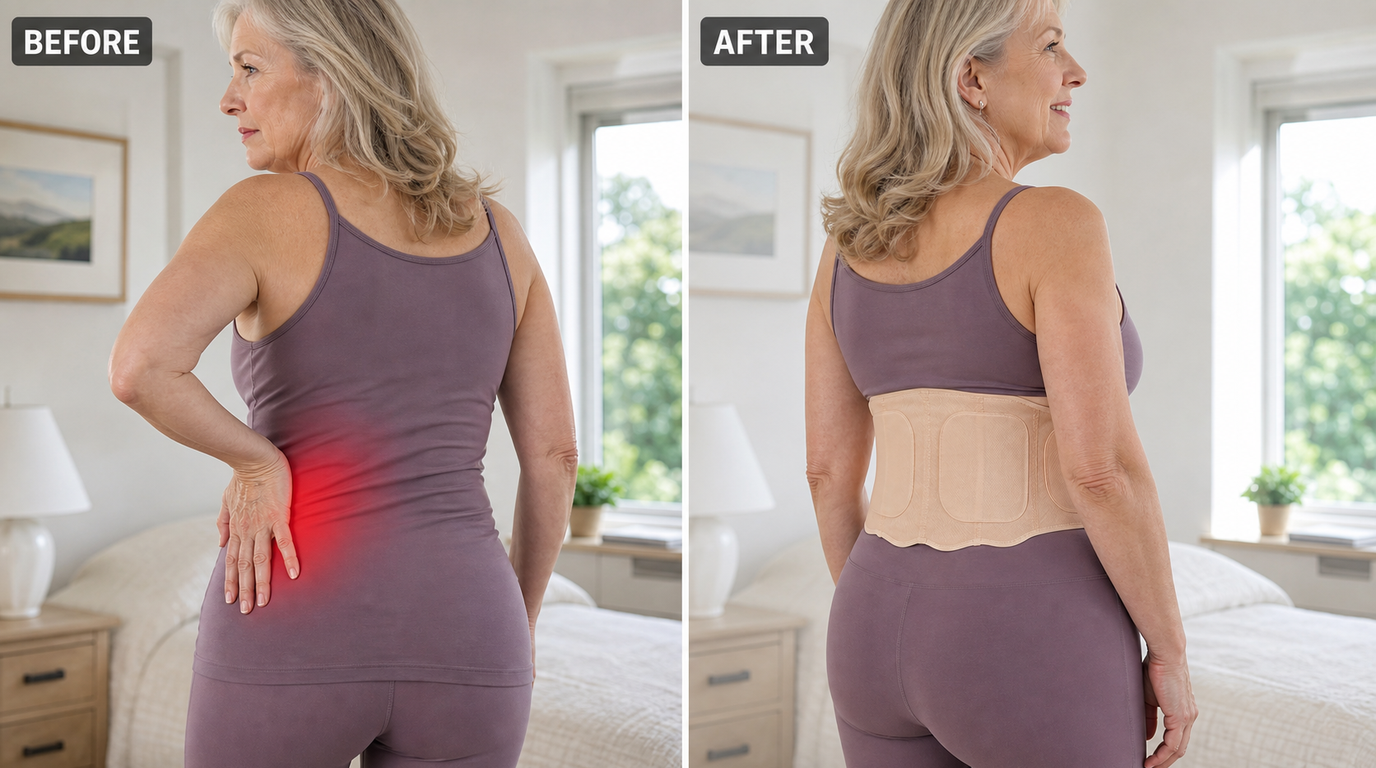
Remember my husband on that bathroom floor?
Three weeks after my discovery, Mark was back on his feet.
Not sprinting. Not pretending. Just walking through a normal afternoon without that burning pain shooting down his leg.
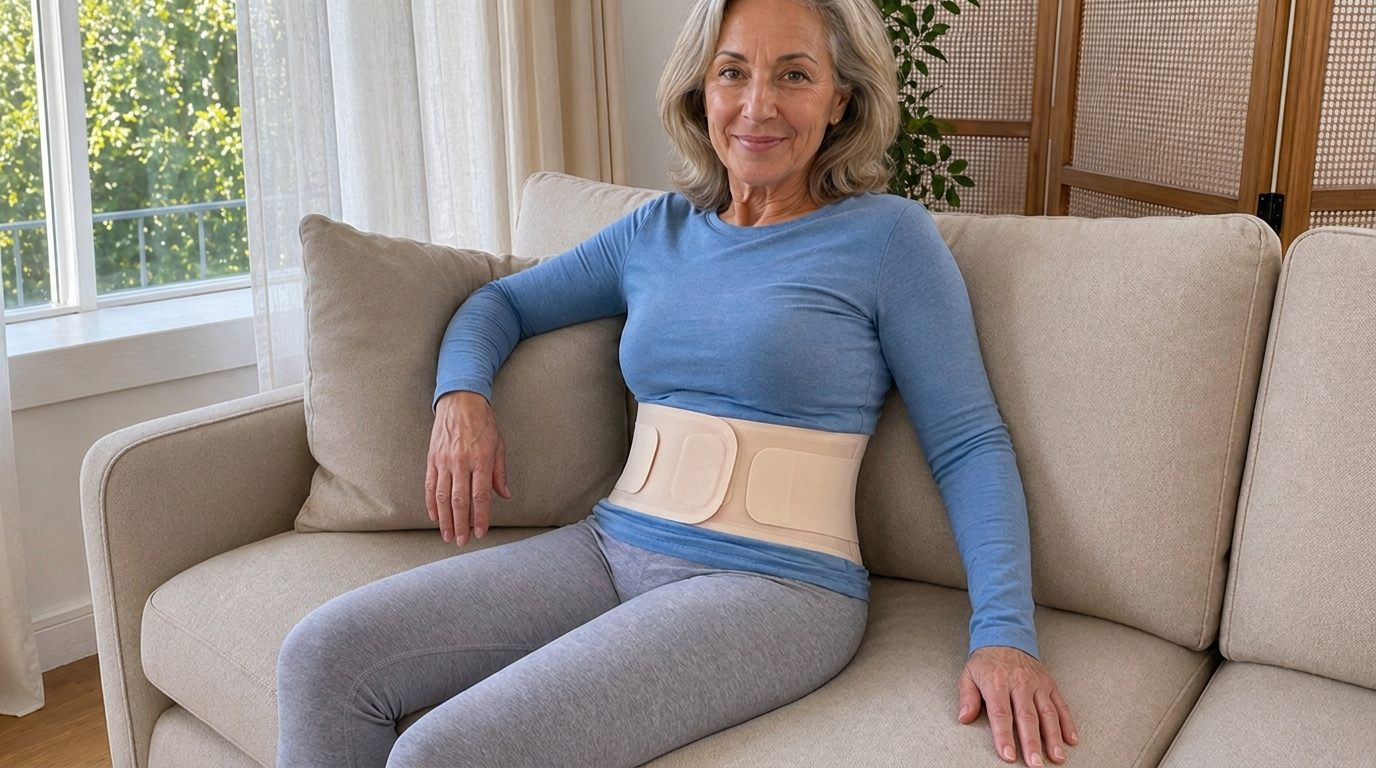
Just daily wear of a belt so stupidly simple, I'm embarrassed it took me 23 years in practice to figure it out.
To decompress the spine effectively, the belt needs to do three practical things at the same time:
1. DECOMPRESS - Uses targeted compression around the waist to create a pressure column that lifts the vertebrae apart
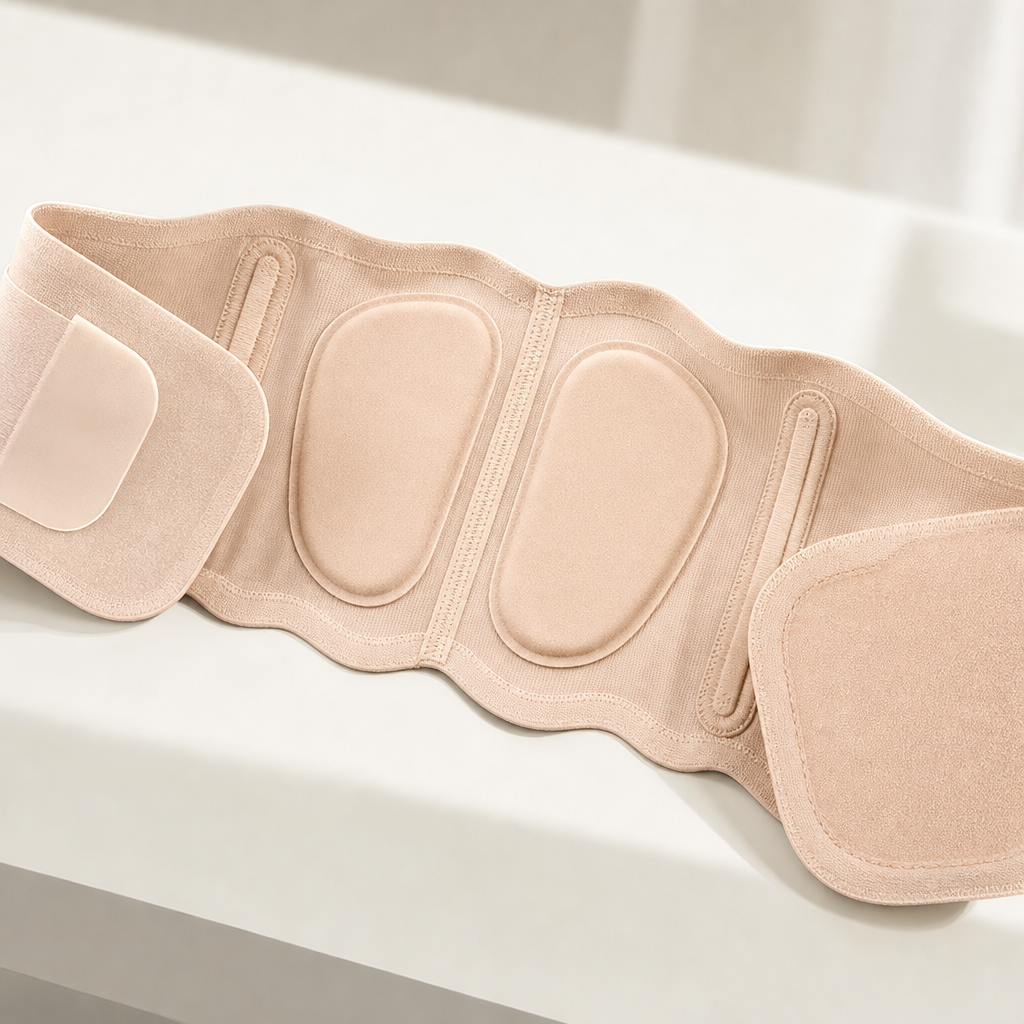
2. SUPPORT RODS - Uses flexible support rods to maintain the decompression column while you sit, stand, and move
3. STAY INVISIBLE - Uses a breathable nylon/spandex blend like seamless underwear, plus lightweight support strips, so it disappears under clothes while still holding firm compression
Miss the invisible wear part, and you are wasting your time.
That is why pain pills do not work. They mask the signal while the disc keeps pressing on the nerve.
That is why cortisone injections only last a few weeks. They reduce the inflammation but they do not decompress the spine.
That is why physical therapy alone fails. Strengthening the muscles around the spine does not create space between the vertebrae.
And that is why surgery is not the first answer either. Surgery can cut away part of the bulging disc, but it does not change the daily compression that helped push the disc outward in the first place.
So if you go right back to sitting, driving, bending, and standing with the same pressure on your lower spine, the same compression pattern can keep coming back.
You need three things working together: targeted compression to create the pressure column, support rods to help hold the lift, and a thin breathable design you can actually keep on all day.
A daily decompression layer.
And that is exactly what BareSupport was built to do.
WHY DECOMPRESSION ONLY WORKS IF YOU CAN KEEP IT ON
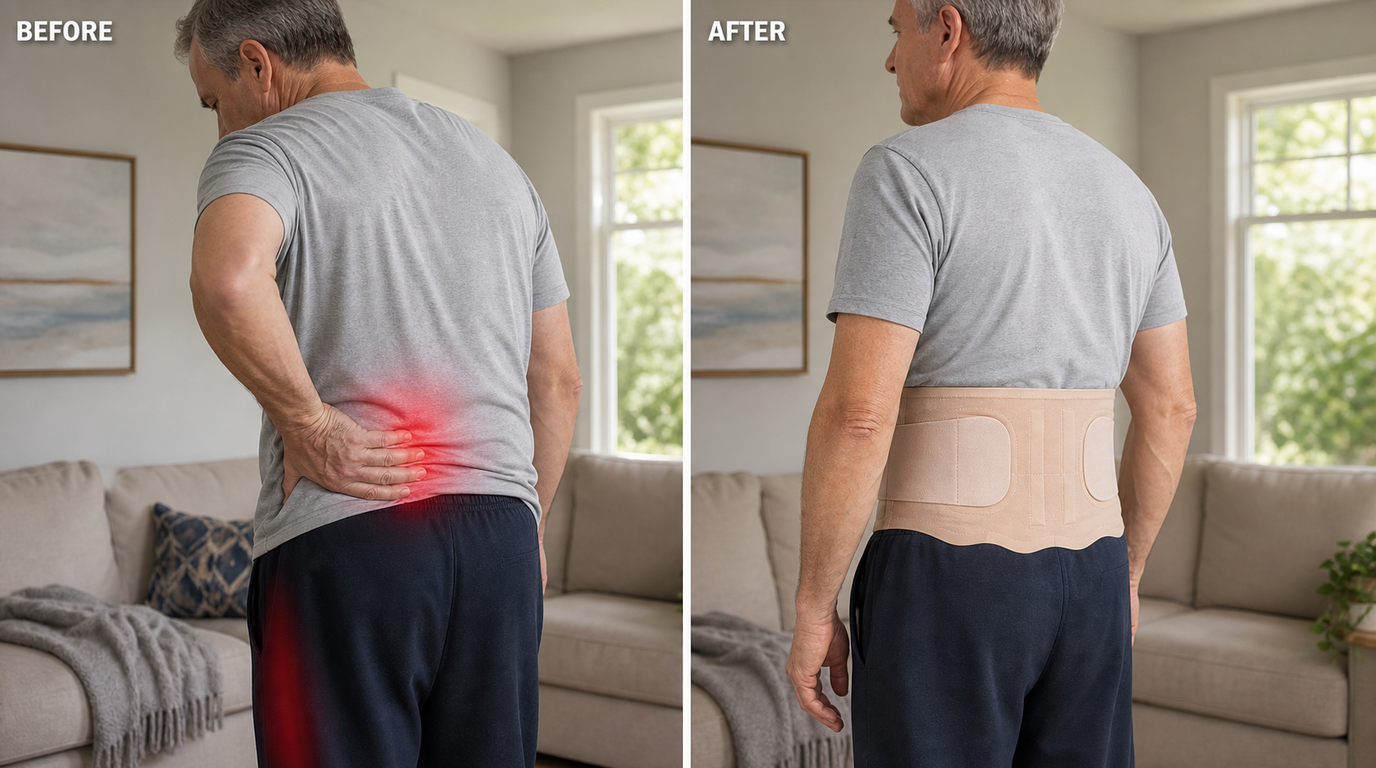
The early feedback kept pointing to the same pattern.
Decompression therapy works. Studies have proven it.
But in clinics, it requires expensive machines, 30-minute sessions, and repeated visits that cost thousands of dollars.
That showed up in the same daily moments again and again: grocery aisles, car rides, stairs, standing at the sink, and getting through work without constantly planning around the next flare-up.
Every hour you spend sitting at a desk, driving, or standing with poor posture pushes your vertebrae closer together.
But if you can maintain decompression during those same hours, the disc finally has room to retract.
One early tester put it simply: it felt like his spine finally had room to breathe for the first time in years.
The wording changed from person to person, but the pattern did not. Decompression works, but only if you can keep the belt on.
Teachers, nurses, drivers, tradesmen, parents, and grandparents kept describing the same problem: their lower back controlled ordinary life more than it should.
Again and again, the useful part was not drama. It was sustained decompression during real life.
Not “learn to live with it.” Not another temporary coping tool.
A practical daily decompression layer that creates the space your disc needs to heal.
That is when the bigger pattern became obvious.
WHY MOST TREATMENTS FAIL

The more people tried it, the clearer the problem became.
Every option available treats everything except the compression itself:
support only matters if people can actually keep wearing it. Serious symptoms still need real medical care, but everyday support should not be so bulky that it gets removed after a few minutes.
That is why clinic decompression fails: it does not last through real life.
People need decompression that works during real life.
That is the gap BareSupport was built for: sustained spinal decompression you can actually keep on through every hour of the day.
A belt that:
- Decompresses the spine during the sitting, driving, and standing that normally compress the vertebrae
- Creates enough space between the vertebrae for the bulging disc to retract off the sciatic nerve
- Stays thin and invisible under clothes so the decompression keeps working during the hours that matter
That became the design target.
I kept refining the prototype around simple daily wear.
And the final version became lighter, flatter, and easier to keep on.
INTRODUCING THE LOW-PROFILE BELT MADE FOR DAILY LOWER BACK & SCIATIC-TYPE SUPPORT
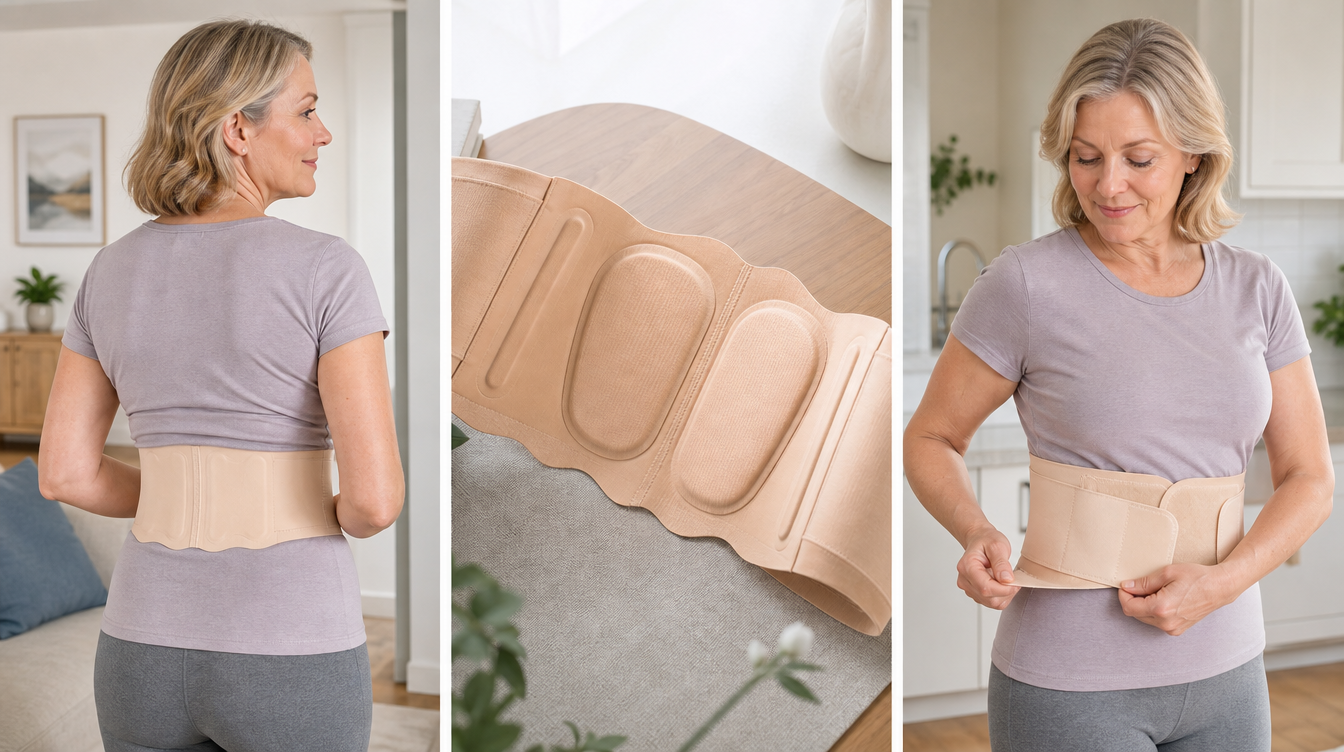
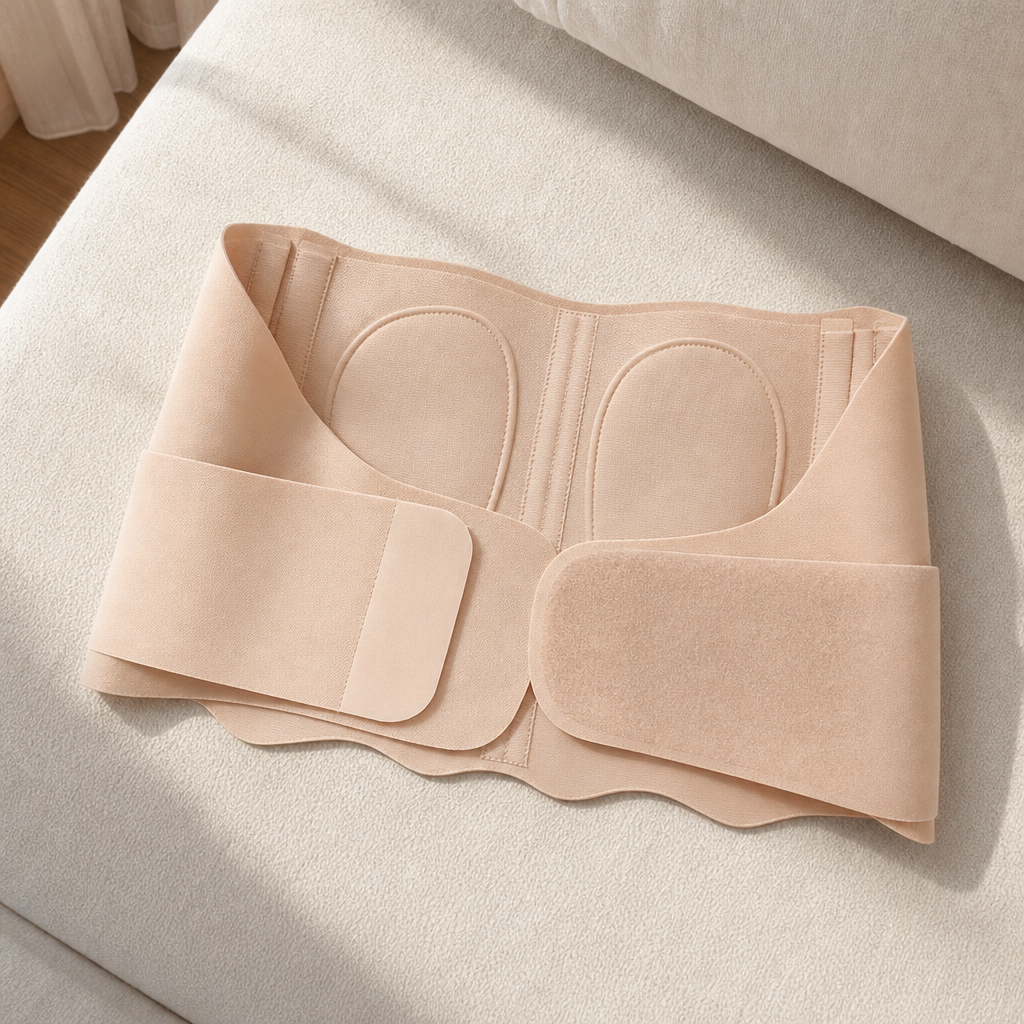
It's called the BareSupport Back Belt.
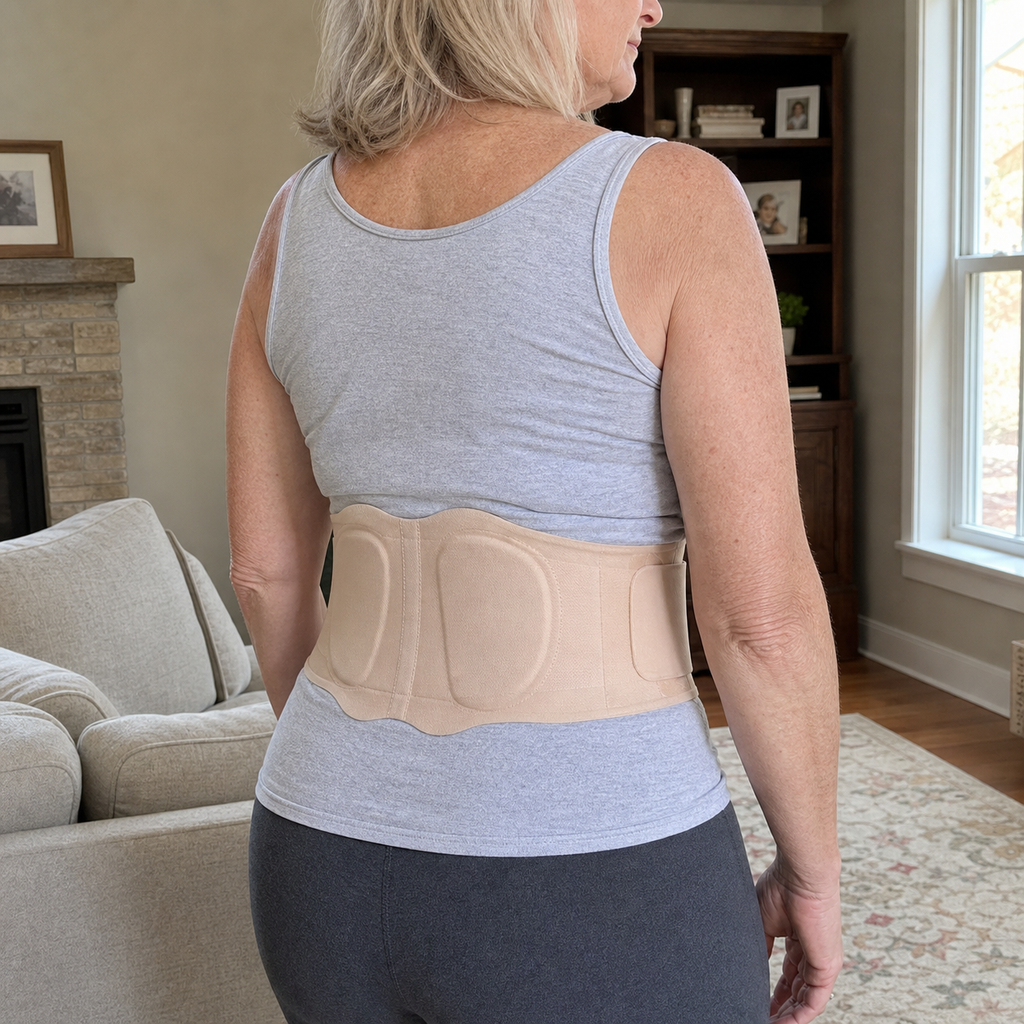
The easiest way to understand it is this: you wrap it around your waist, and the targeted compression creates a pressure column that helps lift the vertebrae apart.
And it is the one belt I recommend because it does the three things no other treatment can do together:
✓ TARGETED DECOMPRESSION that creates a pressure column around the waist, lifting the vertebrae apart and creating space for the disc to retract.
✓ SUPPORT ROD SYSTEM that maintains decompression while you sit, stand, drive, and move.
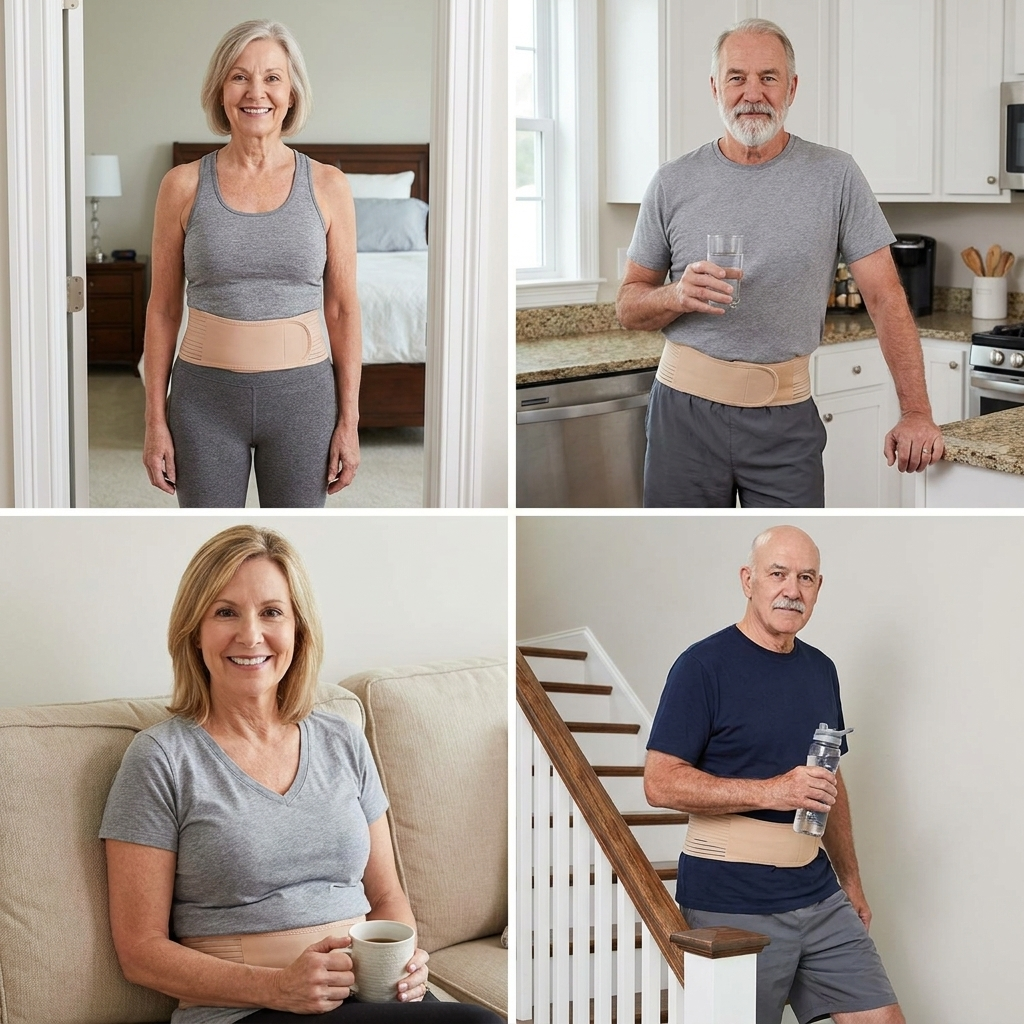
✓ ALL-DAY INVISIBLE WEAR using a breathable nylon/spandex blend like seamless underwear, with lightweight support strips that hold structure without bulky armor.
No wires. No batteries. No clinic appointments. No $2,000 decompression machine.
You wrap it around your waist, fasten it, and keep living your day while your spine stays decompressed and your disc finally has room to retract.
The invisible wear is what makes it work. Decompression only helps if it stays on long enough for the disc to retract.
HERE IS EXACTLY HOW IT SUPPORTS YOUR LOWER BACK THROUGH THE DAY
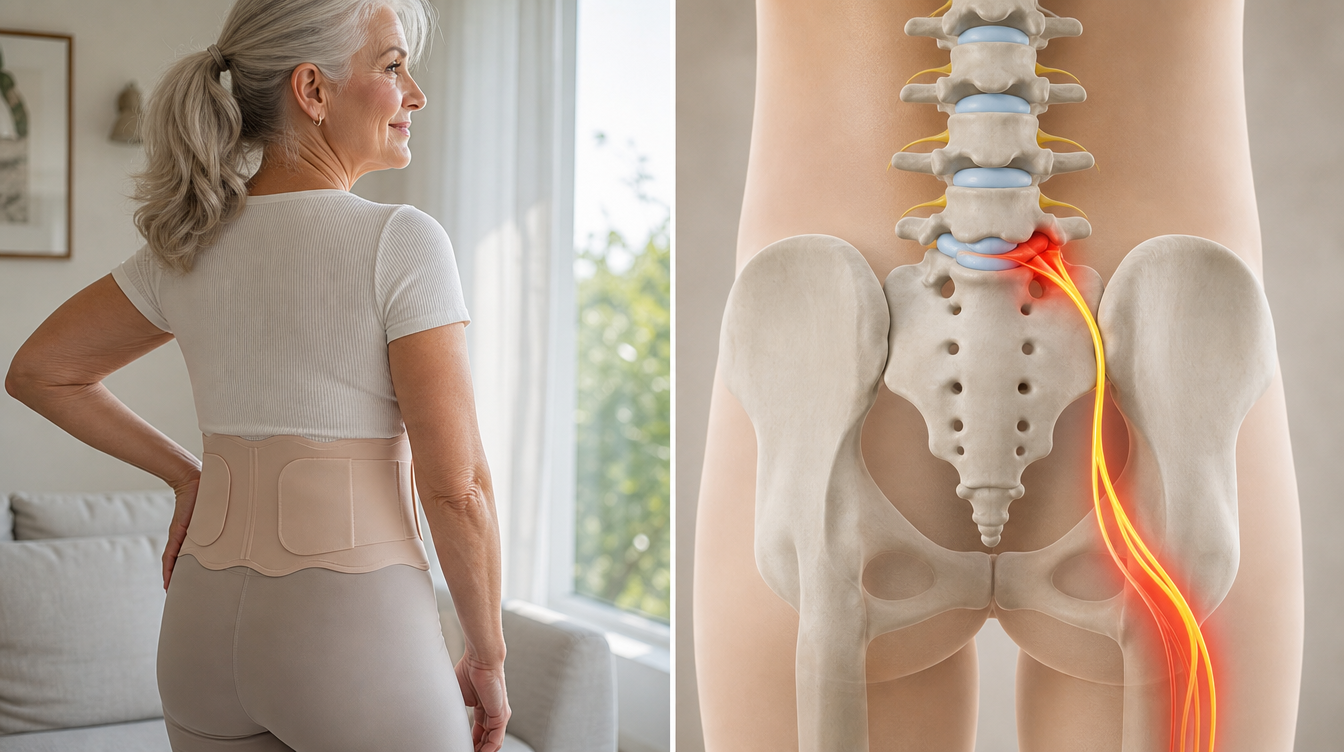
When you put on the BareSupport Back Belt, here is what happens to your spine:
First wear: the decompression begins.
The targeted compression creates a pressure column around your waist.
Days 1-3: the nerve starts to calm.
With the belt on during sitting, driving, and standing, the decompression holds.
Week 1: the disc starts retracting.
With sustained daily decompression, the disc begins pulling back toward its natural position.
Weeks 2-3: the nerve is freed.
As the disc continues retracting, the pressure on the sciatic nerve drops and the burning pain down the leg can start fading.
WHY PEOPLE KEEP WEARING IT
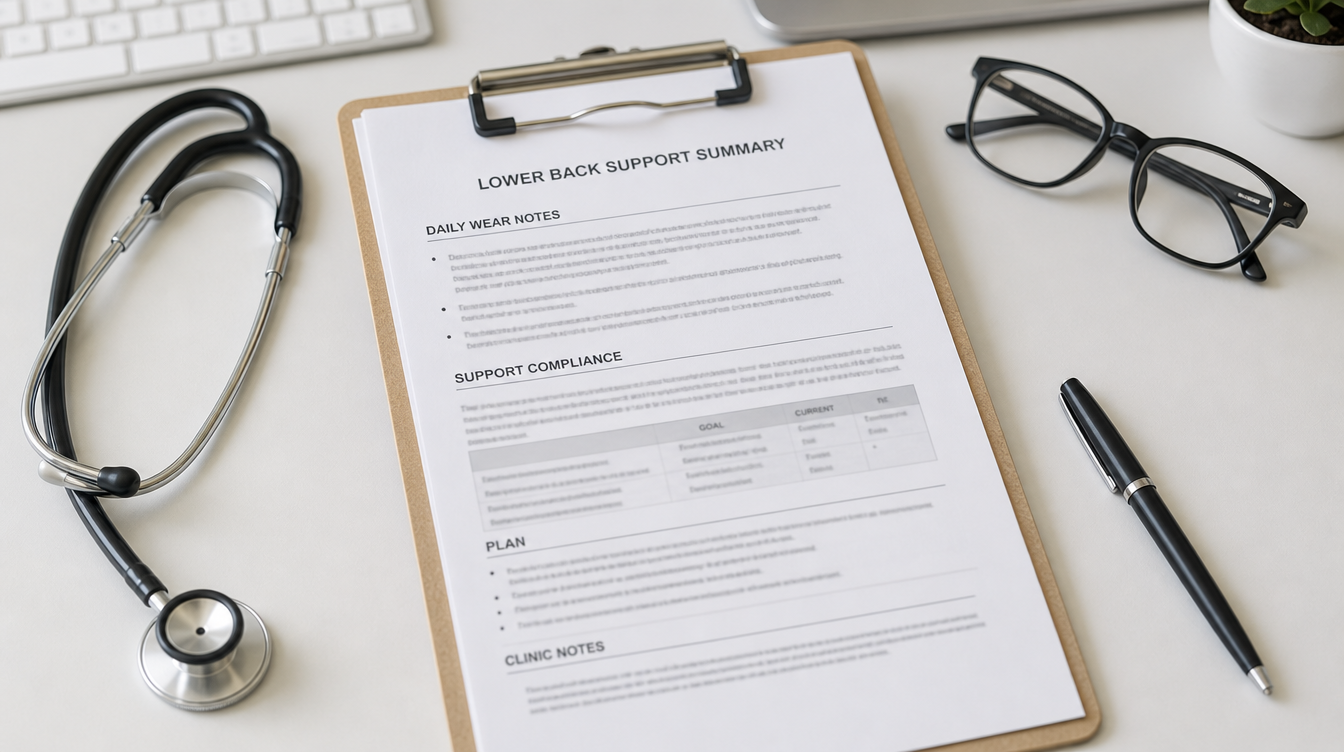
The pattern we kept seeing was simple:
People did not need another intimidating brace they hated wearing. They needed something light enough to put on before the pain spiral took over the day.
That is why BareSupport is built around daily comfort, discreet wear, and steady lower-back support for the sitting, driving, and movement patterns that often trigger sciatic-type pain.
And the reason people keep using it is not complicated:
It fits into normal life before pain takes over. Check out what real users are saying:
Donna K. - Phoenix, AZ ⭐⭐⭐⭐⭐ “Honestly, I was days away from booking another appointment because sitting and standing were both miserable. Bought this as a last resort. A few weeks later, I could get through my clinic shift without that shooting pain down my leg controlling every move.”
Elaine T. - Detroit, MI ⭐⭐⭐⭐⭐ “I tried the usual stuff for years. PT helped for a little while, cushions did nothing, and every car ride still felt like a gamble. BareSupport was the first thing I could wear through the day without ripping it off. That is what finally made it useful.”
Jennifer R. - Tampa, FL ⭐⭐⭐⭐⭐ “Long shifts were destroying my lower back. I needed something I could hide under scrubs and actually keep on, not another bulky brace sitting in my locker. BareSupport stayed flat, felt breathable, and made work feel less like a countdown to the next flare-up.”
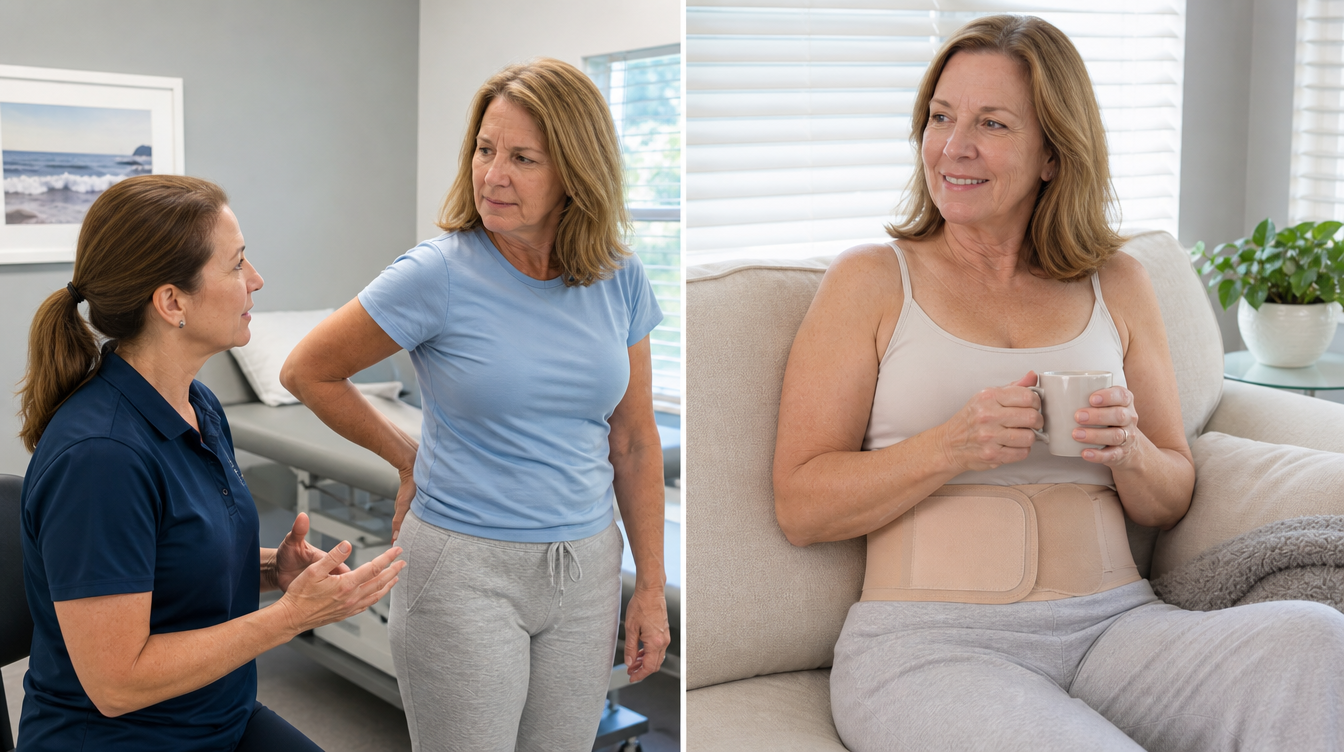
Clinical note: many people do better with support they can actually keep wearing. The most important part is not making a brace more dramatic. It is making support realistic during the hours that usually trigger pain.
WHY A SIMPLE DAILY SUPPORT BELT MAKES SENSE
Look at the usual path people get pushed through:
Appointment Route:
- repeated visits can drain time and money fast
- the same sitting, driving, and bending can bring the pressure right back
- Total: expensive, slow, and still not there during the hours that compress your spine
Injection / Clinic Route:
- consults, imaging, injections, and follow-ups can stack up quickly
- injections may calm inflammation, but they do not create lasting space between the vertebrae
- clinic decompression can feel good on the table, then normal life starts compressing the spine again
- Total: more money for relief that may fade when daily compression comes back
Surgery Route:
- surgery can become the conversation when nothing else seems to last
- it can remove disc material, but it does not erase the sitting, posture, and daily compression pattern that helped cause the bulge
- recovery can disrupt work, sleep, driving, and family life
- outcomes are not guaranteed, and some people still need more care later
- Total: a serious decision for a qualified professional, not something to rush into before trying a simple daily decompression layer
The frustrating part is how often people are pushed toward complicated routes before anyone asks whether their daily support is actually wearable.
Know why?
Because the same trigger keeps coming back.
Temporary relief turns into a frustrating loop.
It turns into a loop: temporary relief, normal life, same flare-up.
But here is what most bulky braces miss:
The BareSupport Back Belt could easily have been turned into another overpriced clinic-only brace.
Simple support does not have to feel complicated.
This was built as a practical daily-wear option.
I created it because simple daily support should not feel like another complicated medical project.
I kept thinking about people who were still functional, still working, still caring for families, but quietly planning their whole day around their lower back.
They needed a practical first move before the problem swallowed more of their day.
So here's the deal:
The regular price is $113.95.
Far less than most repeated appointments and short-term fixes.
But that's not what you'll pay today.
THE 56% OFF DAILY-SUPPORT OFFER
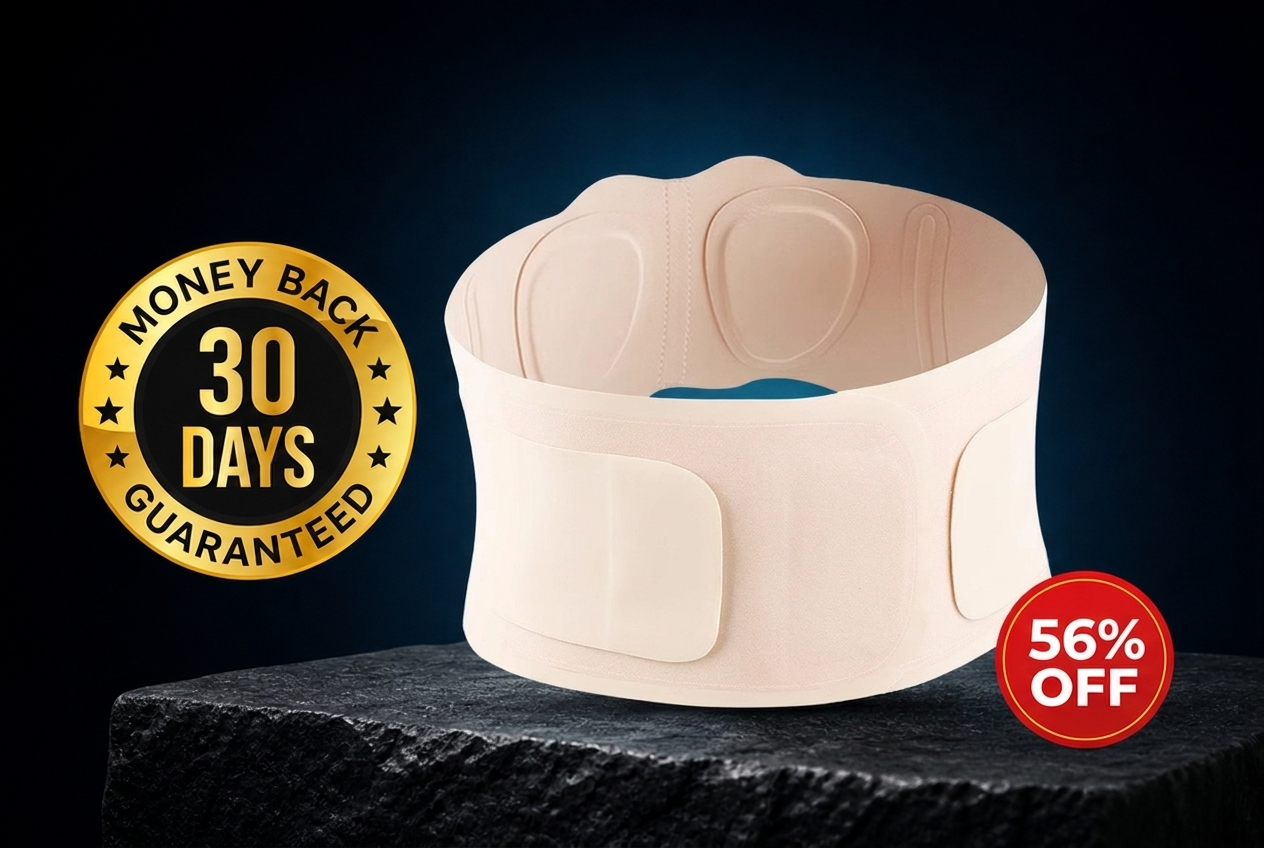
Here is the simple point:
Support does not help if you cannot keep wearing it. A belt that hides under clothes has a better chance of becoming part of your real day. That is why this offer exists.
The cleaner the idea became, the more obvious the offer had to be: make the belt affordable enough for people who are tired of buying another short-term fix. My response?
I am making this promotional batch available at 56% OFF.
That's right.
Just $49.95
A practical price for daily support.
Less than a specialist appointment.
Less than the pillows, creams, straps, and gadgets sitting in closets across America.
For the low-profile support belt built around the real daily-wear problem behind the pain loop.
Why would I do this?
Because every person who gets reliable daily support at home has one more practical option before escalating to more expensive routes.
Because I want more people to try a support layer that can help with the ordinary moments that usually trigger lower-back and leg pain: sitting, standing, walking, errands, stairs, and car rides.
⚠️ THIS 56% DISCOUNT IS AVAILABLE WHILE CURRENT PROMOTIONAL INVENTORY LASTS ⚠️
After that, the regular price returns to $113.95. And units are selling out fast.
MY PERSONAL 30-DAY TRY-IT-AT-HOME GUARANTEE
Look, I get it.
You've been burned before.
Spent money on overhyped fixes that turned out to be expensive paperweights.
So here's my promise:
Try the BareSupport Back Belt for 30 days.
Wear it during the parts of the day that usually trigger your lower back and sciatic-type pain.
Feel your lower back supported... Feel your lower back stop fighting every movement... Feel normal movement become less threatening...
And if it does not feel supportive enough for your daily routine...
We will refund your order under the 30-day guarantee.
No forms to fill out. No "store credit" nonsense. No hassle.
Just email support@daywick.com and say "It didn't work."
We'll walk you through the return process under the 30-day guarantee.
Why am I so confident?
Because people keep telling us the same thing: this is the first lower-back support belt they actually keep wearing.
That is the whole advantage.
A support belt only matters if it fits into real life.
BUT HERE IS THE CATCH
This 56% discount is available while the current promotional inventory lasts.
Not because I'm playing games.
Because inventory is real, and demand from people with daily lower-back pain is very real.
Once the current promotional inventory is gone, the regular price returns to $113.95.
Still a steal. But not $49.95.
Also, and this is important, we only reserve a limited number of units at this reader price.
Our manufacturer can only produce limited batches at a time.
When a promotion is active, inventory can move quickly.
The safest place to order is through the official Daywick website, where the current offer, guarantee, and support process are controlled by us.
If you're reading this, units are still available.
But I cannot promise the promotional inventory will stay available.
And here's the thing...
Waiting usually means going back to:
- the same short-term fixes
- the same chairs, stairs, and car rides you keep planning around
- the same lower-back pressure pattern getting provoked again
while a simple support layer is sitting right here for less than a night out.
THE CHOICE FOR YOUR NEXT NORMAL DAY

Right now, you're at a crossroads.
Path #1: Keep Doing What You're Doing
Keep relying on short-term relief. Keep paying someone to stretch your lower back with zero lasting results. Keep sitting in that weird position that sometimes helps. Keep missing out on life because movement equals pain.
Keep buying short-term fixes that never stay with you through a normal day.
Path #2: Try The Simple At-Home Method
Spend less than a single copay.
Get a belt that decompresses your spine during every hour of the day.
Give your bulging disc the space it needs to retract off the nerve.
Start tomorrow with the one method that addresses the actual cause of your sciatica instead of just masking the pain.
Get a belt that decompresses your spine during every hour of the day.
Give your bulging disc the space it needs to retract off the nerve.
Start tomorrow with the one method that addresses the actual cause of your sciatica instead of just masking the pain.
Try the simple daily-wear option most bulky braces miss.
The choice seems pretty obvious to me.
HERE IS EXACTLY WHAT TO DO NEXT
1. Click the button below that says "Check Availability Now →"
2. Choose your package (Pro tip: Get two. One for home. One for someone else suffering. You'll save more)
3. Fill out your shipping info (delivery estimates are shown at checkout)
4. Wait 5-8 days for your order to arrive
5. Use it for daily wear the moment it arrives
6. Email us your success story (email support@daywick.com if you need help getting started)
But whatever you do, don't close this page thinking "I'll order later."
Later does not exist when every chair, stair, and night in bed is already a negotiation.
Later is another morning grabbing the wall.
Later is another family plan you quietly avoid.
Later is the discount disappearing while your lower back stays exactly the same.
Your lower back has waited long enough.
Click below and give your lower back the quiet support it has been asking for.
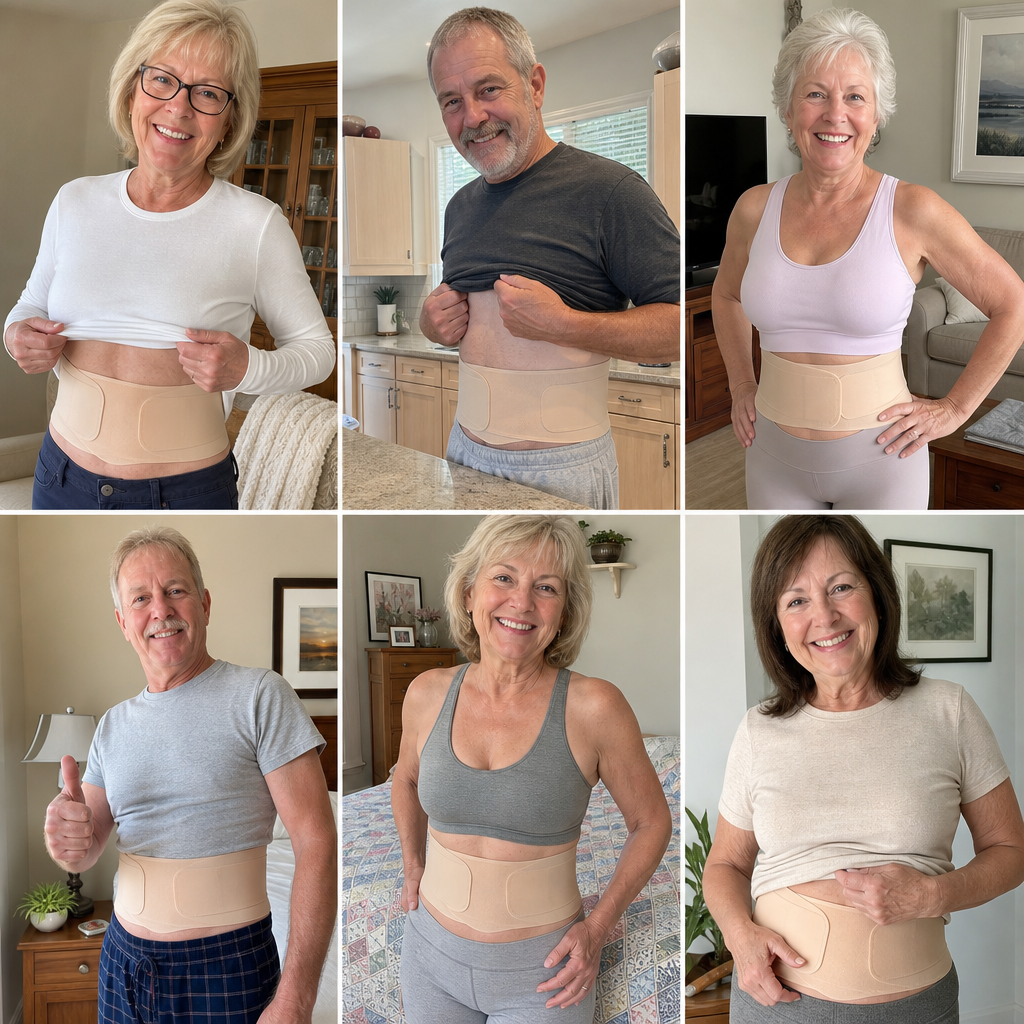
You can take advantage of this offer while the current promotional inventory is available.
INTERNET ONLY OFFER!
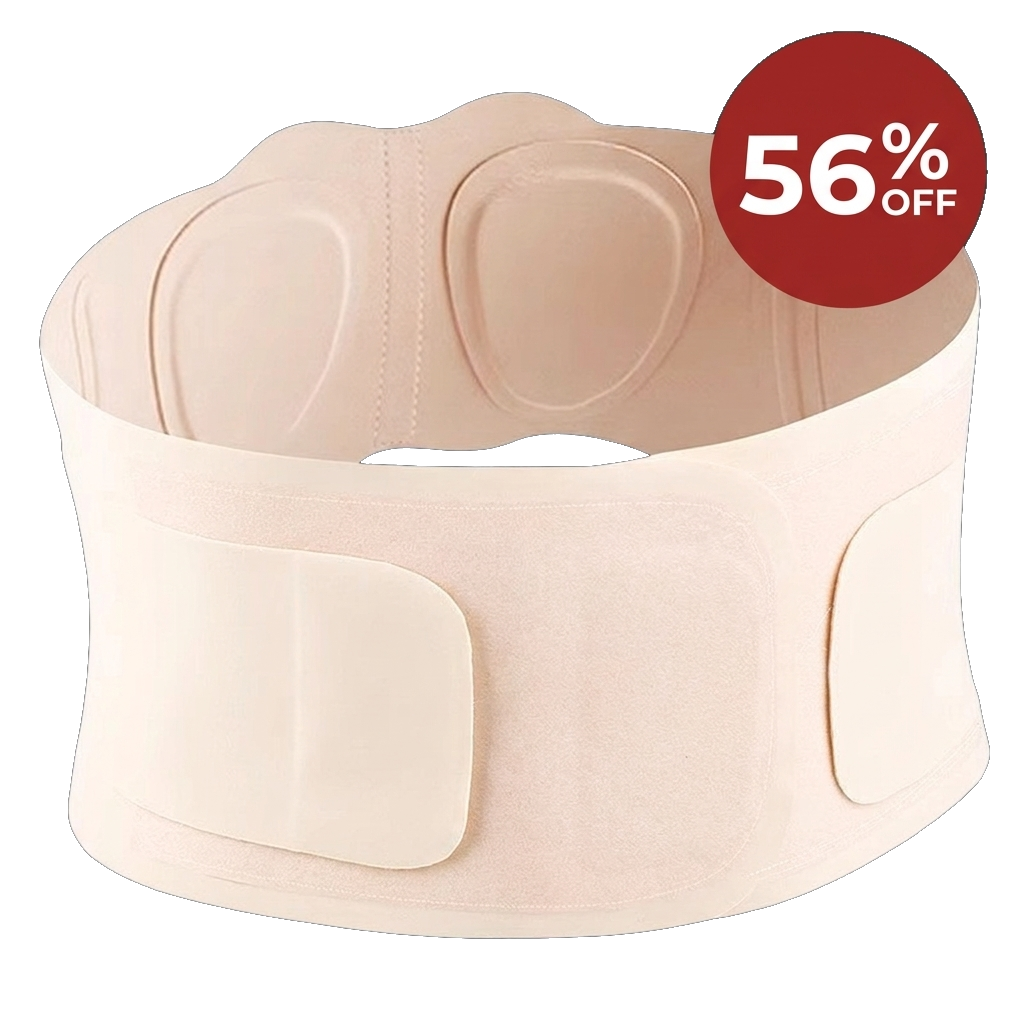
FOR A LIMITED TIME:
56% OFF + FREE SHIPPING OVER $70
LIMITED TIME READER-ONLY SPECIAL: Ordering now makes you eligible for 56% OFF BareSupport Back Belt. Only available here. Available while the current promotional inventory lasts.
With respect and urgency,
Elaine Porter, Physical Therapist Creator, BareSupport Back Belt Advocate for At-Home Lower Back Support
P.S. - If your lower back keeps controlling sitting, standing, errands, or work, start with the practical support layer you can actually keep wearing. The point is simple: if daily lower-back support keeps getting delayed, the same daily triggers keep winning.
P.P.S. - The BareSupport Back Belt is built for targeted at-home lower back relief, with the same no-nonsense standards people expect from Daywick.
P.P.P.S. - Promotional inventory is limited. If the page is still available, you can still claim the current offer.