The Back Pain Report
The Back Pain Report
- Home > Health > Back Pain
Physical Therapist: "This Is the Fastest Way to Support Lower Back & Sciatic-Type Pain Without Surgery Or Bulky Braces"
- Thu . Apr . 23 rd , 2026 | 11:11 am EST - 251.328 👁
Written by Elaine Porter, Physical Therapist |
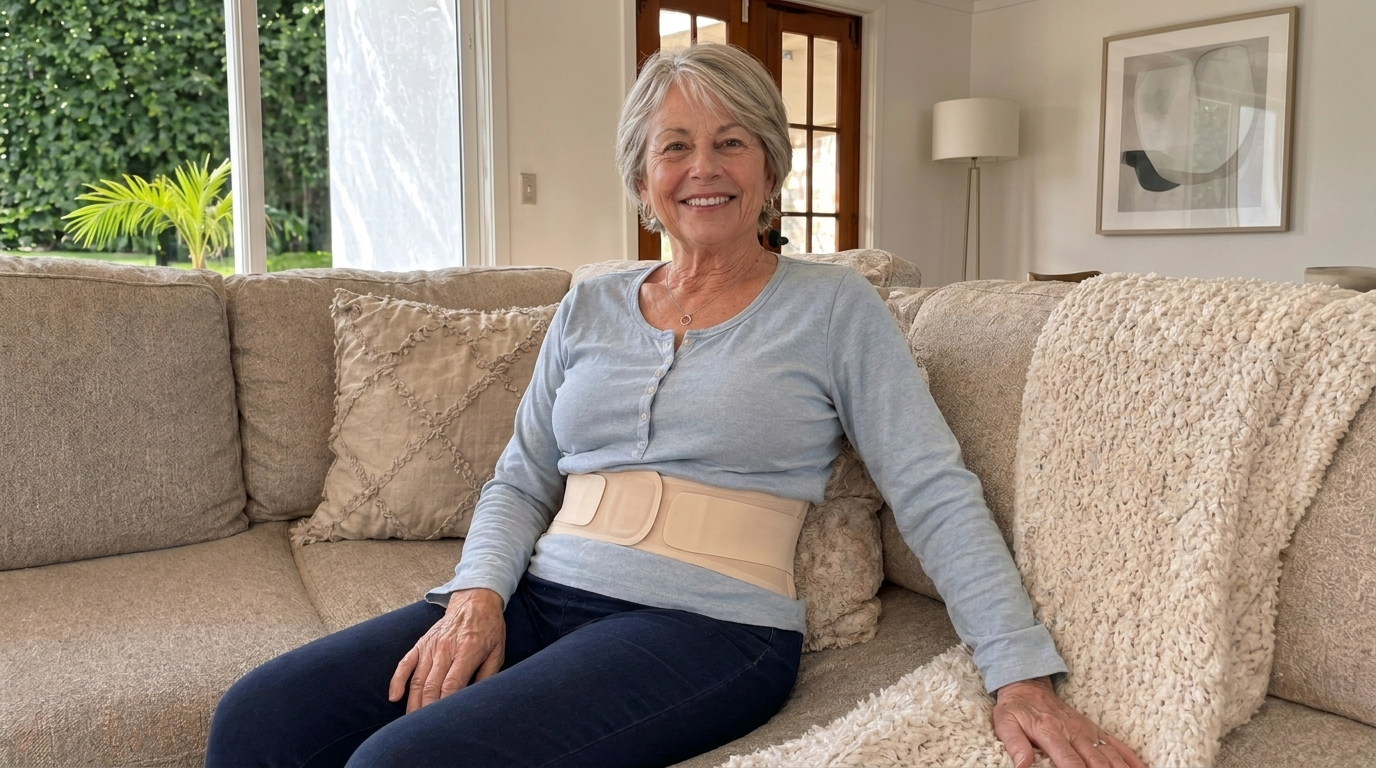
Dear Friend With Lower Back Or Sciatic-Type Pain,
If your lower back aches the second you sit down, or the pain starts running into your glute or leg...
If sitting or driving feels impossible now...
If stairs, grocery aisles, or getting out of the car send that familiar jolt down your leg...
Then what I am about to share could save you from bulky braces, endless therapy visits, and the terrifying sentence nobody wants to hear: “we may need to talk about back surgery.”
But I need to warn you:
What you're about to read will make you angry.
Because the method I discovered is the last thing the back-support industry wants you to understand.
Not because it is complicated.
But because it is embarrassingly simple.
And when a $73 billion back-pain machine sees something that could keep people out of the back-surgery pipeline...
They do not explain it to you.
They keep you moving from appointment to appointment until you break.
My name is Elaine Porter.
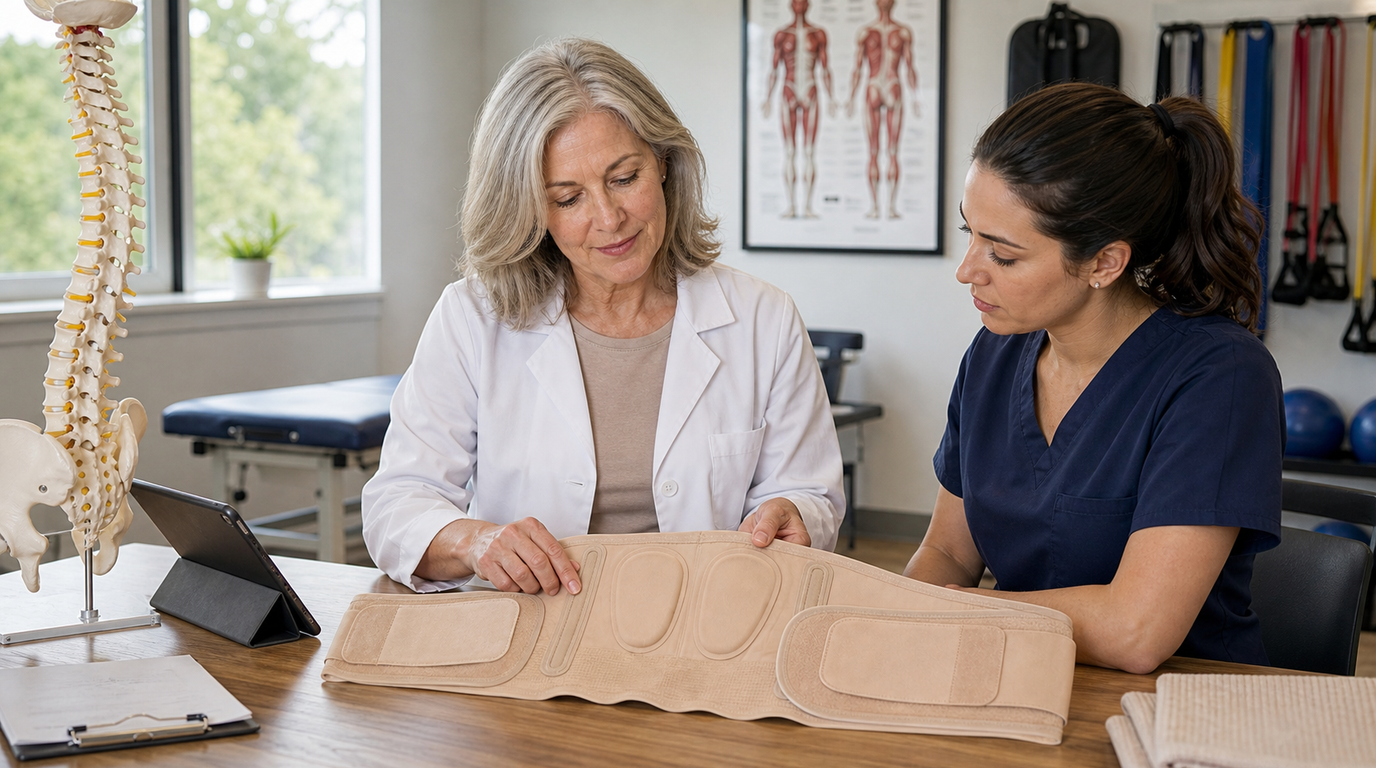
I'm a physical therapist with 23 years of clinical experience.
I've treated over 3,000 lower-back pain cases.
I've worked with patients who were told surgery might be their next option.
And until 18 months ago, I believed everything I had been taught about “age-related” lower-back and sciatic-type pain.
THE NIGHT EVERYTHING CHANGED...
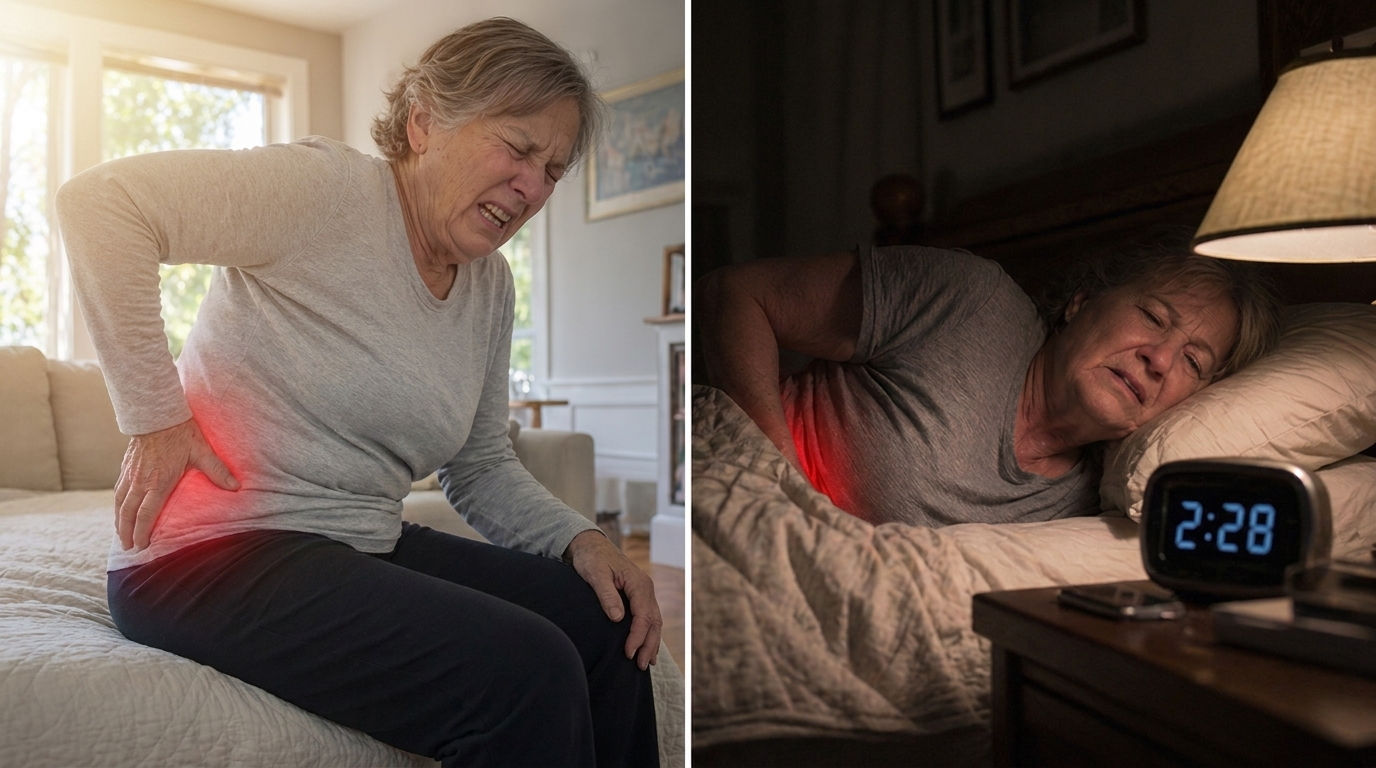
Then at 3:17 AM on a Tuesday morning, everything changed.
I woke up to a noise from the hallway.
My husband Mark was frozen halfway between the bedroom and bathroom, one hand on the wall, crying through his teeth.
The pain medication bottle was in his hand.
He had tried to make it there quietly so he would not wake me.
His lower back, the one everyone kept calling “wear and tear,” had locked up so hard he could barely take another step.
“I cannot live like this,” he whispered. “I am scared this is just my life now.”
Mark is a critical care nurse. Was a critical care nurse. For 19 years, he worked in the ICU - lifting, turning, and repositioning patients who could not move themselves.
His back pain was gradual, then sudden. A little stiffness became a limp. The limp became cancelled dinners. Then the hallway became a threat.
Now he could barely stand up from bed without bracing against furniture like someone twice his age.
But Here's What Destroyed Me:
When I tried to help him up, he screamed.
I touched the outside of his lower back.
That's all it took.
We had not gone on a normal walk in 4 months.
Every plan came with the same calculation: how far is the parking lot, how many stairs, how long will he have to sit?
Every small piece of life became a negotiation with pain.
The man who once worked full ICU shifts was scared of walking to the bathroom.
And I just stood there.
Useless.
A physical therapist who could not even help her own husband.
I had tried everything my training taught me. Physical therapy. Cushions. Ice. Support. TENS units. Stretching. Anti-inflammatories.
Nothing worked for more than a few hours.
The "experts" weren't any better:
- His physical therapist? Stretched and strengthened twice a week for $200 a pop. The relief lasted about as long as the car ride home.
- Pain management doctor? Pumped him full of short-term fixes that made him gain weight and feel like a zombie.
- The surgeon? Wanted to cut into his lower back for a $35,000 procedure with a 40% failure rate.
That night, something inside me snapped.
I was not going to watch the person I love become another “failed conservative care” file.
I was not going to let some surgeon use his fear as a Mercedes payment.
I went to war with everything I thought I knew about back pain.
THE MIND BLOWING DISCOVERY
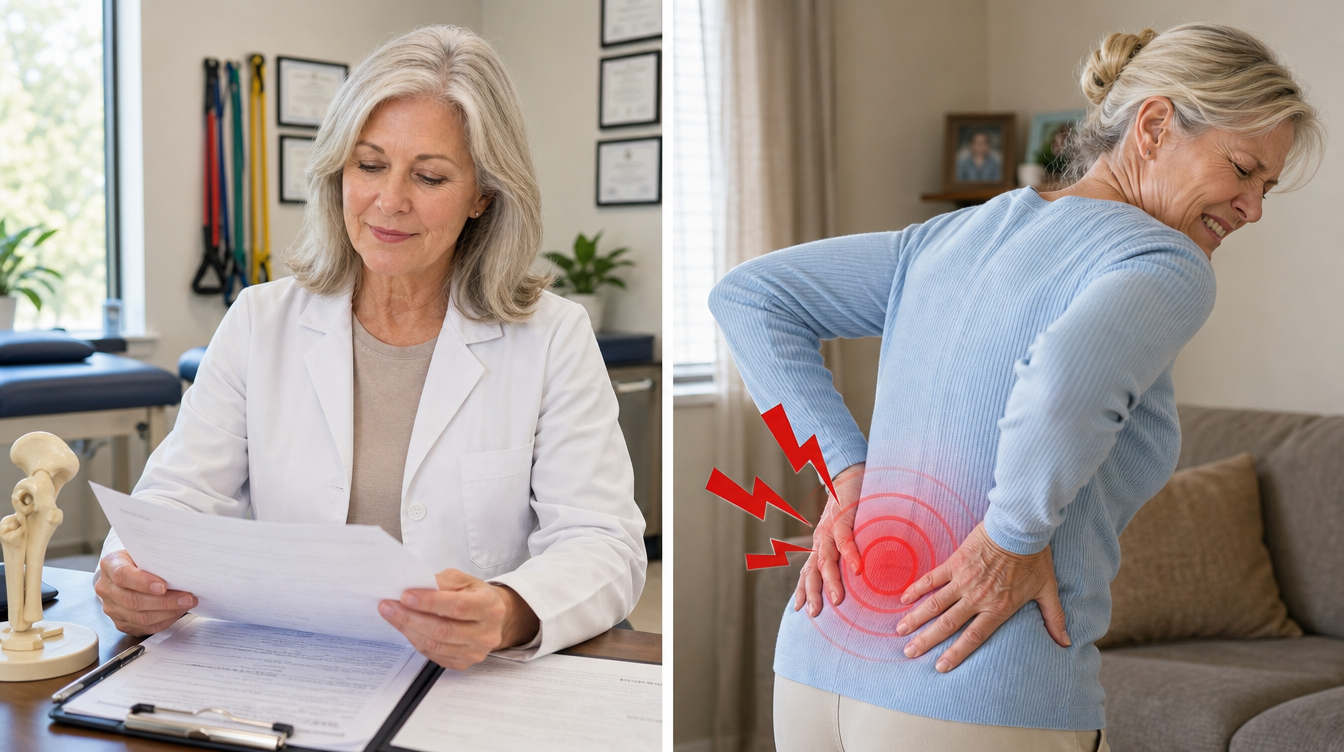
For the next 3 months, I lived like a person possessed.
I devoured every study. Called clinicians who had been studying protective muscle guarding for decades. Studied non-surgical orthopedic recovery. Spent months buried in medical journals and support-device research.
And what I found made me want to punch a hole through my computer screen.
The entire back pain industry is treating the wrong thing first.
A simple missing explanation that keeps people buying one temporary fix after another.
Here is what almost nobody explains clearly:
Most chronic back pain is not just “the joint wearing out.” It is the body guarding itself into a tighter and tighter trap.
It is not just about “strengthening the muscles.” It is not just about “reducing inflammation.” It is not just about “resting until it calms down.”
That is why the same treatments give a few hours of hope, then drop you right back into the same pain loop.
The real cause is so simple that I felt sick when I realized how many patients had never been told.
Your lower back is not just sore. It is often being guarded into a tighter and tighter loop.
Let me explain...
THE GUARDING LOOP BEHIND CHRONIC BACK PAIN
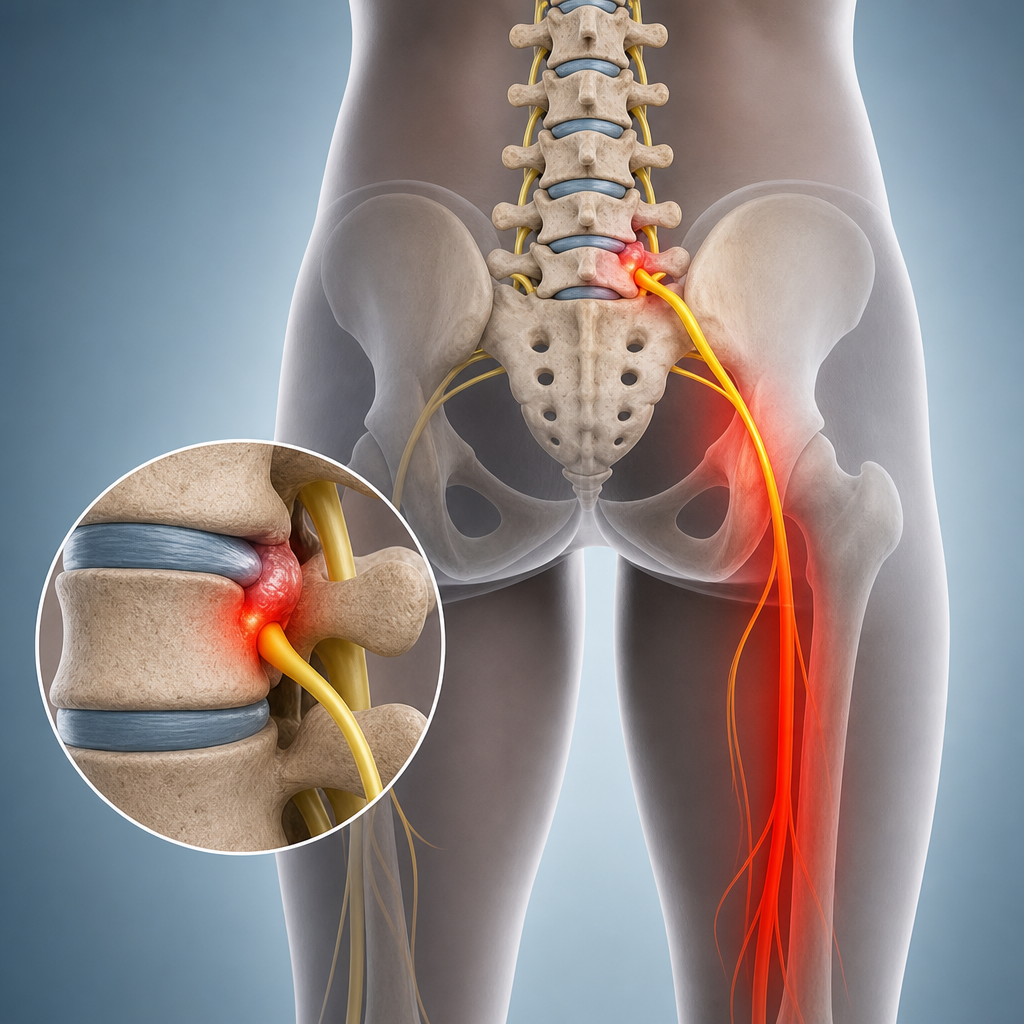
Think of the lower back like a hinge wrapped in a tightening rope.
When the lower back feels steadily supported, the body has less reason to brace before every normal movement.
The muscles can stop clenching so hard. Sitting, standing, rolling over, and climbing stairs stop feeling like a threat signal every time.
But after months or years of irritation, the body starts guarding the area.
The glutes, lower back flexors, piriformis, and surrounding soft tissue tighten like a protective splint.
That sounds helpful until the splint never turns off.
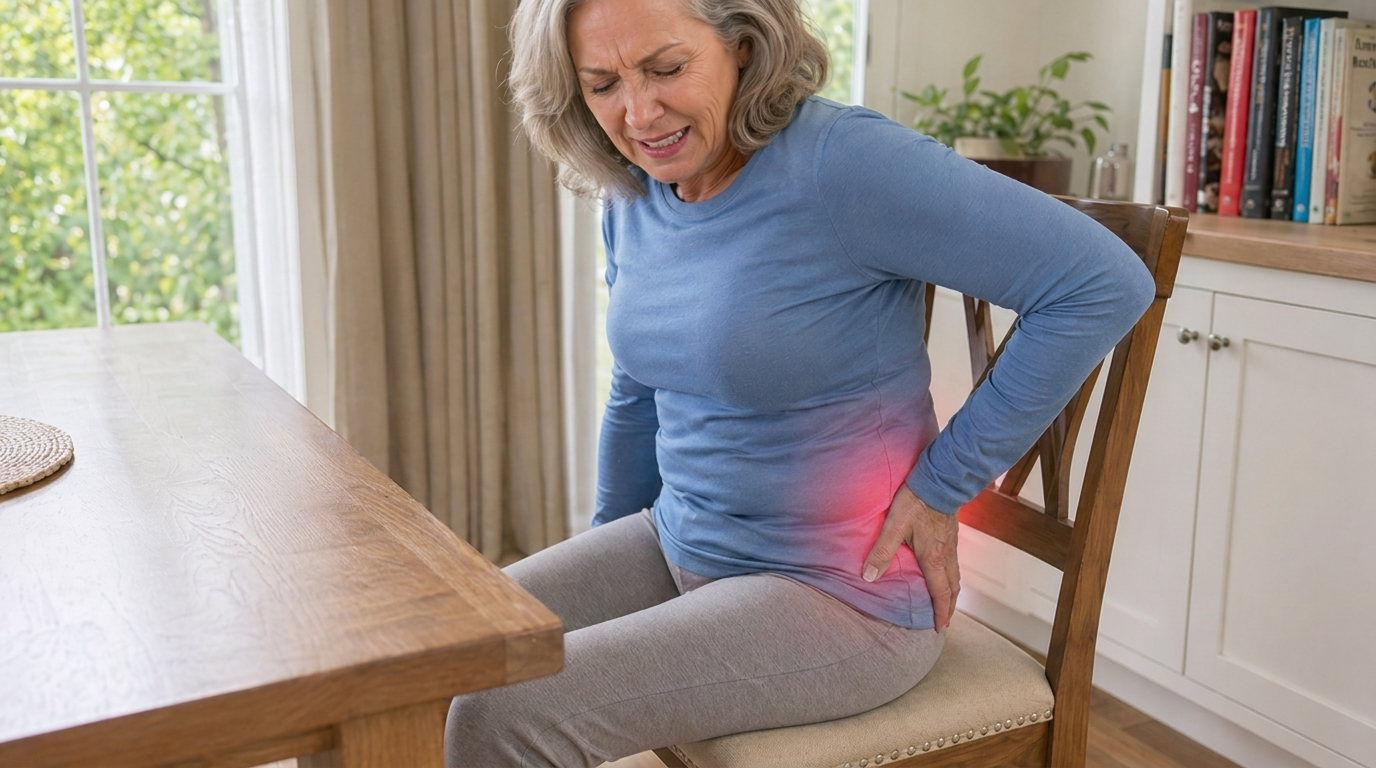
You know the feeling: the deep ache, the side-lower back burn, the stabbing when you stand, the pain that spreads into the glute or down the leg when the nerve gets irritated.
- At first, it feels like stiffness. Then the nerve starts warning you every time the muscle clamps down.
- Over time, the body learns to protect the area by tightening even harder.
That is why the same back pain keeps coming back in the morning, in the car, on stairs, and the second you finally sit down.
The joint may be where you feel it. But the guarding loop is often what keeps feeding it.
Like the image, the problem is not just the pain signal. It is the pressure point that keeps re-triggering the signal.
The medical industry KNOWS this.
They have known for decades that failed back-support treatment often has one thing in common:they chase symptoms while the guarding loop keeps squeezing underneath.
But here's the kicker...
There is no money in making the simple part obvious.
Why?
Because the actual method is too simple. Too cheap. And it would put half the back-support machine out of business.
You cannot patent calming the guarding loop at home.
You cannot bill insurance for teaching someone to stop irritating the same soft tissue every day.
Think about it:
You would not keep scraping rust off a hinge if the hinge is still dry and grinding.
You would warm it. Oil it. Support it. Let it move again.
But that is exactly what most back-support treatments miss: they quiet the pain signal while the body keeps clamping down harder underneath.
So they keep you on the hamster wheel.
It's genius, really.
If you're a sociopathic medical executive who sees human suffering as a revenue stream.
THE DAILY SUPPORT FIX HIDING IN PLAIN SIGHT
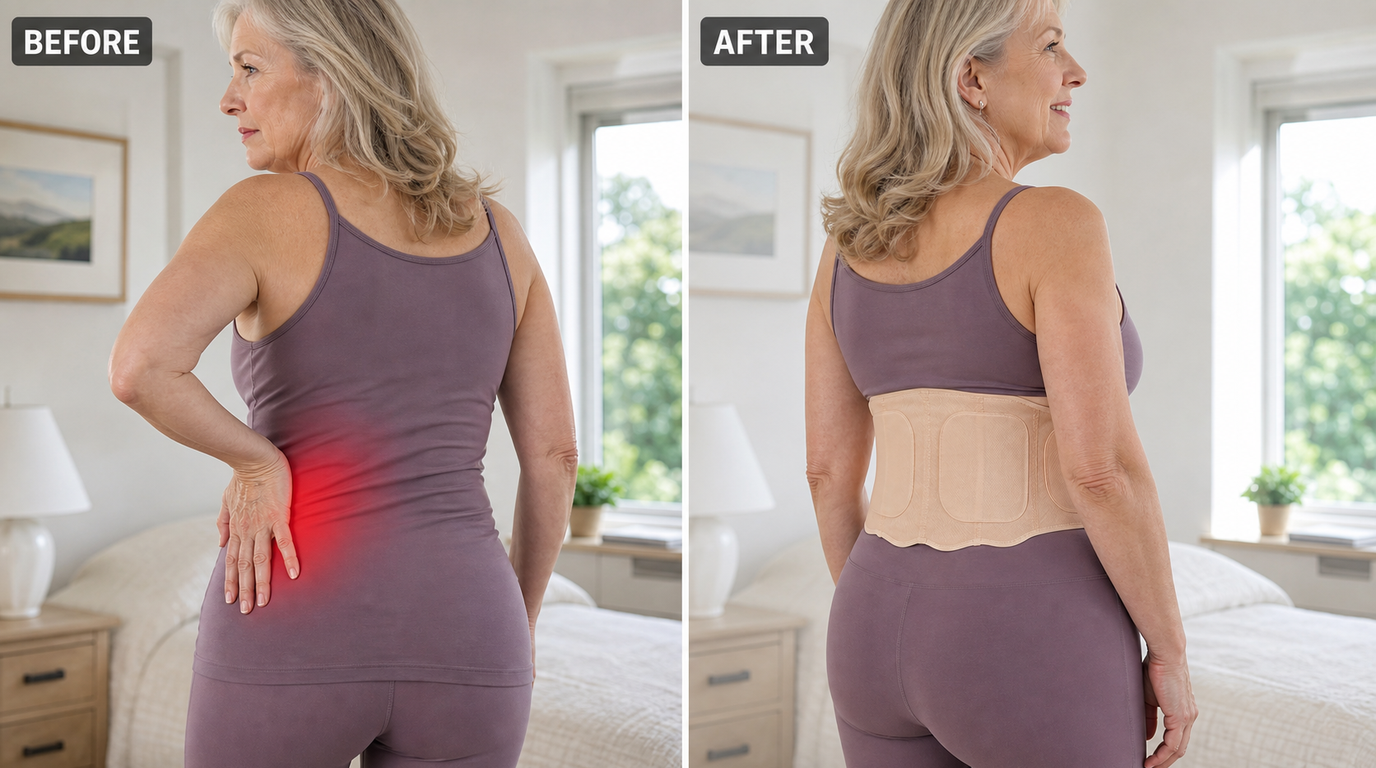
Remember my husband on that bathroom floor?
Three weeks after my discovery, Mark was back on his feet. Not sprinting. Not pretending. Just walking through a normal afternoon without touching every counter for support.
Truly life-changing.
Just daily wear of something so stupidly simple, I'm embarrassed it took me 23 years in practice to figure it out.
To make daily lower-back support actually work, the belt needs to do three practical things at the same time:
1. SUPPORT - Gives the lower back a steady cue so it feels less exposed and unstable
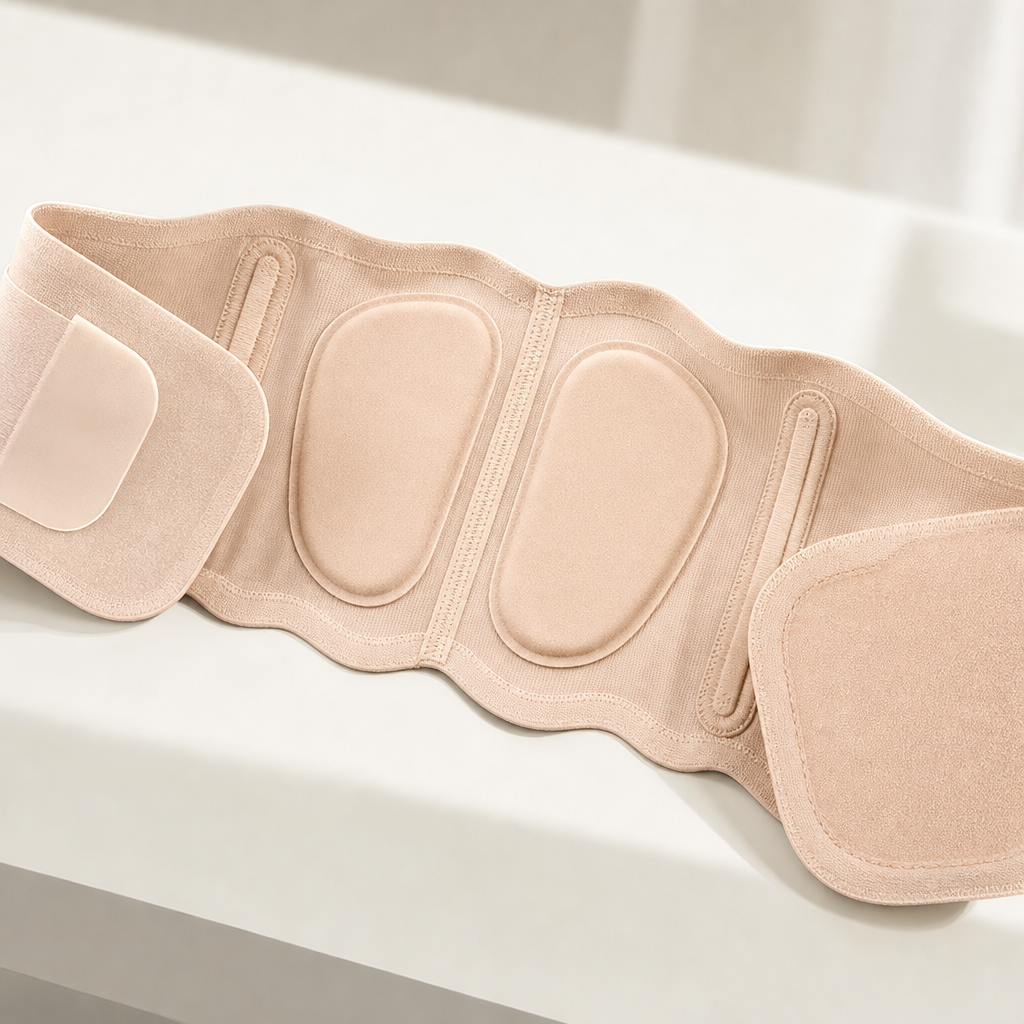
2. SPREAD PRESSURE - Uses flexible lumbar pads so support is not forced into one hard pressure point
3. STAY WEARABLE - Uses anti-roll edges and soft fabric so you can keep wearing it during the hours that usually trigger pain
Miss the wearability part, and you are wasting your time.
That is why pain pills do not change the daily loop. They do not support the area while you move.
That is why random stretching can backfire. It can tug on tissue that is already protecting itself.
And that is why stiff braces often fail: they may support the back, but people hate wearing them long enough for it to matter.
That is why short appointments fade: they end before normal life starts provoking the same area again.
That is why one-off support fades. It does not stay with you through the ordinary hours that keep triggering the pain.
You need the three practical pieces at the same time: steady compression, pressure-spreading lumbar pads, and a belt comfortable enough to keep wearing.
A Daily-Wear Support Loop.
And that is exactly what BareSupport was built to do.
THIS BREAKTHROUGH IS PISSING OFF AN ENTIRE INDUSTRY
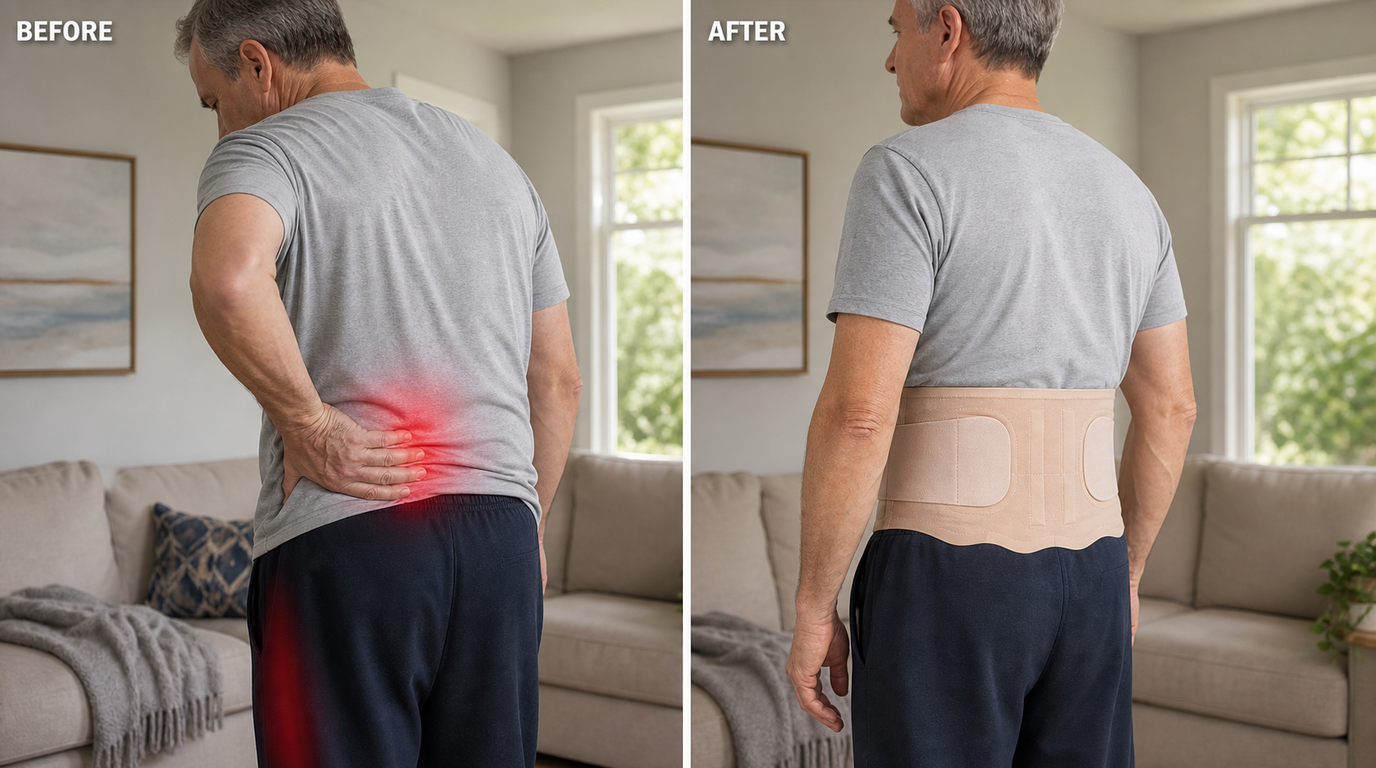
After Mark's miracle recovery, word spread fast.
My neighbor Michael - a construction foreman, 58 years old, tough as nails - knocked on my door at 9 PM.
"Whatever you did for Mark... I need it. NOW."
This man had not walked through a grocery store without stopping in 2 years. Lower back pain had him planning his life around benches, parking lots, and how far the bathroom was.
After three weeks of daily wear with my prototype belt, he walked through the grocery store without stopping.
He cried.
Not from pain. From relief.
“It is like someone finally turned my lower back down for the first time in years,” he said.
Michael told two guys on his crew. They told their wives. Word spread the way it does in a tight neighborhood, slowly at first, then all at once. Within two weeks, I had people I had never met knocking on my door, asking about “that lower back thing.” I was doing demos in my garage on weekends, feeling like a fool. But it kept working.
Teachers who could not stand through a full class... Nurses who wanted to quit because lifting patients was torture... Grandparents who could not walk through the park with their grandkids...
Again and again, people told me the same thing: life finally felt less controlled by their lower back.
Not “learn to live with it.” Not another temporary coping tool.
Actual daily-life improvement.
That's when the threats started.
WHEN YOU MESS WITH $73 BILLION, THEY COME FOR YOU

First, it was "friendly" warnings.
A department head I'd known for years pulled me aside at a conference:
“Elaine, what you are doing is dangerous. People need REAL medical treatment. You should stop before someone loses their job...”
Then came the cease and desist letters.
Three law firms. All representing "concerned medical professionals" who claimed I was "undermining established treatment protocols."
The final straw?
My biggest equipment supplier - a company I'd bought from for 15 years - suddenly couldn't fulfill my orders.
"Sorry Elaine, corporate decision. Nothing personal."
They wanted me gone because I'd created something that could make their entire business model obsolete.
A belt that:
- Interrupted the lower back guarding loop (not just symptoms)
- Worked in daily wear (not weeks of appointments)
- Let people manage it themselves at home (not in some $3 million surgical suite)
But here's what those suits didn't count on...
I'd already partnered with a team of biomedical engineers who believed in the mission.
And we'd turned my garage prototype into something even better.
INTRODUCING THE LOW-PROFILE BELT MADE FOR DAILY LOWER BACK & SCIATIC-TYPE SUPPORT
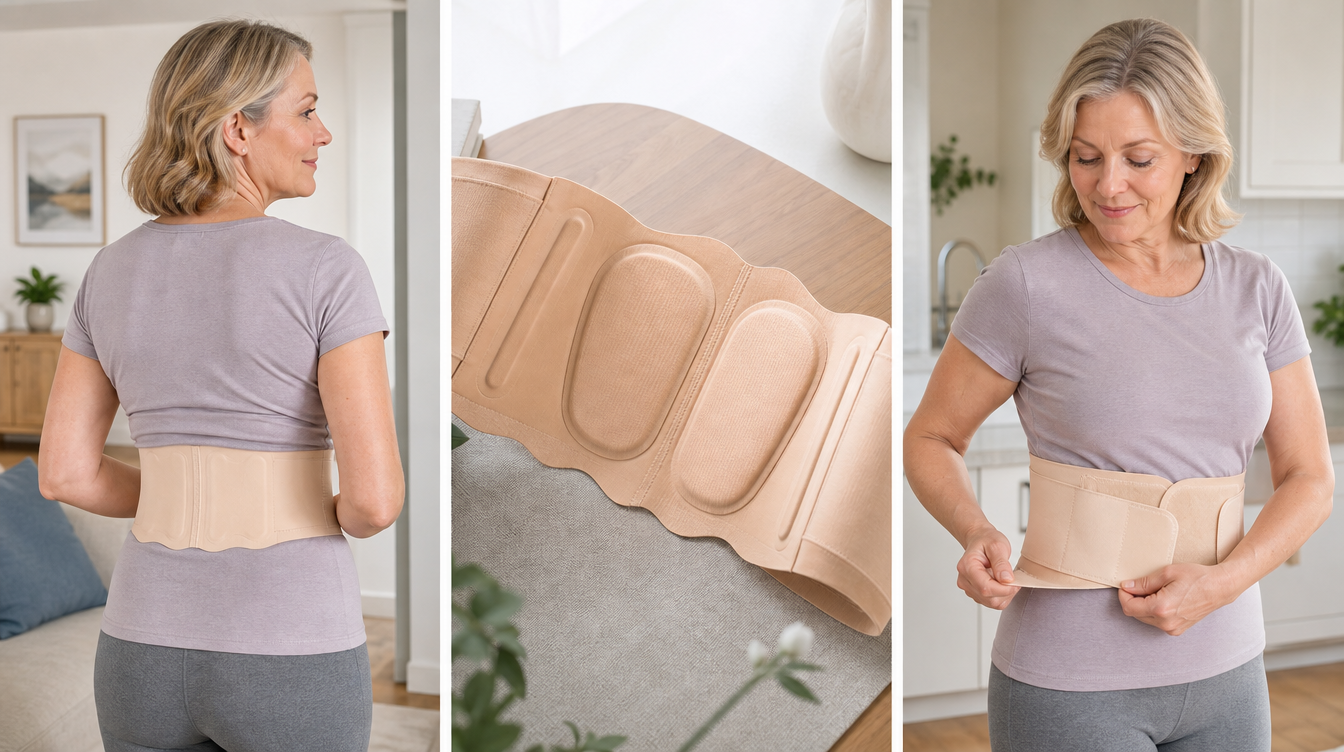
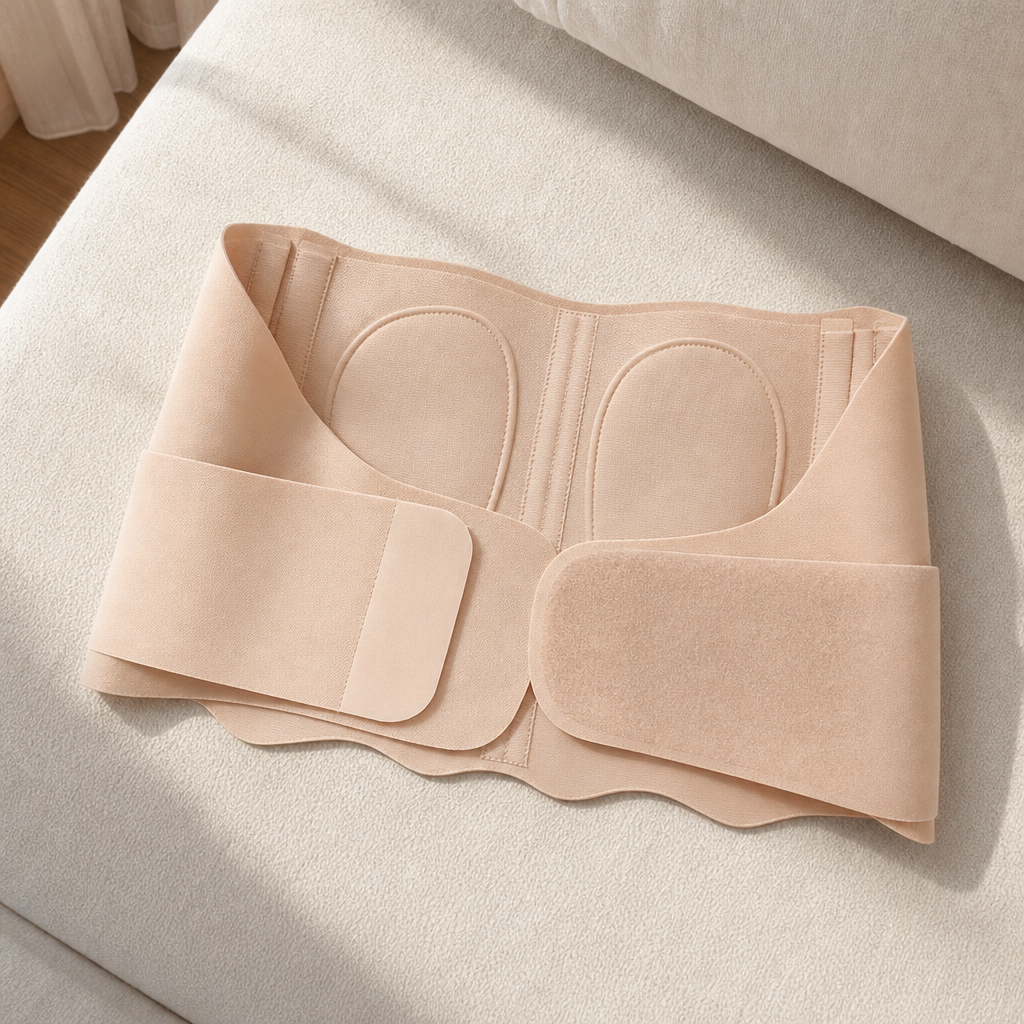
It's called the BareSupport Back Belt.
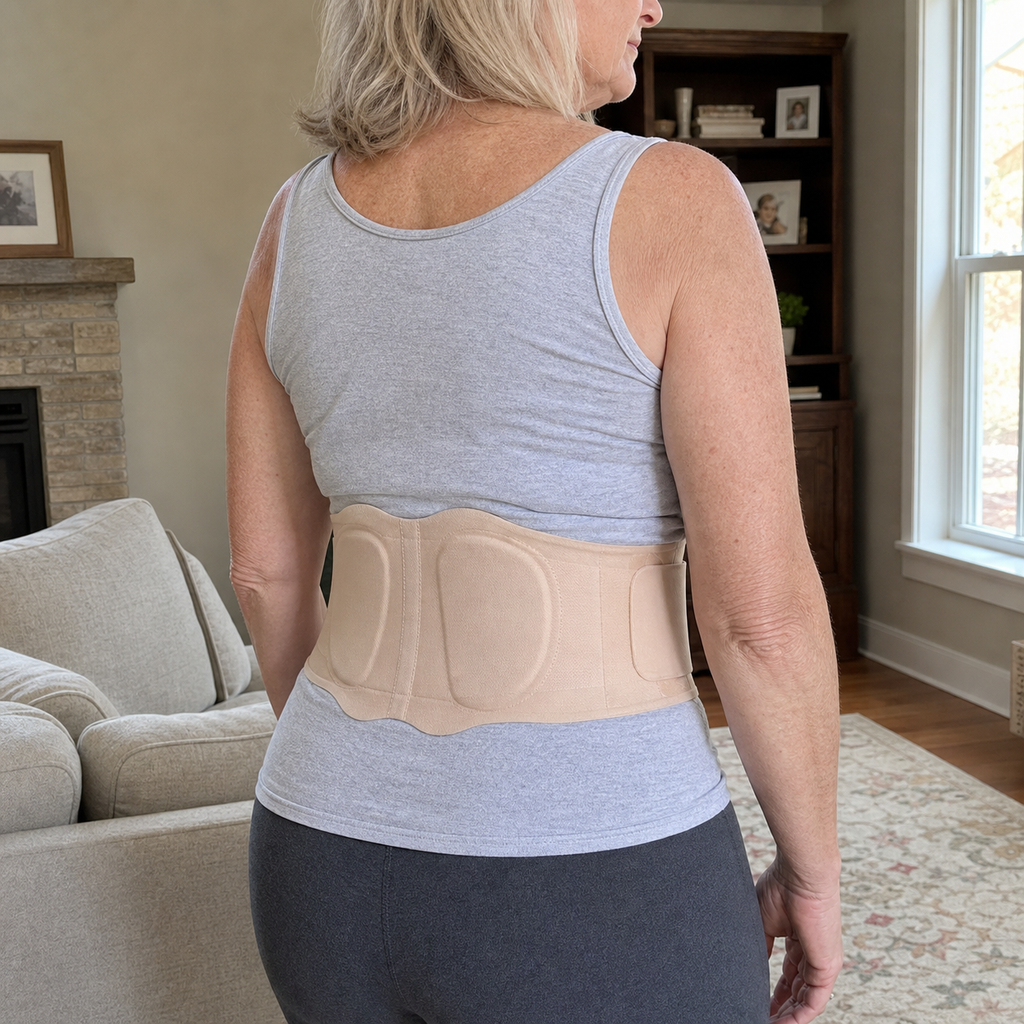
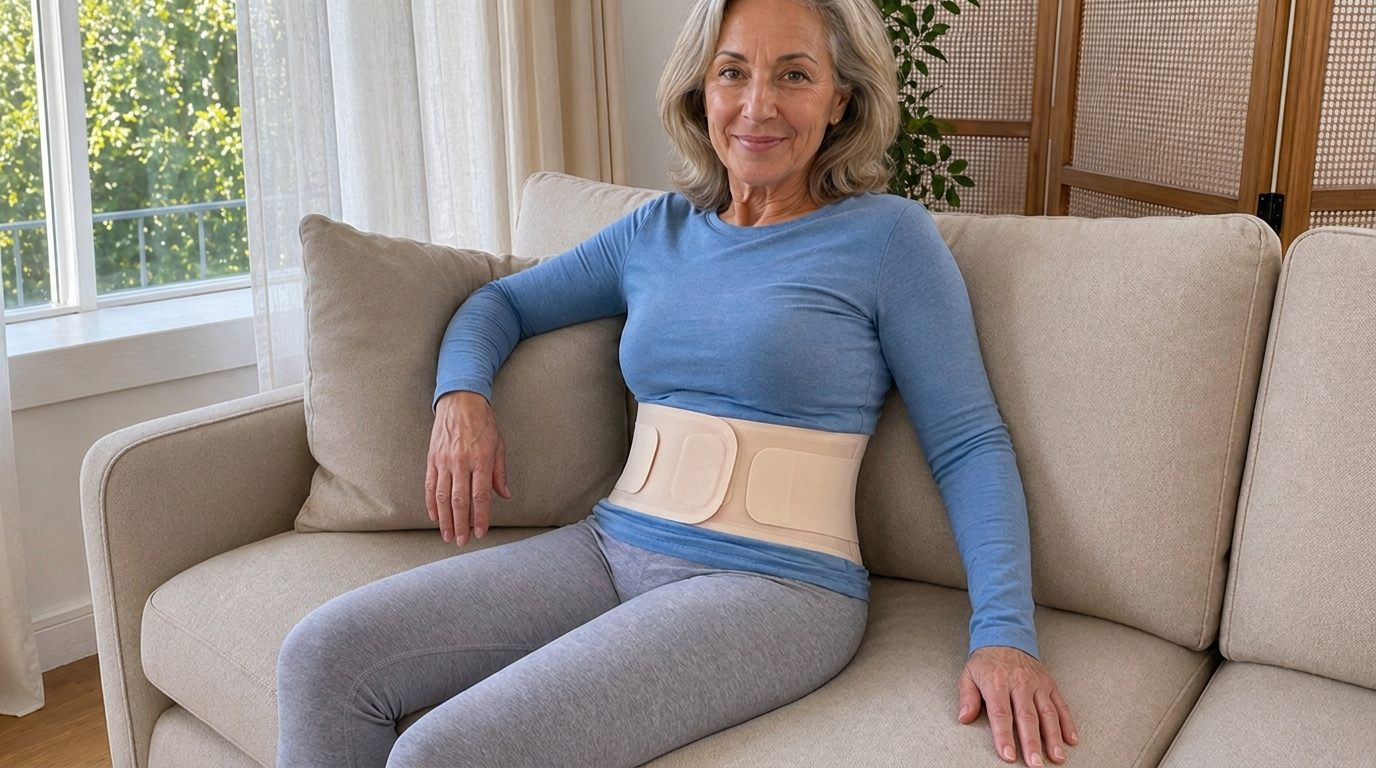
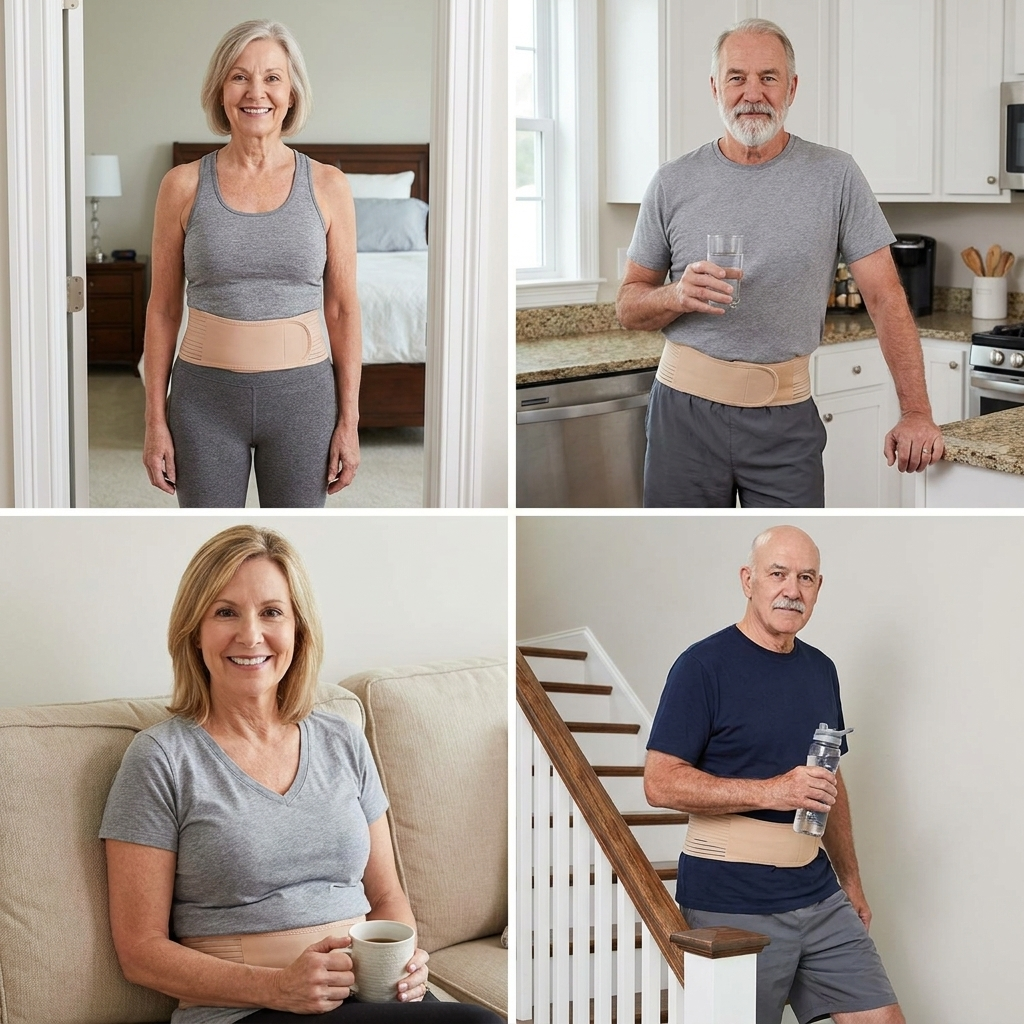
The easiest way to understand it is this: it works like underwear for your back. You put it on before your day starts, it disappears under normal clothes, and it gives your lower back a quiet support layer nobody else has to see.
And it is the one support belt I recommend because it does the three things most bulky braces fail to do in real life:
✓ SOFT DAILY COMPRESSION that gives the lower back a steady support cue while you sit, stand, walk, and work.
✓ FLEXIBLE LUMBAR PADS that spread support across the lower back without one hard pressure point.
✓ ANTI-ROLL EDGE SUPPORT that helps the belt stay flat under clothes instead of bunching, folding, or sliding around.
No wires. No batteries. No therapy session. No giant medical brace announcing your pain to the room. It is meant to sit under your clothes like a normal base layer, not turn your back pain into a public announcement.
You wrap it around your lower back and waist, fasten it, and keep living your day while your back finally gets the quiet support it has been asking for.
That invisible daily-wear part matters. If support is awkward, hot, or obvious, people stop wearing it. If it feels like a private layer under clothes, it can actually stay on during the hours your back usually starts fighting you.
HERE IS EXACTLY HOW IT SUPPORTS YOUR LOWER BACK THROUGH THE DAY
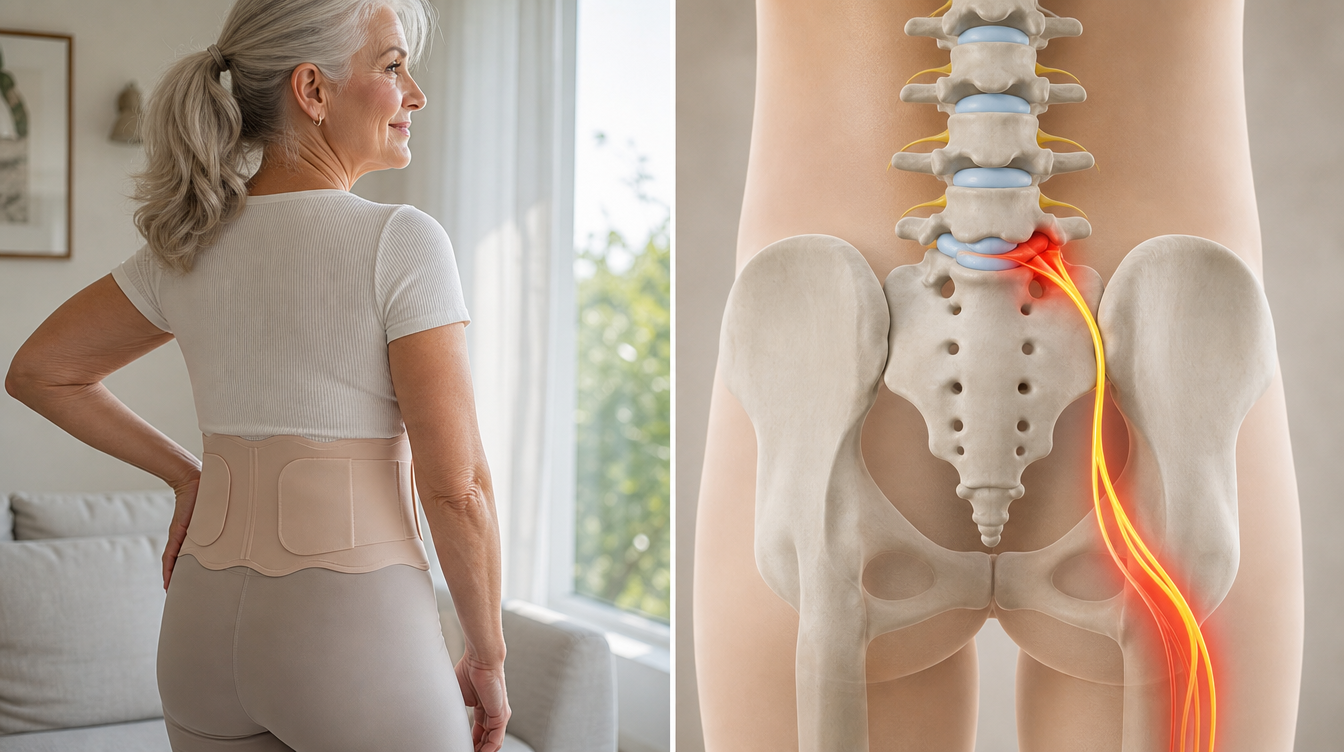
When you put on the BareSupport Back Belt, here is what changes:
First wear: your back gets a support cue.
The soft compression wraps around the lower back and waist, so the area feels steadier instead of exposed, tense, and unprotected.
During sitting and driving: the belt keeps working.
The flexible lumbar pads spread support across the small of the back while you sit, stand, drive, clean, or move through errands.
During movement: it stays wearable.
The anti-roll edges help it stay flat instead of folding into your waist the way bulky braces often do.
That is the part most braces miss: support only matters if you can keep wearing it.
Not numbed out. Not strapped into armor. Just steadier, calmer, and easier to move through the day.
WHY PEOPLE KEEP WEARING IT
The pattern we kept seeing was simple:
People did not need another intimidating brace they hated wearing. They needed something light enough to put on before the pain spiral took over the day.
That is why BareSupport is built around daily comfort, discreet wear, and steady lower-back support for the sitting, driving, and movement patterns that often trigger sciatic-type pain.
And the reason people keep using it is not complicated:
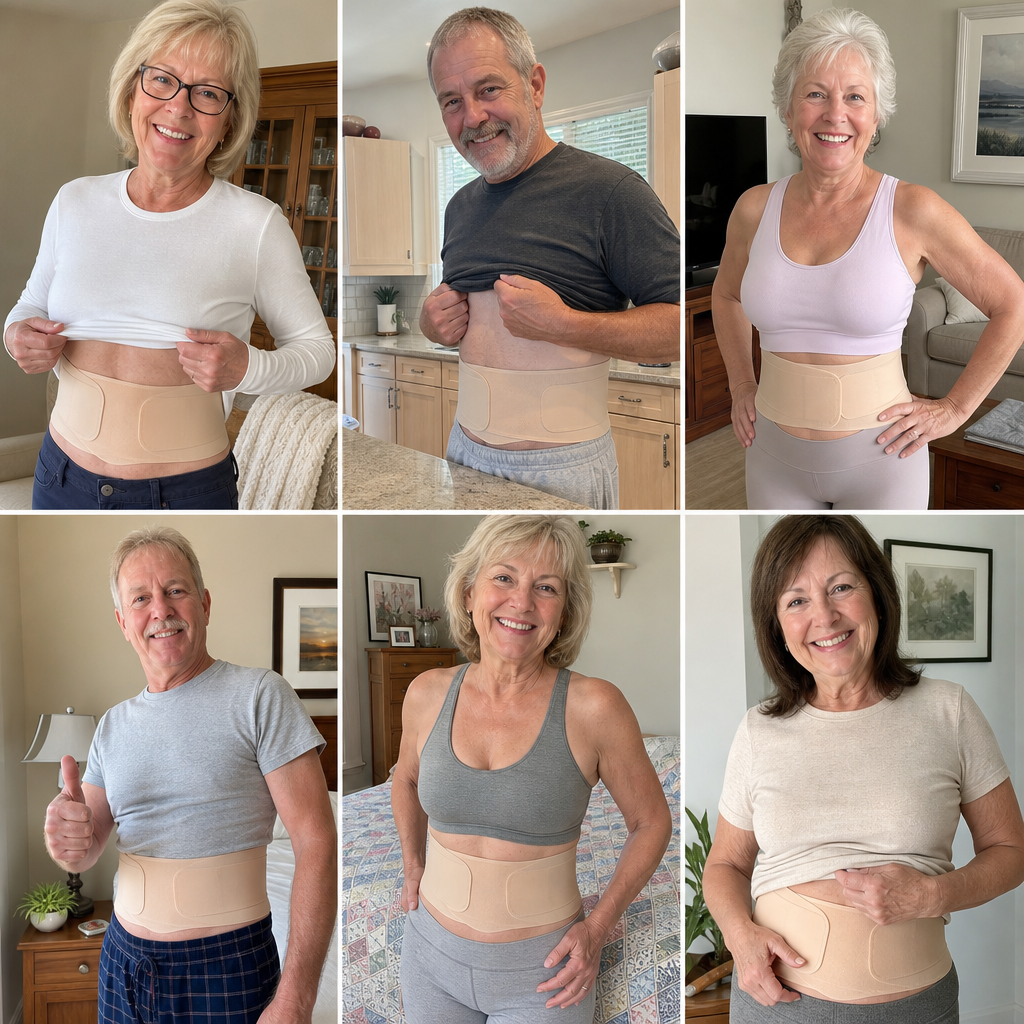
It fits into normal life before pain takes over. Check out what real users are saying:
Donna K. - Phoenix, AZ ⭐⭐⭐⭐⭐ “I was scheduled for an invasive lower back procedure. Deposit paid. Used BareSupport as a last resort before giving up on daily support. Five months later, I am working 10-hour shifts as a dental hygienist. Pain-free. My therapist called to ask why I did not reschedule. I told him I did not need to anymore. He hung up on me.”
Elaine T. - Detroit, MI ⭐⭐⭐⭐⭐ “Could not walk through the grocery store without stopping. My doctor said it was just age. Three weeks with the belt, I made it through the whole store again. My husband cried in the parking lot.”
Jennifer R. - Tampa, FL ⭐⭐⭐⭐⭐ “I am 54. ER nurse for 17 years, just like Elaine Porter’s husband. Years of lifting patients destroyed my lower back. They were talking about a spinal procedure. Been using Daywick for 3 months. Just got promoted to charge nurse. The young nurses ask how I move so easily. I just smile.”
Dr. Patricia Vance, Physical Medicine & Rehabilitation Physician ⭐⭐⭐⭐⭐ "I'm a PM&R specialist. I see failed lower back surgeries every week. When I reviewed Elaine Porter's research, the mechanism made immediate sense. I tried it on my own chronic lower back issue first. Then I started quietly recommending it to patients who wanted to avoid invasive procedures. The results have been remarkable."
THE PRICE THAT'S CAUSING MEDICAL INDUSTRY PANIC
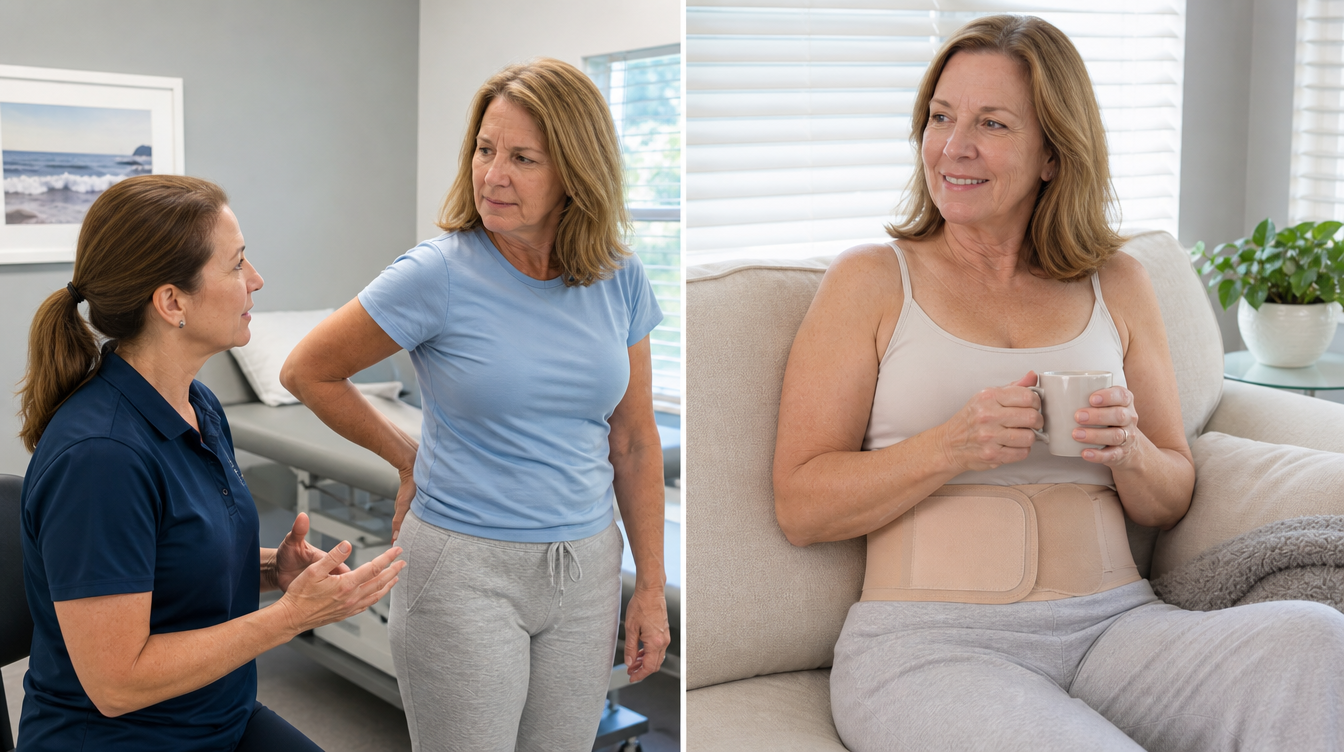
Let me show you what the back-support machine REALLY costs in America:
Physical Therapy Route:
- 2x per week for 6 months = 48 visits
- $200 per visit average
- Total: $9,600 (plus gas, time off work, and your dignity)
Pain Management Route:
- Initial consultation: $350
- MRI scan: $3,000
- Targeted in-clinic methods: $500 each (need 3-6 per year)
- Total: $5,350(for support that may only last a short period)
Invasive Procedure Route
- lower back surgery consult: $25,000-$50,000
- 6 months recovery (unpaid if you're self-employed)
- 40% chance it doesn't work
- 25% chance you need revision procedures
- Total: Your life savings and a dice roll on permanent damage
The medical industry LOVES these options.
Know why?
Because you keep coming back.
Temporary relief equals lifetime customer.
It's a goldmine built on human suffering.
But here's what really pisses them off...
The BareSupport Back Belt could easily have been turned into another overpriced clinic-only brace.
That is how this industry works: make simple support feel complicated, then charge people for access.
I did not create this to make another overpriced clinic product.
I created it because the alternative was watching the system turn simple support into another bill.
I created it because I watched my husband - a nurse who had saved lives for 19 years - unable to stand at the bathroom sink without gripping the counter.
Because Jennifer was about to let some knife-happy surgeon cut into her lower back at 54.
So here's the deal:
The regular price is $113.95.
Already 90% less than ONE MONTH of typical treatment.
But that's not what you'll pay today.
THE 56% OFF “IN YOUR FACE” REPLY TO THE BACK-PAIN MACHINE
Remember those warnings I mentioned?
The pressure? The threats? The quiet little comments from people who profit when you stay in the system?
Well, I just got word that a major medical device company is trying to patent-block this technology.
They cannot make it disappear, but they can make it harder for normal people to get it cheaply.
So now they are trying to make the simple version expensive, clinic-owned, and out of reach.
My response?
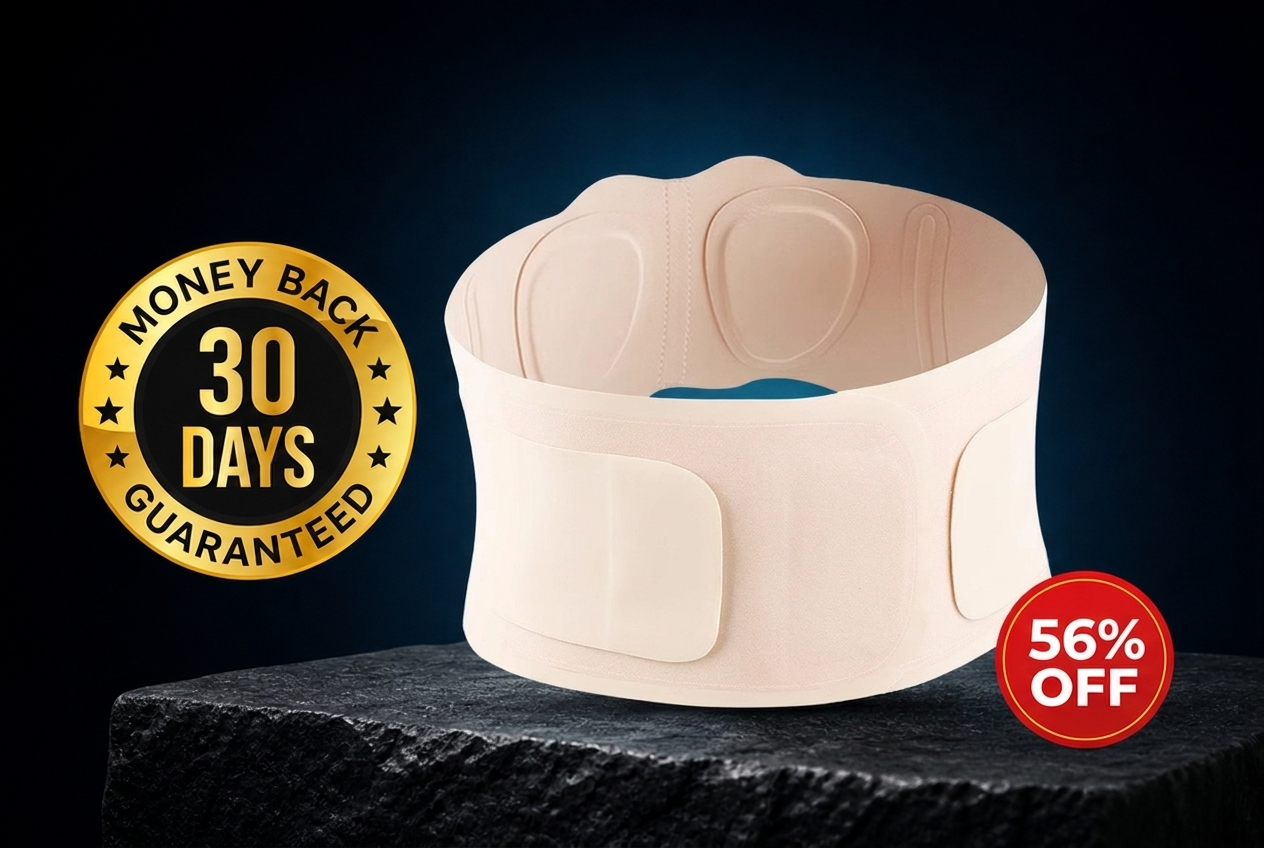
I am putting 5,000 units on sale at 56% OFF.
That's right.
Just $49.95
Less than one physical therapy visit.
Less than a specialist appointment.
Less than the pillows, creams, straps, and gadgets sitting in closets across America.
For the low-profile support belt built around the real daily-wear problem behind the pain loop.
Why would I do this?
Because every person who gets relief at home is one less person being pushed toward a procedure they may not need.
Because I want 5,000 people walking, sleeping, sitting, and climbing stairs again before the system convinces them they are broken beyond help.
⚠️ THIS 56% DISCOUNT EXPIRES IN 72 HOURS ⚠️
After that, the regular price returns to $113.95. And units are selling out fast.
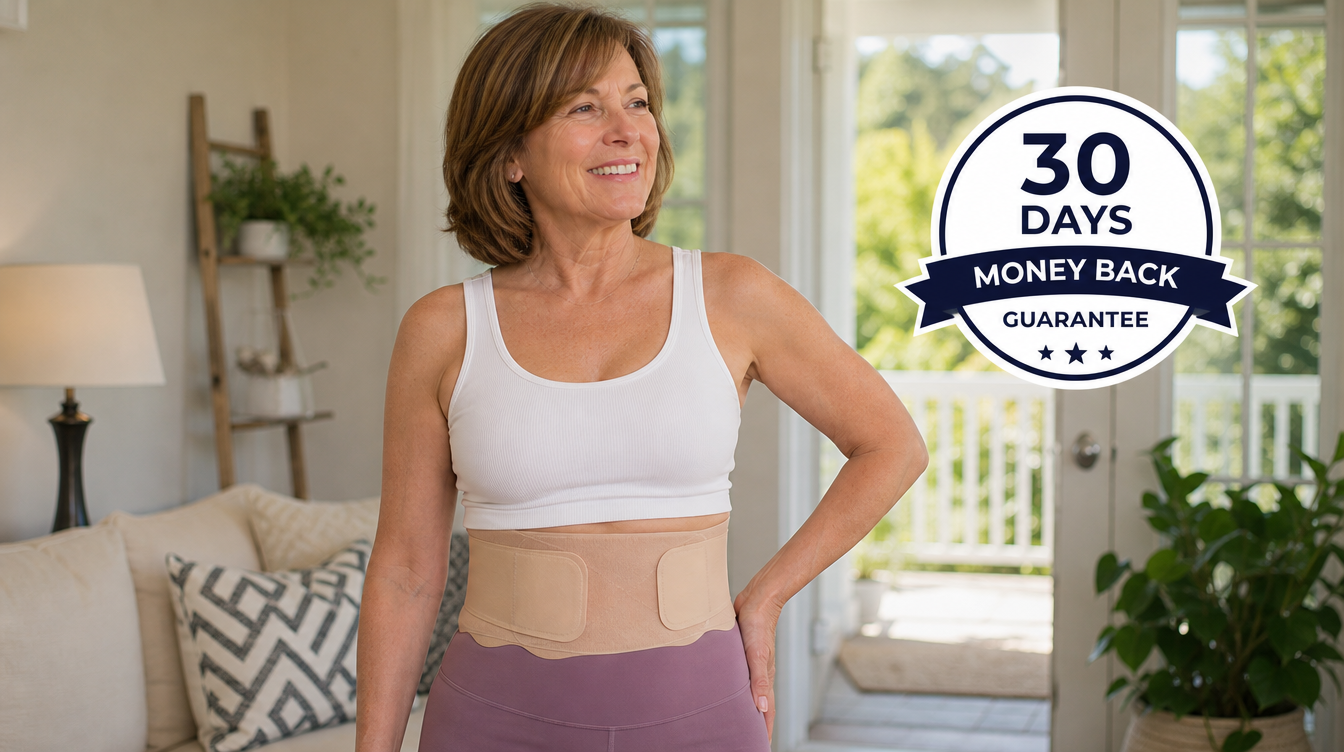
MY PERSONAL 30-DAY TRY-IT-AT-HOME GUARANTEE
Look, I get it.
You've been burned before.
Spent money on "miracle cures" that turned out to be expensive paperweights.
So here's my promise:
Try the BareSupport Back Belt for 30 days.
Wear it during the parts of the day that usually trigger your lower back and sciatic-type pain.
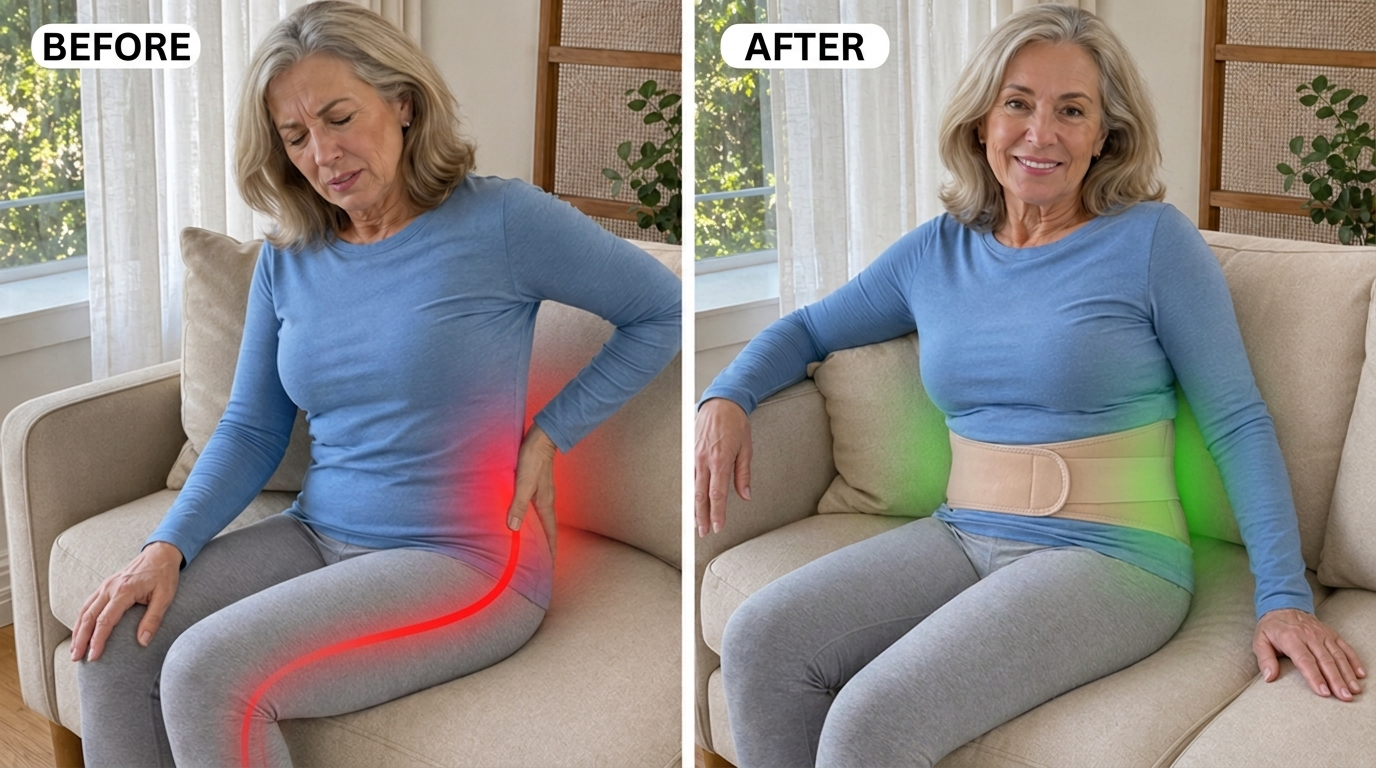
Feel your lower back supported... Feel the guarded tension calm down... Feel normal movement become less threatening...
And if you don't wake up one morning thinking "Holy crap, I forgot I even HAD back pain"...
I'll refund every penny.
No forms to fill out. No "store credit" nonsense. No questions asked.
Just email support@daywick.com and say "It didn't work."
We'll walk you through the return process under the 30-day guarantee.
Why am I so confident?
Because in 18 months and nearly 20,000 users, our refund rate is 0.02%.
That's FOUR people per thousand.
And the few returns we did see were simple buyer's remorse, not people saying the method failed.
BUT HERE'S THE CATCH (AND IT'S A BIG ONE)
This 56% discount can disappear at any time.
Not because I'm playing games.
Because inventory is real, legal pressure is real, and demand from older Americans with back pain is very, very real.
After 72 hours, the regular price returns to $113.95.
Still a steal. But not $49.95.
Also, and this is important, we only reserve a limited number of units at this reader price.
Our manufacturer can only produce 500 per week.
When we got featured by a health newsletter last month, the last batch sold out in under 24 hours.
...So we no longer sell on Amazon. You won't find our original product there - only cheap knockoffs. The only place we sell is through our official Daywick website.
If you're reading this, units are still available.
But I can't promise they'll last the day.
And here's the thing...
Every minute you wait is another minute you're:
- Feeding the pain-management machine
- Enriching clinics that never explain the guarding loop
- Living in unnecessary pain
While the actual method is sitting right here for less than a night out.
THE CHOICE THAT WILL DEFINE YOUR NEXT DECADE

Right now, you're at a crossroads.
Path #1: Keep Doing What You're Doing
Keep relying on short-term relief. Keep paying someone to stretch your lower back with zero lasting results. Keep sitting in that weird position that sometimes helps. Keep missing out on life because movement equals pain.
Keep being a cash cow for the back-support industry.
Path #2: Try The Simple At-Home Method
Spend less than you'd blow on dinner and drinks. Get a support belt built for the daily-wear loop that keeps ruining normal life. Support the real problem instead of only masking symptoms. Wake up tomorrow with hope instead of dread.
Join the quiet rebellion against medical exploitation.
The choice seems pretty obvious to me.
HERE IS EXACTLY WHAT TO DO NEXT
1. Click the button below that says "Check Availability Now →"
2. Choose your package (Pro tip: Get two. One for home. One for someone else suffering. You'll save more)
3. Fill out your shipping info (We ship same day if you order before 3 PM EST)
4. Wait 5-8 days for your lower back's salvation to arrive
5. Use it for daily wear the moment it arrives
6. Email us your success story (seriously, email us at support@daywick.com)
But whatever you do, don't close this page thinking "I'll order later."
Later does not exist when every chair, stair, and night in bed is already a negotiation.
Later is another morning grabbing the wall.
Later is another family plan you quietly avoid.
Later is the discount disappearing while your lower back stays exactly the same.
Your lower back has waited long enough.
Click below and let us end this nightmare.
You can take advantage of this unique offer for 3 days only!
INTERNET ONLY OFFER!
FOR A LIMITED TIME:
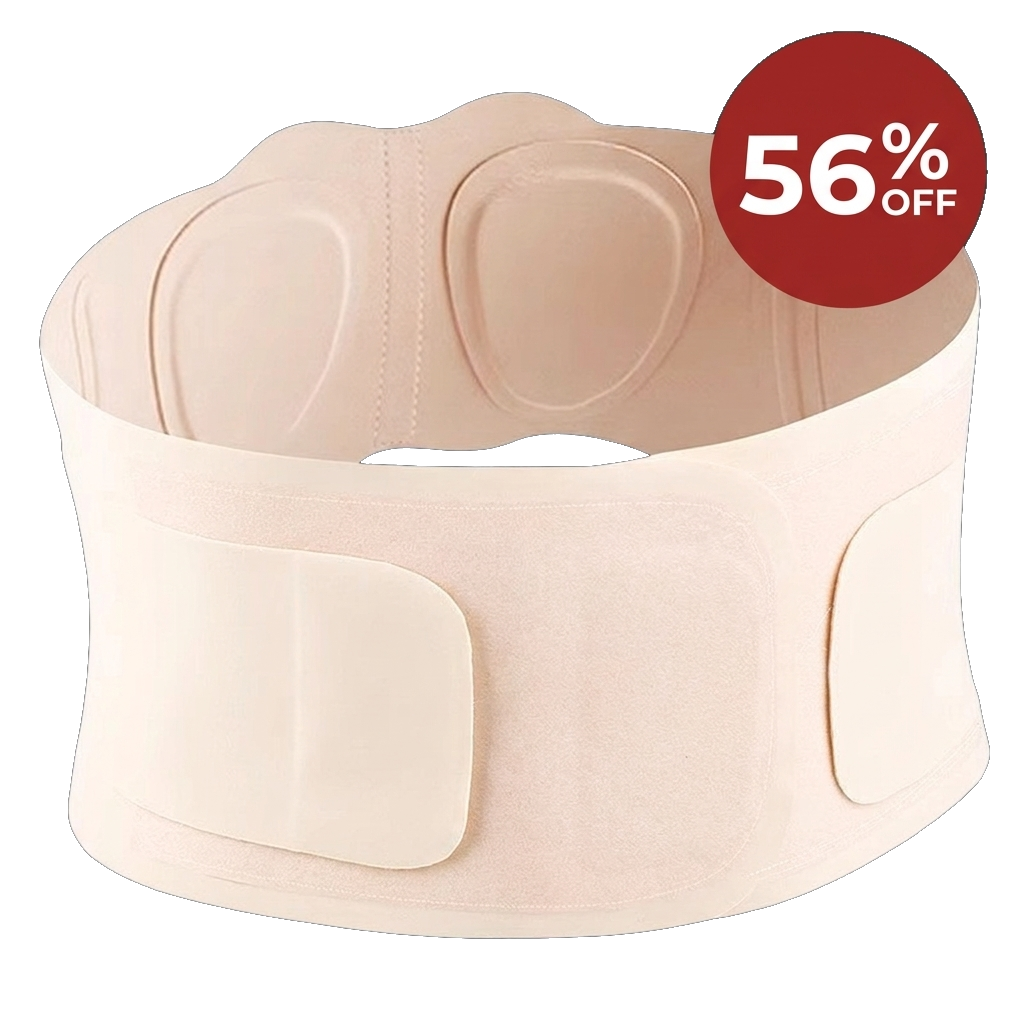
56% OFF + FREE SHIPPING
LIMITED TIME READER-ONLY SPECIAL: Ordering now makes you eligible for 56% OFF BareSupport Back Belt. Only available here. Limited to first 500 customers only.
With respect and urgency,
Elaine Porter, Physical Therapist Creator, BareSupport Back Belt Advocate for At-Home Lower Back Support
P.S. - I just got a text from my husband. He is back at the hospital - not as a patient, but saving lives again. Full shifts. Lifting patients. The man who could not make it through a grocery aisle is back to being the nurse he was born to be. That could be you in a few weeks. But only if you act now.
P.P.S. - The BareSupport Back Belt is built for targeted at-home lower back relief, with the same no-nonsense standards people expect from Daywick.
P.P.P.S. - Seriously, we're down to 4,127 units. When I refresh our inventory system and see it below 1,000, I'm pulling this page. Don't say I didn't warn you.